Reverse Plank March: Form, Muscles Worked, Sets, Tips & FAQ
Learn the Reverse Plank March to strengthen glutes, hamstrings, core, and shoulder stability with proper form, sets, tips, mistakes, FAQs, and gear.
Reverse Plank March
This exercise is best used when you want to build posterior-chain endurance, hip stability, and anti-rotation control without machines. Because the body is supported by the hands and heels, the shoulders must stay strong while the glutes keep the hips from dropping. In addition, the alternating march pattern teaches your core to resist twisting as the legs move one at a time.
Quick Overview
| Body Part | Core |
|---|---|
| Primary Muscle | Glutes, hamstrings, and deep core stabilizers |
| Secondary Muscle | Shoulders, triceps, spinal erectors, hip flexors, and calves |
| Equipment | No equipment required; optional exercise mat for comfort |
| Difficulty | Intermediate because it requires hip control, shoulder support, and core stability |
Sets & Reps (By Goal)
- Core stability: 3 sets × 8–12 total marches with a slow, controlled tempo
- Glute and hamstring endurance: 3–4 sets × 10–16 total marches while keeping the hips high
- Warm-up activation: 2 sets × 6–10 total marches before lower-body or posterior-chain training
- Bodyweight strength: 4 sets × 8–10 total marches with a 1–2 second pause on each leg lift
- Beginner progression: 2–3 sets × 5–8 total marches, or hold the reverse plank without marching first
Progression rule: Add reps only when your hips stay level. After that, increase the pause at the top of each march before adding more volume.
Setup / Starting Position
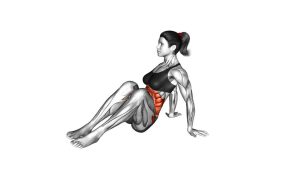
- Sit on the floor: Extend both legs forward and place your heels on the ground.
- Set your hands: Place your palms behind your hips with fingers pointing toward your feet or slightly outward.
- Brace your upper body: Press the hands into the floor, straighten the arms, and keep the shoulders pulled away from the ears.
- Lift the hips: Drive through the heels and squeeze the glutes until your body forms a long line from shoulders to ankles.
- Control your neck: Keep the head neutral or slightly lifted. Avoid dropping the head backward.
- Prepare to march: Before lifting one leg, tighten the glutes and brace the core so the pelvis does not rotate.
Tip: If the wrists feel uncomfortable, turn the fingers slightly outward or use push-up handles. However, do not continue if the position creates sharp pain.
Execution (Step-by-Step)
- Start in a strong reverse plank: Press through your hands and heels while lifting the hips into a straight-body position.
- Brace before moving: Tighten your core and glutes so the torso stays steady.
- Lift one leg: Raise one foot a few inches off the floor without bending the elbows or dropping the hips.
- Pause briefly: Hold the lifted-leg position for a moment while keeping the pelvis level.
- Return with control: Lower the foot back to the floor softly instead of letting it drop.
- Switch sides: Lift the opposite leg with the same controlled tempo and stable hip position.
- Continue alternating: March side to side until all reps are complete, then lower the hips slowly to finish.
Pro Tips & Common Mistakes
- Keep the hips lifted: The most important cue is to maintain a straight line through the body.
- Move slowly: A slow march builds more control than a fast, swinging leg lift.
- Do not over-lift the leg: A small lift is enough if the pelvis stays steady.
- Avoid shoulder collapse: Push the floor away and keep the chest open throughout the set.
- Control the ribs: Do not flare the ribs upward, because this can shift stress into the lower back.
- Use your glutes first: If the hamstrings cramp, squeeze the glutes harder and reduce the hold time.
- Do not rush the return: Place each heel down softly before lifting the opposite leg.
- Watch the wrists: If wrist extension feels intense, modify the hand angle or use handles.
- Stay level: Avoid twisting the hips toward the lifted leg.
- Finish clean: Lower the hips with control instead of dropping suddenly at the end.
FAQ
What muscles does the Reverse Plank March work?
The Reverse Plank March mainly works the glutes, hamstrings, and deep core stabilizers. Additionally, the shoulders, triceps, spinal erectors, and hip flexors assist as the body holds a strong reverse plank position.
Is the Reverse Plank March good for core strength?
Yes. It is especially useful for core stability because the trunk must resist rotation while one leg lifts. As a result, it trains control instead of only abdominal flexion.
Why do my hips drop during the exercise?
Hip drop usually means the glutes and core are losing tension. To fix it, lift the hips before each rep, reduce the leg-lift height, and slow the movement.
Should I feel this exercise in my lower back?
You may feel light work around the back of the body, but you should not feel sharp or compressed lower-back pain. If your lower back takes over, squeeze the glutes, control the ribs, and reduce the set length.
Is the Reverse Plank March beginner-friendly?
It can be challenging for beginners because it requires shoulder, hip, and core stability at the same time. For an easier version, practice a basic reverse plank hold first, then add small alternating marches later.
How high should I lift each leg?
Lift only as high as you can while keeping your hips level. In most cases, a small controlled lift is better than a high swing.
Can I do the Reverse Plank March at home?
Yes. This exercise needs only floor space. However, an exercise mat can make the position more comfortable for your hands and heels.
Recommended Equipment
- Thick Exercise Mat — adds comfort for floor-based core and posterior-chain exercises
- Push-Up Handles — may reduce wrist extension stress during reverse plank variations
- Yoga Blocks — useful for modified hand support and mobility-friendly setup options
- Mini Resistance Bands — helpful for glute activation drills before reverse plank work
- Foam Roller — supports warm-up and recovery for hamstrings, glutes, and upper back
Tip: Equipment is optional. Still, a supportive mat and wrist-friendly handles can make the exercise easier to practice with clean form.