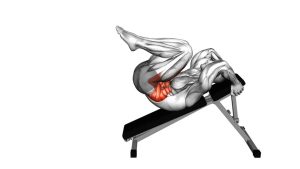
Lying Raised-Shoulders Windshield Wiper: Core Form, Sets, Tips & FAQ
Learn the Lying Raised-Shoulders Windshield Wiper to train obliques, abs, and core control with proper form, sets, tips, mistakes, FAQs, and equipment.
Lying Raised-Shoulders Windshield Wiper
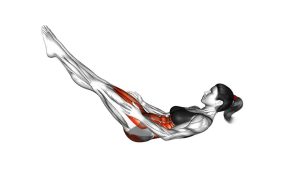
This exercise is best for lifters who already have solid core strength and can control straight-leg raises without arching the lower back. The raised-shoulder position increases abdominal demand, while the side-to-side leg motion challenges rotational control. Keep the legs together, move slowly, and stop each rep before your lower back loses position.
Quick Overview
| Body Part | Core |
|---|---|
| Primary Muscle | Obliques |
| Secondary Muscle | Rectus abdominis, lower abs, hip flexors, deep core stabilizers |
| Equipment | No equipment required; optional exercise mat |
| Difficulty | Advanced |
Sets & Reps (By Goal)
- Core control: 2–3 sets × 6–10 reps per side with a slow tempo.
- Oblique strength: 3–4 sets × 8–12 controlled reps per side.
- Ab endurance: 2–3 sets × 30–45 seconds of continuous controlled reps.
- Beginner progression: 2–3 sets × 6–8 reps per side with bent knees and shorter range.
Progression rule: Increase control before increasing range. A smaller clean rep is better than a large rep that pulls the lower back off the floor.
Setup / Starting Position
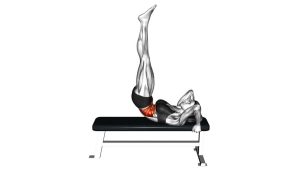
- Lie on your back: Use a flat floor or mat and keep your body long from head to hips.
- Raise your legs: Lift both legs toward the ceiling with the knees straight or slightly soft.
- Lift your shoulders: Curl the shoulders slightly off the floor to engage the upper abs.
- Place your arms for support: Keep the arms out to the sides or slightly angled for balance.
- Brace your core: Pull the ribs down and keep the lower back controlled before starting.
If the neck feels strained, keep the shoulder lift smaller or support the head lightly without pulling on the neck.
Execution (Step-by-Step)
- Start at center: Keep both legs raised and together above the hips.
- Lower to one side: Slowly rotate the legs to one side while keeping the shoulders lifted.
- Control the bottom: Stop before the lower back arches or the legs touch the floor.
- Return to center: Pull the legs back to the vertical position using your obliques and abs.
- Switch sides: Repeat the same controlled motion to the opposite side.
- Continue alternating: Keep each rep smooth, slow, and controlled from start to finish.
Pro Tips & Common Mistakes
- Keep the movement slow: Fast reps usually turn this exercise into momentum instead of core training.
- Do not let the legs crash down: Control the lowering phase on every rep.
- Keep the shoulders raised: Dropping the shoulders reduces abdominal tension and changes the exercise difficulty.
- Avoid lower-back arching: Shorten the range if your pelvis pulls out of position.
- Use your arms lightly: The arms help balance, but they should not do the work for your abs.
- Breathe with control: Exhale as the legs return to center to improve bracing.
- Regress when needed: Bend the knees to shorten the lever and make the exercise easier.
FAQ
What muscles does the Lying Raised-Shoulders Windshield Wiper work?
It mainly works the obliques, while also training the rectus abdominis, lower abs, hip flexors, and deep core stabilizers. The raised-shoulder position keeps the abs active throughout the full movement.
Is this exercise beginner-friendly?
The straight-leg raised-shoulder version is advanced. Beginners should start with bent-knee windshield wipers, smaller ranges of motion, or regular lying knee drops before progressing.
Should my legs touch the floor?
No. For most people, the legs should hover above the floor. Touching the floor can reduce tension and may cause the lower back to lose control.
Why do I feel this in my hip flexors?
Some hip flexor involvement is normal because the legs are raised. However, if the hip flexors dominate, bend the knees, reduce the range, and focus on pulling the ribs down.
How can I make this exercise easier?
Bend the knees, lower the shoulders slightly, reduce the side-to-side range, or perform the exercise with the feet closer to the body. Build control first before using straight legs.
Recommended Equipment (Optional)
- Exercise Mat — provides floor comfort and support during supine core exercises
- Thick Yoga Mat — useful if your lower back or shoulders need extra cushioning
- Adjustable Ankle Weights — optional advanced progression once bodyweight control is mastered
- Pilates Ball — can be used between the knees or ankles to improve leg control
- Core Sliders — useful for additional core training variations and anti-rotation work
Tip: Equipment is optional. Master the bodyweight version first, then add tools only if your lower back stays controlled.