Trap Bar Deadlift: Proper Form, Muscles Worked, Sets, Tips & FAQ
Learn the Trap Bar Deadlift for stronger legs, glutes, and back. Step-by-step form, muscles worked, sets by goal, common mistakes, FAQs, and equipment.
Trap Bar Deadlift
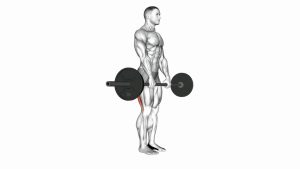
This exercise is excellent for building total-body strength while keeping the movement pattern simple and athletic. The trap bar position allows you to push through the floor, keep the chest tall, and use both the knees and hips together. It can feel more natural for many lifters because the neutral handles reduce grip and shoulder stress while the centered load supports a strong vertical pull.
Quick Overview
| Body Part | Legs |
|---|---|
| Primary Muscle | Quadriceps, glutes, hamstrings |
| Secondary Muscle | Spinal erectors, traps, forearms, core, adductors, calves |
| Equipment | Trap bar / hex bar, weight plates, collars |
| Difficulty | Beginner to Intermediate |
Sets & Reps (By Goal)
- Strength: 3–5 sets × 3–6 reps with heavier loads and 2–3 minutes rest.
- Muscle growth: 3–4 sets × 6–10 reps with controlled tempo and 90–150 seconds rest.
- Power development: 3–6 sets × 2–5 reps using fast, clean reps with 2–3 minutes rest.
- Beginner technique: 2–3 sets × 6–8 reps with light-to-moderate weight and full control.
- Conditioning: 3–5 rounds × 8–12 reps using moderate weight and clean breathing rhythm.
Progression rule: Add weight only when every rep stays smooth, your spine stays neutral, and the bar leaves the floor without jerking.
Setup / Starting Position
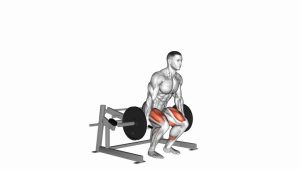
- Step inside the trap bar: Stand in the center of the frame with your feet about hip-width to shoulder-width apart.
- Line up your midfoot: Keep the handles close to the middle of your foot so the load rises vertically.
- Hinge and bend the knees: Push your hips slightly back while bending your knees until your hands reach the handles.
- Grip the handles firmly: Use a neutral grip with both arms straight and shoulders packed down.
- Set your torso: Lift your chest, keep your ribs controlled, brace your core, and keep your back neutral.
- Prepare to push: Think about driving your feet through the floor instead of yanking the bar up with your arms.
Your hips should be lower than a conventional deadlift but not so low that the movement becomes a full squat. The best position lets your chest stay tall while your legs and hips drive together.
Execution (Step-by-Step)
- Brace before lifting: Take a breath, tighten your core, and create full-body tension before the bar leaves the floor.
- Push the floor away: Drive through your midfoot and heels as your knees and hips extend together.
- Keep the bar path vertical: Let the trap bar travel straight up without drifting forward or backward.
- Maintain straight arms: Your arms are hooks. Do not bend your elbows or shrug the weight up.
- Stand tall at the top: Finish with hips and knees extended, glutes tight, ribs down, and shoulders neutral.
- Lower with control: Push your hips back, bend your knees, and guide the bar down along the same path.
- Reset each rep: Let the plates settle briefly, re-brace, and repeat with the same clean setup.
Pro Tips & Common Mistakes
- Push, don’t pull: Think about pushing the floor away to activate the legs and glutes more effectively.
- Keep your chest tall: Avoid collapsing forward or rounding the upper back during the start.
- Do not jerk the bar: Build tension first, then lift smoothly.
- Avoid overextending at lockout: Stand tall without leaning backward or thrusting the ribs forward.
- Keep knees tracking with toes: Do not let the knees cave inward as you lift.
- Control the descent: Dropping the bar removes tension and may reduce technique quality.
- Use the correct handle height: High handles can help beginners learn; low handles increase range of motion.
- Keep the neck neutral: Do not crank the head up. Look slightly forward and down to maintain alignment.
FAQ
What muscles does the trap bar deadlift work?
The trap bar deadlift mainly works the quadriceps, glutes, and hamstrings. It also trains the spinal erectors, traps, core, forearms, calves, and adductors as stabilizers.
Is the trap bar deadlift good for beginners?
Yes. The centered load and neutral handles often make it easier to learn than a conventional barbell deadlift. Beginners should start with light weight, focus on bracing, and practice a smooth vertical bar path.
Is the trap bar deadlift more for legs or back?
It is usually more leg-dominant than a conventional deadlift because the torso stays more upright and the knees bend more. However, the back still works hard to stabilize the spine and keep the torso strong.
Should I use high handles or low handles?
High handles reduce the range of motion and are useful for beginners, taller lifters, or heavier strength work. Low handles increase the range of motion and may create a harder leg and hip challenge.
How heavy should I go on trap bar deadlifts?
Use a weight that allows you to keep a neutral spine, controlled setup, strong brace, and smooth lockout. If you need to jerk the bar or your hips rise too fast, reduce the load.
Can trap bar deadlifts replace squats?
They can support lower-body strength, but they are not a perfect squat replacement. Trap bar deadlifts combine squat-like knee drive with deadlift-like hip extension, making them a strong companion or alternative depending on your goal.
Recommended Equipment
- Trap Bar / Hex Bar — the main tool for performing the trap bar deadlift safely and efficiently.
- Olympic Weight Plates — essential for loading the trap bar progressively.
- Olympic Barbell Collars — help secure plates and keep the load stable during each rep.
- Weightlifting Belt — useful for heavier sets when you already know how to brace properly.
- Deadlift Lifting Straps — helpful when grip strength limits your heavier pulling sets.
Tip: Start with the trap bar and plates first. Add a belt or straps only when your technique is consistent and your training loads become more demanding.