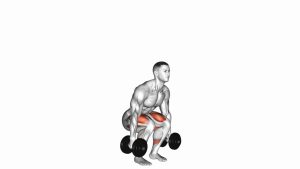
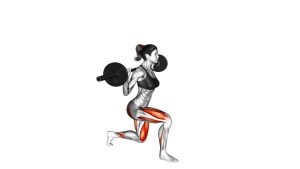
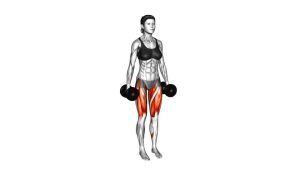
Dumbbell Forward Lunge: Form, Muscles, Sets, Tips & FAQ
Learn the dumbbell forward lunge for stronger quads, glutes, balance, and leg control. Includes setup, steps, sets, mistakes, FAQ, and equipment.
Dumbbell Forward Lunge
This exercise is excellent for building balanced leg strength because each side must work independently. Unlike a squat, the forward lunge challenges the body through a split stance, which improves hip stability, knee control, ankle balance, and core bracing. It is especially useful for athletes, general strength training, home workouts, and lower-body muscle development.
Quick Overview
| Body Part | Legs |
|---|---|
| Primary Muscle | Quadriceps and Gluteus Maximus |
| Secondary Muscle | Hamstrings, calves, adductors, glute medius, and core stabilizers |
| Equipment | Dumbbells |
| Difficulty | Beginner to Intermediate |
Sets & Reps (By Goal)
- Strength: 3–5 sets × 5–8 reps per leg using heavier dumbbells and full rest.
- Muscle growth: 3–4 sets × 8–12 reps per leg with controlled tempo and moderate load.
- Endurance: 2–4 sets × 12–20 reps per leg using lighter dumbbells and shorter rest.
- Balance and control: 2–3 sets × 6–10 reps per leg with slow reps and a brief pause at the bottom.
- Beginner practice: 2–3 sets × 6–8 reps per leg using bodyweight first, then light dumbbells.
Progression rule: Increase control before increasing weight. Add reps first, then add dumbbell load only when both knees track smoothly and your torso stays upright.
Setup / Starting Position
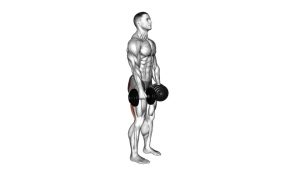
- Stand tall: Place your feet about hip-width apart with your chest lifted and ribs stacked over the pelvis.
- Hold the dumbbells: Keep one dumbbell in each hand with a neutral grip and arms hanging naturally at your sides.
- Set your shoulders: Pull the shoulders slightly back and down without over-arching the lower back.
- Brace your core: Create light abdominal tension before stepping forward.
- Look forward: Keep your head neutral and eyes forward to help maintain balance.
- Choose your step length: Use a stride long enough to lower smoothly without the front heel lifting.
Tip: If balance is difficult, practice the movement without dumbbells first or use lighter weights until the step pattern feels stable.
Execution (Step-by-Step)
- Start from a strong stance: Stand upright with both dumbbells controlled at your sides.
- Step forward: Take one controlled step forward with one leg. Let the heel contact first, then place the whole foot flat.
- Lower your body: Bend both knees and descend until the front thigh is close to parallel with the floor.
- Keep the torso tall: Avoid folding forward. Your chest should stay lifted and your shoulders should remain above your hips.
- Control the front knee: Let the knee travel naturally over the foot while keeping it aligned with the toes.
- Pause briefly: Stop at the bottom without bouncing. The rear knee should hover just above the floor or lightly approach it.
- Drive back: Push through the front foot, especially the midfoot and heel, to return to the starting position.
- Reset fully: Bring the front foot back under your hips before repeating on the same side or alternating legs.
Pro Tips & Common Mistakes
Pro Tips
- Use a controlled step: Step forward with purpose, not speed. A rushed step often causes poor balance.
- Push through the front leg: The front quad and glute should drive the return, not the rear leg pushing hard off the floor.
- Keep the front foot planted: Maintain contact through the heel, midfoot, and big toe for better stability.
- Use a vertical descent: Think about lowering your hips down instead of falling forward into the knee.
- Control both directions: The lowering phase builds strength, while the return phase trains power and stability.
Common Mistakes
- Stepping too short: A short stride can force the knee too far forward and reduce control.
- Knee collapsing inward: Keep the knee tracking in the same direction as the toes.
- Leaning forward excessively: A small torso angle is natural, but collapsing forward reduces control and increases stress.
- Bouncing at the bottom: Avoid using momentum. Pause and drive up with strength.
- Swinging the dumbbells: Keep the arms relaxed but stable so the weights do not pull you off balance.
- Using too much weight too soon: Heavy dumbbells are only useful when the lunge pattern stays clean.
FAQ
What muscles does the dumbbell forward lunge work?
The dumbbell forward lunge mainly works the quadriceps and glutes. It also trains the hamstrings, calves, adductors, glute medius, and core muscles for balance and control.
Is the dumbbell forward lunge good for beginners?
Yes, but beginners should start with bodyweight or light dumbbells. The exercise requires balance, so clean form is more important than heavy loading in the beginning.
Should my front knee go past my toes?
A small amount of forward knee travel is normal. The key is that the front heel stays down, the knee tracks in line with the toes, and the movement feels controlled without pain.
What is the difference between a forward lunge and a reverse lunge?
In a forward lunge, you step forward and then push back to the start. In a reverse lunge, you step backward. Forward lunges usually feel more demanding on deceleration and knee control, while reverse lunges are often easier for beginners to control.
How heavy should my dumbbells be?
Choose dumbbells that allow you to complete every rep with stable knees, upright posture, and no swinging. If your balance breaks down, reduce the weight.
Can dumbbell forward lunges build bigger legs?
Yes. When performed with progressive overload, enough volume, and controlled depth, dumbbell forward lunges can help build the quads, glutes, and overall lower-body muscle.
Recommended Equipment
- Adjustable Dumbbells — useful for progressing weight gradually as your lunge strength improves
- Rubber Hex Dumbbells — stable, durable dumbbells for lower-body strength workouts
- Exercise Mat — provides comfort and floor protection during home training
- Weightlifting Shoes — can improve foot stability and lower-body control during weighted lunges
- Resistance Bands for Legs — helpful for glute activation and knee-tracking warm-ups before lunges
Tip: Dumbbells are the main tool for this exercise, but supportive shoes and a stable training surface can make the movement safer and more consistent.