Dumbbell Single-Leg Squat: Form, Muscles & Tips
Learn the Dumbbell Single-Leg Squat with precise form cues, muscles worked, sets by goal, balance tips, common mistakes, FAQs, and equipment guidance.
Dumbbell Single-Leg Squat
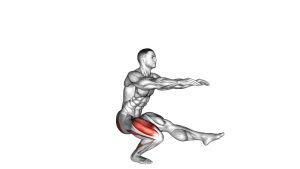
The Dumbbell Single-Leg Squat builds unilateral leg strength while challenging coordination and body control. Because the supporting leg performs nearly all the work, the exercise creates substantial demands on the quadriceps and glutes. In addition, the ankle, hip, and trunk stabilizers must continuously adjust to maintain balance.
This movement resembles a loaded pistol squat variation, although the exact squat depth depends on mobility and strength. First, master a controlled bodyweight single-leg squat before introducing a dumbbell. Then, increase resistance gradually while preserving smooth knee tracking and a stable supporting foot. Most importantly, prioritize controlled repetitions rather than forcing maximum depth.
Quick Overview
| Body Part | Legs |
|---|---|
| Primary Muscle | Quadriceps femoris, with substantial gluteus maximus involvement |
| Secondary Muscle | Adductor magnus, hamstrings, gluteus medius, gluteus minimus, calves, hip flexors, and core stabilizers |
| Equipment | One dumbbell; a stable, non-slip floor |
| Difficulty | Advanced — requires single-leg strength, ankle mobility, balance, and controlled knee movement |
Sets & Reps (By Goal)
- Strength: 3–5 sets × 3–6 controlled reps per leg. Rest 90–150 seconds between sets. Choose a manageable weight and maintain consistent depth.
- Hypertrophy: 3–4 sets × 6–10 reps per leg. Use a controlled lowering phase and rest 60–120 seconds between sets.
- Muscular endurance: 2–3 sets × 10–15 reps per leg. However, use very light resistance and stop before balance or technique deteriorates.
- Mobility and balance control: 2–4 sets × 4–6 reps per leg. Initially, practice an unloaded, supported variation with comfortable depth and slow movement.
- Rehab-style progression: 2–3 sets × 5–8 assisted partial-range reps per leg. Use this regression only when appropriate and approved by a qualified rehabilitation professional.
Progression rule: First improve balance, depth, and repetition quality without weight. Next, increase repetitions or gradually expand your comfortable range of motion. Finally, add a light dumbbell and progress resistance only when both legs demonstrate consistent control. For most people, adding weight before mastering balance creates unnecessary difficulty.
Setup / Starting Position
- Choose a suitable dumbbell: Select a weight you can control without disturbing your balance. If you are new to single-leg squats, begin with bodyweight instead.
- Stand upright: Position yourself on a firm, level surface with both feet initially beneath your hips. Keep your chest comfortably lifted and shoulders relaxed.
- Hold the dumbbell: Grip one dumbbell with a neutral wrist and allow it to hang beside your working leg. Meanwhile, keep the opposite hand free for balance, matching the demonstrated movement.
- Establish your supporting leg: Transfer your body weight onto one foot. Maintain balanced pressure through the heel, big-toe base, and little-toe base.
- Position the non-working leg: Extend the opposite leg forward and lift its foot away from the floor. Keep the raised leg controlled without locking the knee aggressively.
- Brace your core: Gently tighten your abdominal muscles to stabilize the pelvis and torso. Avoid excessive back arching or rotating toward the dumbbell.
- Prepare your knee alignment: Point the supporting knee generally in the same direction as your toes. Before descending, confirm that you can maintain balance without hopping.
Tip: Practice near a stable support when learning the movement. However, the demonstrated exercise is performed without external hand support. Only progress to the unsupported version when your balance is reliable.
Execution (Step-by-Step)
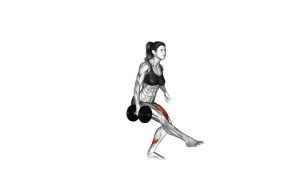
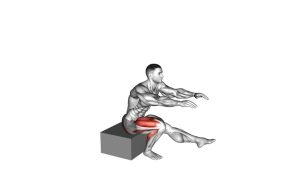
- Establish your balance: Stand tall on the working leg while holding the dumbbell beside your thigh. Extend the free leg forward and keep your gaze directed ahead.
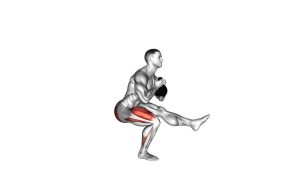
- Initiate the descent: Slowly bend your supporting knee and hip together. As you lower, allow the hips to travel backward while keeping the torso controlled.
- Maintain the extended leg: Keep the non-working leg forward and suspended above the floor. Meanwhile, use the free arm naturally to help maintain balance.
- Control your torso position: Allow a slight forward lean from the hips as needed. However, avoid rounding excessively, twisting, or leaning sideways toward the dumbbell.
- Lower to a manageable depth: Continue bending the supporting leg until you reach your deepest controlled position. Importantly, never force additional depth by collapsing the knee or lifting the supporting foot.
- Stabilize the bottom position: Maintain muscular tension through the quadriceps, glutes, and core. Pause briefly if your balance allows, without bouncing or resting on the opposite foot.
- Drive upward: Push through the supporting foot while extending the knee and hip. Consequently, the body rises as the working leg produces the main lifting force.
- Return to standing: Continue extending the supporting leg until you regain an upright, balanced position. Keep the dumbbell controlled beside the thigh rather than swinging it.
- Complete the repetition: Stabilize your posture before beginning another squat. After completing the prescribed repetitions, carefully switch to the opposite supporting leg.
Pro Tips & Common Mistakes
- Master bodyweight balance first: A loaded single-leg squat requires significant strength and coordination. Therefore, practice unloaded repetitions before holding a dumbbell.
- Keep the supporting foot stable: Maintain balanced contact through the foot instead of rolling excessively inward or outward. This provides a more reliable foundation during the squat.
- Avoid inward knee collapse: Keep the working knee tracking generally with the toes. If alignment becomes difficult, reduce the range of motion and improve hip control.
- Control the descending phase: Lower yourself over approximately two to three seconds when possible. As a result, you develop better positional awareness and muscular control.
- Keep the forward leg elevated: Do not use the free foot to push yourself upward during the repetition. Instead, let the supporting leg perform the squatting movement.
- Prevent excessive torso rotation: Because the dumbbell is held on one side, your core must resist uneven loading. Keep the shoulders and hips reasonably level throughout the movement.
- Use the free arm for balance: Allow your empty hand to move naturally as a counterbalance. However, avoid abrupt arm swings that disrupt your squat rhythm.
- Do not chase maximum depth: An excessively deep squat is unnecessary when mobility or control is limited. Instead, work within a comfortable range and progress gradually.
- Avoid excessive dumbbell weight: Heavy resistance can amplify balance mistakes and compromise joint control. Therefore, select a load that allows smooth, repeatable movement.
- Train both legs consistently: Complete a similar number of quality repetitions on each side. If one leg is weaker, begin with that side and match its controlled performance.
Training tip: For better results, combine this exercise with other lower-body movements, such as split squats, step-ups, and conventional squats. In addition, strengthening the calves, glutes, and core can support single-leg stability. Always allow adequate recovery after demanding weighted leg sessions.
FAQ
Muscles Worked and Exercise Technique
What muscles does the Dumbbell Single-Leg Squat work?
The Dumbbell Single-Leg Squat primarily challenges the quadriceps and gluteus maximus. In addition, the gluteus medius, gluteus minimus, adductors, calves, and core help stabilize the body. The hip flexors of the raised leg also work to maintain its forward position. Because one leg supports the movement, the exercise places considerable demands on coordination and balance.
Is the Dumbbell Single-Leg Squat the same as a pistol squat?
The movement closely resembles a weighted pistol squat variation because the opposite leg extends forward while one leg performs the squat. However, a traditional full pistol squat typically involves descending into a very deep single-leg position. The demonstrated variation does not require that maximum depth. Instead, the emphasis is on controlled lowering, stable positioning, and a smooth return to standing.
Should I hold one dumbbell or two dumbbells?
The demonstrated variation uses one visible dumbbell held at the side, while the opposite arm remains available for balance. Although some advanced lifters use two dumbbells, that changes the loading and balance demands. Therefore, the single-dumbbell version is the appropriate description for this exercise. Begin with a light load and prioritize controlled repetitions before increasing resistance.
Why does my supporting knee move inward during the squat?
Inward knee movement can occur when balance, coordination, or hip control becomes challenging. Additionally, excessive loading or fatigue may make the problem more noticeable. First, reduce the weight and squat depth. Then, concentrate on keeping your knee aligned generally with your toes. If necessary, practice supported single-leg squats before returning to the weighted version.
Balance, Progression, and Training Frequency
Is the Dumbbell Single-Leg Squat suitable for beginners?
The loaded version is generally better suited to intermediate and advanced trainees. Beginners may lack the necessary ankle mobility, unilateral strength, or balance. Therefore, start with supported bodyweight single-leg squats or controlled step-downs. Once these movements become consistent, gradually progress toward unsupported repetitions. Finally, introduce a light dumbbell only when technique remains stable.
How can I improve my balance during single-leg squats?
First, practice standing on one leg while maintaining a stable foot position. Next, add controlled partial squats with light fingertip support. You can also strengthen the glutes, calves, and core through complementary exercises. Furthermore, slowing the descent helps improve movement awareness. Over time, gradually reduce assistance before adding external resistance.
How deep should I squat on one leg?
Squat only as deeply as your mobility, strength, and balance allow. A deeper position increases the demand on the supporting leg. However, depth should never come at the expense of uncontrolled knee movement or pain. Therefore, begin with a comfortable range and expand it gradually. Consistent technique is more valuable than reaching the lowest possible position.
How often should I perform Dumbbell Single-Leg Squats?
For most strength-training routines, one to three sessions per week may be appropriate, depending on training experience and total leg workload. Additionally, allow sufficient recovery between demanding sessions. Beginners can practice easier balance and bodyweight variations more frequently if tolerated. However, heavy loaded sessions should be managed alongside other squats, lunges, and leg exercises.
What should I do if I cannot complete a full repetition?
Reduce the exercise difficulty rather than forcing the movement. For example, perform a supported single-leg squat while holding a stable rail. Alternatively, use a sturdy box to limit the lowering distance. As your strength improves, gradually increase your controlled range of motion. Only afterward should you attempt unsupported repetitions with a dumbbell.
Can this exercise help reduce strength differences between my legs?
Yes, unilateral training can help identify and address differences in strength and control. Because each leg works separately, the stronger side cannot directly perform the weaker side’s repetitions. However, progress should remain gradual and symmetrical. Start with the less capable leg, use a manageable number of repetitions, and avoid loading beyond the weaker side’s technical ability.
Recommended Equipment
- Rubber Hex Dumbbell — suitable for the single-hand dumbbell carry demonstrated in this exercise; start with a manageable weight
- Adjustable Dumbbell — allows gradual resistance increases as single-leg strength, balance, and movement control improve
- Non-Slip Exercise Mat — provides a suitable training surface when the mat is firm, flat, and secure without creating instability
- Resistance Bands Set — useful for assisted single-leg squat progressions when attached safely to a stable anchor
- Sturdy Plyometric Box — useful for controlled box-assisted single-leg squats and progressively developing squat depth
Tip: The demonstrated Dumbbell Single-Leg Squat requires only a suitable dumbbell and stable floor. However, resistance bands and a sturdy box can help develop balance and strength through easier variations. Choose equipment with secure grips, appropriate resistance, and reliable stability. Most importantly, never increase the load before you can control the full movement.