Lever Single-Leg Extension (Plate-Loaded): Proper Form, Muscles Worked & Tips
Master the Lever Single-Leg Extension (Plate-Loaded) with step-by-step form, quad-focused sets, safe machine setup, mistakes, FAQs, and gear tips.
Lever Single-Leg Extension (Plate-Loaded)
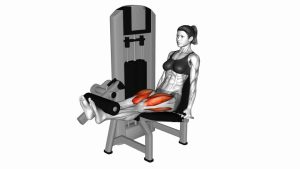
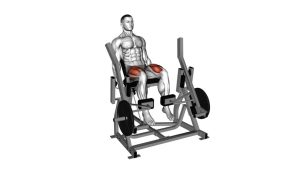
The plate-loaded single-leg extension is an effective isolation exercise for developing quadriceps strength and muscular endurance. Because each leg works separately, the movement allows you to identify differences in strength, coordination, and control between your legs. Additionally, the supported seated position reduces the need for whole-body stabilization, allowing greater attention to the working muscles.
Throughout the exercise, the thigh remains supported while the lower leg rotates upward around the knee. Meanwhile, the attached weight plates provide resistance through the machine’s lever mechanism. A controlled lifting phase develops knee-extension strength, whereas a slower lowering phase challenges the quadriceps eccentrically. For this reason, proper machine adjustment and comfortable movement range are more important than lifting the heaviest possible weight.
Quick Overview
| Body Part | Legs |
|---|---|
| Primary Muscle | Quadriceps femoris: rectus femoris, vastus lateralis, vastus medialis, and vastus intermedius |
| Secondary Muscle | Hip and trunk stabilizers provide minor support; the quadriceps perform the primary movement |
| Equipment | Plate-loaded leg extension machine with adjustable seat, padded lower-leg roller, and weight plates |
| Difficulty | Beginner to Intermediate, depending on resistance, machine familiarity, and knee-extension control |
Sets & Reps (By Goal)
- Beginner control: 2–3 sets × 10–12 reps per leg using light resistance, with 45–75 seconds of rest between sets. Focus on learning the movement and maintaining stable positioning.
- Muscle strength: 3–4 sets × 6–10 reps per leg with challenging but controlled resistance. Rest 90–120 seconds between demanding sets and avoid using momentum to complete repetitions.
- Muscle hypertrophy: 3–4 sets × 8–15 reps per leg, using a controlled lifting phase and approximately 2–3 seconds of lowering. Rest 60–90 seconds between sets.
- Muscular endurance: 2–3 sets × 15–20 reps per leg with light-to-moderate resistance. Maintain smooth repetitions and rest approximately 45–60 seconds between sets.
- Controlled return to training: When cleared by a qualified professional, use 2–3 sets × 10–15 comfortable repetitions per leg. Choose very light resistance and avoid painful movement ranges.
Progression and Resistance Selection
Initially, select a weight that allows you to complete every repetition without lifting your hips or swinging the lever. Once your technique becomes consistent, increase repetitions before adding more weight. Furthermore, small weight increases help maintain control and reduce sudden changes in knee loading.
Progression rule: Increase resistance only when both legs demonstrate smooth, comfortable repetitions through the intended range. Additionally, train the weaker side first and avoid allowing the stronger side to determine excessive loading.
Setup / Starting Position
- Choose the correct machine: Use a dedicated plate-loaded leg extension machine designed for seated knee extensions. Before starting, confirm that the adjustment points and lever move correctly.
- Adjust the seat position: Sit against the backrest and position yourself so your working knee aligns closely with the machine’s rotational pivot. Consequently, the lever can follow a comfortable movement path.
- Position the working leg: Place one lower leg behind the padded roller, with the pad resting just above the ankle. Keep the knee bent within a comfortable starting range.
- Position the non-working leg: Keep your opposite leg in the machine’s designated resting position, away from the moving lever. Avoid using it to assist or interfere with the repetition.
- Stabilize the upper body: Keep your back supported, hips in contact with the seat, and shoulders relaxed. If handles are available, hold them gently for stability.
- Select appropriate resistance: Load the machine with a manageable amount of weight. Beginners should start light because excessive resistance can encourage compensatory movement and poor knee control.
Final Alignment and Positioning Check
Before lifting, confirm that your thigh rests comfortably against the seat and your knee follows the machine’s intended movement path. Additionally, check that the shin pad does not press directly against the ankle joint.
Your torso should remain upright against the backrest, while the working foot stays relaxed or naturally positioned. Importantly, avoid forcing an extreme starting knee bend if the machine adjustment or your mobility makes it uncomfortable.
Setup tip: Perform one or two light practice repetitions before beginning the working set. This allows you to confirm proper alignment, comfortable resistance, and a smooth lever path.
Execution (Step-by-Step)
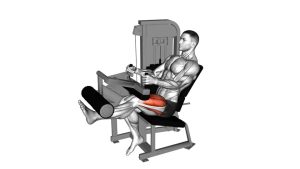
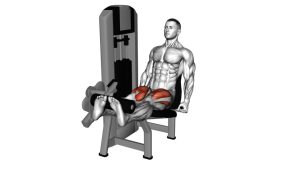
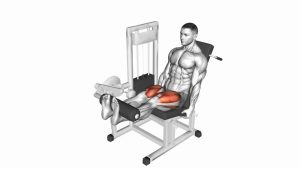
- Establish the starting position: Sit firmly against the backrest with one knee bent and the lower leg positioned behind the roller. Keep your hips stable and hold the handles if available.
- Activate the quadriceps: Begin contracting the front of the working thigh. Then prepare to straighten the knee without shifting your upper body or pushing against the seat.
- Extend the working knee: Smoothly straighten your leg, pushing the padded lever upward and forward. As a result, the machine’s lever rotates and raises the attached weight plates.
- Maintain stable positioning: Keep the working thigh supported and your back against the seat throughout the lift. Meanwhile, avoid swinging the torso or using the inactive leg for assistance.
- Reach the top position: Continue extending until your working leg approaches a comfortable, nearly straight position. However, avoid snapping or forcefully locking the knee.
- Pause under control: Briefly maintain the extended position while contracting the quadriceps. Continue breathing naturally rather than holding your breath unnecessarily.
- Lower the resistance: Gradually bend the working knee while resisting the downward movement of the lever. Ideally, take approximately 2–3 seconds to complete the lowering phase.
- Return to the starting angle: Lower the lever until your knee reaches its original, comfortable bent position. Nevertheless, avoid allowing the plates to slam or the machine to pull your leg abruptly.
- Complete the set: Repeat the movement with consistent control and the same comfortable range. After finishing the working leg, switch sides and perform the prescribed repetitions.
Movement Tempo and Quadriceps Control
A useful starting rhythm involves lifting for approximately two seconds, pausing briefly, and lowering for two to three seconds. Therefore, each repetition emphasizes muscular tension rather than speed or momentum.
During the upward phase, the quadriceps shorten as the knee extends. Conversely, during the lowering phase, they lengthen under tension while controlling the descending resistance. Both phases contribute to effective quadriceps training.
Pro Tips & Common Mistakes
- Align the knee with the pivot: Incorrect seat adjustment can create an awkward movement path and unnecessary discomfort. Therefore, check the machine’s rotational alignment before adding resistance.
- Keep the hips firmly supported: Avoid lifting your hips or sliding forward during difficult repetitions. Instead, maintain consistent contact with the seat and backrest.
- Do not swing the lever: Using momentum reduces control and makes the exercise harder to perform consistently. Consequently, select resistance that allows a smooth lifting phase.
- Avoid aggressive knee lockout: Straighten the working leg to a comfortable endpoint without snapping the joint. A controlled finish is more important than forcing maximum extension.
- Control the eccentric phase: Do not allow the weights to fall quickly after each repetition. Instead, lower gradually while keeping tension through the quadriceps.
- Use a comfortable range of motion: Work through the knee angles your mobility and machine setup allow without pain. Furthermore, increase the movement range progressively when appropriate.
- Keep the inactive leg relaxed: Avoid using your opposite leg to lift the resistance or stabilize the moving lever. This preserves the unilateral nature of the exercise.
- Maintain consistent breathing: Exhale naturally during the lifting phase and inhale during the return. Additionally, avoid unnecessary breath-holding during moderate-resistance sets.
Improving Unilateral Strength and Muscle Balance
Start each working set with the leg that currently demonstrates less strength or control. Then match its repetitions with the opposite leg rather than performing extra repetitions with the stronger side.
Over time, consistent unilateral training may help reduce performance differences between your legs. However, small differences are normal, and equal movement quality matters more than forcing identical sensations during every repetition.
Common Technique Problems to Correct
Excessive weight often causes shortened repetitions, rapid lifting, and uncontrolled lowering. Likewise, poorly adjusted equipment may produce uncomfortable pressure against the lower shin.
If these problems appear, reduce the weight and reassess your starting position. Moreover, focus on steady knee extension instead of attempting to lift heavier plates with compensatory movement.
Training tip: Combine controlled single-leg extensions with appropriate compound lower-body exercises, such as squats or leg presses, for a more complete quadriceps training routine.
FAQ
What muscles does the Lever Single-Leg Extension (Plate-Loaded) work?
This exercise primarily targets the quadriceps femoris, which includes the rectus femoris, vastus lateralis, vastus medialis, and vastus intermedius. Together, these muscles produce knee extension.
Additionally, surrounding muscles help maintain stable positioning during the movement. However, the exercise remains a quadriceps isolation movement rather than a compound lower-body exercise.
Is the plate-loaded single-leg extension good for beginners?
Yes. Beginners can use the machine when they understand its adjustments and start with manageable resistance. Because the seated position supports the upper body, the movement requires relatively little balance.
Nevertheless, proper knee alignment and controlled repetitions remain essential. Therefore, practice with very light resistance before progressing to heavier working sets.
What is the difference between single-leg and bilateral leg extensions?
A bilateral leg extension trains both legs simultaneously, whereas the single-leg variation trains one side at a time. Consequently, unilateral training makes it easier to observe differences in strength and movement control.
Both variations target the quadriceps effectively. However, single-leg extensions can be particularly useful when you want to monitor the performance of each leg independently.
Resistance, Knee Comfort, and Training Frequency
How much weight should I use for single-leg extensions?
Start with a load that allows you to complete the prescribed repetitions without swinging, shifting, or forcing knee extension. For example, beginners may begin with minimal machine resistance.
As your control improves, increase resistance gradually. Furthermore, remember that different plate-loaded machines have different lever mechanics, so identical plate weights may not feel equally difficult.
Are single-leg extensions safe for the knees?
Leg extensions can be appropriate for many healthy individuals when performed with suitable resistance and comfortable technique. However, knee loading changes throughout the movement and depends on machine design, resistance, and joint position.
Therefore, avoid forcing painful repetitions or aggressively locking the knee. If you have a knee injury, persistent discomfort, or recent surgery, obtain individualized guidance from a qualified healthcare professional.
How often should I perform single-leg extensions?
Many people can include the exercise in their lower-body workouts approximately one to three times weekly, depending on overall training volume. Additionally, recovery requirements increase with heavier resistance and more demanding sets.
For best results, coordinate your leg extension work with squats, leg presses, and other quadriceps exercises. Meanwhile, allow sufficient recovery between challenging training sessions.
Recommended Equipment
- Plate-Loaded Leg Extension Machine — the primary equipment required for performing seated single-leg extensions with lever-based resistance. Choose a machine with adjustable positioning and a suitable movement range.
- Olympic Weight Plates — provide adjustable resistance for compatible plate-loaded machines. Check the machine’s loading sleeve diameter and maximum capacity before purchasing.
- Fractional Weight Plates — allow smaller resistance increases, making them useful for gradual unilateral strength progression. Confirm compatibility with the machine’s loading sleeves.
- Light Resistance Bands Set — useful for low-resistance quadriceps activation and controlled warm-up exercises before beginning machine-based leg training.
- Knee Compression Sleeves — optional accessories that may provide warmth and a comfortable supportive sensation during training. They do not replace proper technique or medical care.
Equipment tip: Prioritize a correctly adjusted machine and manageable resistance before purchasing additional accessories. Furthermore, confirm that all weight plates fit your equipment and that the machine remains stable throughout the exercise.