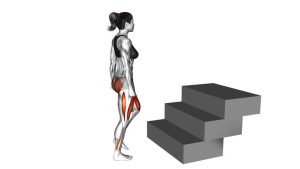
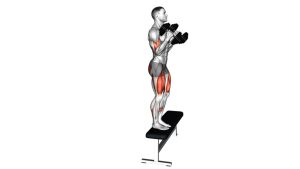
Kettlebell Lateral Step-Up: Proper Form, Muscles Worked & Tips
Build stronger quads and glutes with the Kettlebell Lateral Step-Up. Learn proper form, sets, balance tips, common mistakes, FAQs, and equipment.
Kettlebell Lateral Step-Up
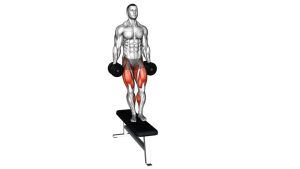
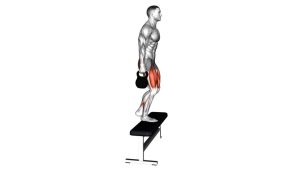
The Kettlebell Lateral Step-Up develops practical lower-body strength through controlled single-leg loading. Because the movement begins from the side of a bench, the hips must stabilize the pelvis as the working leg lifts the body upward.
Additionally, the kettlebells increase muscular demand without requiring a barbell across the shoulders. The quadriceps extend the knee, while the glutes contribute to hip extension. Meanwhile, the core and lateral hip muscles help maintain balance and prevent unnecessary side-to-side movement.
This exercise fits strength, hypertrophy, and functional training programs. However, proper technique should come before heavier kettlebells or higher platforms. Beginners should first master the movement using bodyweight or light resistance.
Quick Overview
| Body Part | Legs |
|---|---|
| Primary Muscle | Quadriceps and gluteus maximus |
| Secondary Muscle | Gluteus medius, hamstrings, calves, hip adductors, and core stabilizers |
| Equipment | Two kettlebells and a sturdy elevated bench, step platform, or plyometric box |
| Difficulty | Intermediate — requires unilateral strength, hip stability, balance, and controlled weight handling |
Sets & Reps (By Goal)
Recommended Training Volume
- Strength: 3–4 sets × 5–8 reps per leg using challenging but manageable kettlebells. Rest approximately 90–150 seconds between sets.
- Muscle hypertrophy: 3–4 sets × 8–12 reps per leg using moderate resistance. Maintain controlled repetitions and rest 60–90 seconds.
- Muscular endurance: 2–3 sets × 12–15 reps per leg using lighter kettlebells. Focus on consistent movement quality and rest 45–75 seconds.
- Balance and hip stability: 2–3 sets × 6–10 reps per leg with light resistance. Pause briefly at the top and rest 45–75 seconds.
- Movement preparation: 1–2 sets × 6–8 reps per leg using bodyweight or very light kettlebells. Use a lower platform and emphasize smooth coordination.
Progression and Load Selection
Progression rule: Begin with a low platform and a weight you can control without leaning. First, improve knee tracking, balance, and lowering technique. Then gradually increase repetitions or kettlebell resistance.
Avoid increasing platform height and kettlebell weight simultaneously. Instead, progress one variable at a time while maintaining equal training volume for both legs. If the trailing foot starts pushing excessively, reduce the load.
Setup / Starting Position
Preparing the Bench and Kettlebells
- Choose a stable elevated surface: Position a sturdy bench, step, or plyometric box on a level floor. Additionally, confirm that the platform will not slide or tip during the exercise.
- Stand beside the platform: Place your body laterally to the bench rather than directly in front of it. Keep both feet planted and establish a comfortable, balanced stance.
- Hold two kettlebells: Grip one kettlebell in each hand with your palms facing inward. Allow both arms to hang naturally beside your thighs without swinging.
- Establish neutral posture: Keep your chest upright, shoulders relaxed, and spine neutral. Meanwhile, gently brace your abdominal muscles to stabilize the torso.
- Position the working foot: Lift the foot closest to the bench and place it fully on the platform. Ensure the heel and forefoot are supported before transferring weight.
- Align the supporting knee: Point your knee in approximately the same direction as your toes. Avoid excessive inward collapse or twisting through the supporting leg.
Establishing Balance Before the Lift
Before beginning the ascent, distribute pressure across the working foot. The opposite foot should remain grounded until you are ready to rise. Furthermore, keep both kettlebells close to the sides of your body.
Tip: If placing your foot onto the platform requires excessive hip hiking, twisting, or leaning, choose a lower step. Proper positioning should feel stable before you begin lifting your body weight.
Execution (Step-by-Step)
Performing the Lateral Step-Up
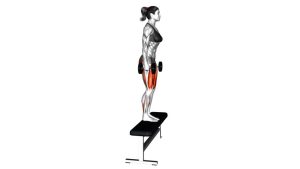
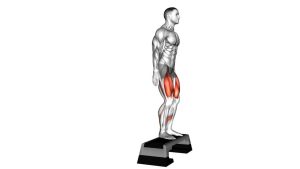
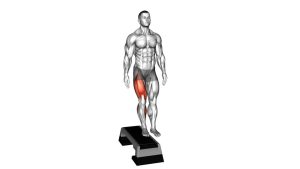
- Begin with a stable stance: Stand beside the bench with one foot on the elevated surface. Maintain an upright torso and keep both kettlebells hanging at your sides.
- Transfer weight onto the working leg: Shift your body weight toward the elevated foot while keeping the pelvis controlled. Avoid leaning excessively sideways or rotating your torso.
- Drive upward through the elevated foot: Push through the midfoot and heel while extending the working knee and hip. Consequently, your body rises toward the platform.
- Bring the trailing leg onto the bench: As you rise, lift the opposite foot from the floor and place it beside the working foot. Keep the kettlebells stable throughout the transition.
- Stand tall at the top: Reach an upright position with both feet supported on the bench. Briefly stabilize your posture without leaning backward or locking your knees forcefully.
- Begin the controlled descent: Step the trailing foot toward the floor while bending the supporting knee and hip. Meanwhile, keep most of your control through the elevated leg.
- Return to the starting position: Lower the body until the trailing foot contacts the ground. Then step the elevated foot down to complete the repetition, or keep it planted for the next controlled rep.
- Repeat and switch sides: Complete the prescribed repetitions before changing the working leg. Alternatively, alternate sides carefully while maintaining consistent technique and equal repetitions.
Breathing and Movement Tempo
Inhale before initiating the movement and maintain gentle abdominal tension. Then exhale during the upward drive without holding your breath unnecessarily. Use approximately one to two seconds to rise and two to three seconds to lower.
Throughout the exercise, the kettlebells should hang naturally beside the body. Avoid curling, swinging, or lifting the weights to generate momentum. Instead, allow the working leg to produce the upward force.
Pro Tips & Common Mistakes
Pro Tips for Better Technique
- Use a manageable platform height: Choose a step that allows full-foot placement without excessive hip flexion or torso compensation.
- Drive through the working leg: Focus on extending the elevated hip and knee. Meanwhile, minimize the contribution of the trailing foot.
- Keep the knee aligned: Maintain comfortable tracking over the toes. Therefore, avoid allowing the supporting knee to collapse inward.
- Stabilize your pelvis: Engage the lateral hip muscles to limit unnecessary dropping or shifting of the hips.
- Maintain a neutral grip: Keep the kettlebells beside your thighs with relaxed shoulders. Additionally, avoid swinging the arms during the ascent.
- Control the lowering phase: Descend smoothly rather than dropping onto the floor. As a result, the working muscles remain engaged during the return.
- Train both sides equally: Complete matching repetitions and use manageable resistance for your weaker leg. Gradually progress as control improves.
- Prioritize balance before load: First master the lateral stepping pattern without weights. Then introduce kettlebells once your technique becomes consistent.
Common Mistakes to Avoid
Pushing excessively from the trailing leg: This reduces the strength demand on the elevated leg. Instead, initiate the ascent through the foot already on the bench.
Using a platform that is too high: Excessive height may cause hip rotation, knee collapse, or loss of balance. Therefore, select a lower platform whenever alignment becomes difficult.
Rushing the descent: Dropping quickly reduces eccentric control and may increase impact. Instead, bend the supporting leg gradually and land softly.
Leaning sideways with the kettlebells: Unnecessary torso movement can compromise balance. Keep the shoulders relatively level and the weights close to your sides.
Increasing resistance too early: Heavy kettlebells can exaggerate existing movement errors. Consequently, improve control and stability before adding weight.
FAQ
Muscles Worked and Exercise Benefits
What muscles does the Kettlebell Lateral Step-Up work?
The Kettlebell Lateral Step-Up primarily targets the quadriceps and gluteus maximus. Additionally, the gluteus medius, hamstrings, calves, and core help stabilize the movement. Because the exercise is performed one leg at a time, it also challenges balance and pelvic control.
Is the Kettlebell Lateral Step-Up better for glutes or quadriceps?
Both muscle groups contribute significantly. The quadriceps extend the knee, while the glutes help extend the hip. Moreover, the sideways stepping pattern challenges lateral hip stability. The relative emphasis depends on platform height, body position, resistance, and individual mechanics.
What is the difference between a lateral step-up and a regular step-up?
A regular step-up generally begins with the athlete facing the platform. In contrast, a lateral step-up starts beside the elevated surface and involves stepping sideways. Both exercises train the lower body. However, the lateral variation places additional demands on frontal-plane balance and hip stabilization.
Technique, Progression, and Safety
Can beginners perform Kettlebell Lateral Step-Ups?
Yes, although beginners should learn the movement without weights first. Start with a low, stable step and practice controlled repetitions on both legs. Once balance and knee alignment improve, introduce light kettlebells. Gradually increase resistance only when the movement remains consistent.
How high should the bench be for lateral step-ups?
Choose a height that allows secure foot placement and a controlled ascent without excessive trunk movement. A lower platform is usually easier to manage. Furthermore, the correct height depends on your mobility, leg length, strength, and balance. Avoid selecting a higher bench simply to increase difficulty.
How many Kettlebell Lateral Step-Ups should I perform?
For general muscle development, begin with 3 sets of 8–12 repetitions per leg. However, strength-focused training may use fewer repetitions with heavier kettlebells. Balance-focused sessions can use lighter resistance and slower movement. Always select a workload that allows proper technique.
Why do I lose balance during the lateral step-up?
Balance difficulties may result from excessive resistance, a high platform, unstable foot placement, or insufficient hip control. Additionally, swinging the kettlebells can disturb your center of mass. Therefore, reduce the load, slow the repetition, and practice with a lower step.
Should both feet reach the top of the platform?
In the variation demonstrated here, both feet reach the elevated surface at the top. The working leg drives the body upward before the trailing foot joins it. Subsequently, the trailing leg lowers first during the descent. Other step-up variations may use different finishing positions.
Can Kettlebell Lateral Step-Ups cause knee pain?
The exercise should not produce sharp or increasing knee pain. However, excessive platform height, poor load control, or unsuitable resistance may aggravate symptoms. If discomfort occurs, stop and reassess your technique. Consult a qualified healthcare professional when pain persists or worsens.
Recommended Equipment
Equipment for Safe and Effective Training
- Cast Iron Kettlebell Set — provides external resistance for the double-kettlebell lateral step-up and other strength exercises
- Adjustable Kettlebell — allows gradual resistance progression without purchasing numerous fixed-weight kettlebells
- Non-Slip Plyometric Box — provides a sturdy elevated surface for controlled step-ups and lower-body strength training
- Adjustable Aerobic Step Platform — offers lower height settings for learning the movement and improving balance before heavier loading
- Non-Slip Gym Floor Mat — helps protect flooring and can provide a stable training area when used beneath suitable equipment
Equipment tip: For the best training experience, choose kettlebells with comfortable handles and a platform rated for your total body weight plus the external load. Additionally, make sure the bench remains level and secure throughout every repetition. Always prioritize stability over platform height.