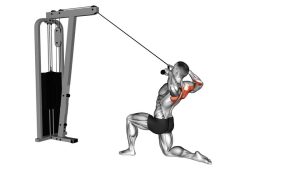
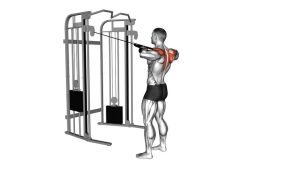
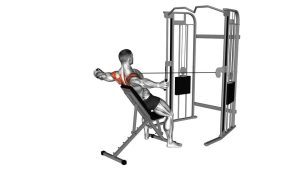
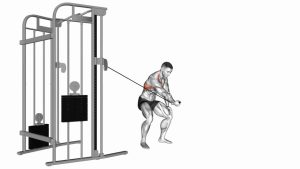
Cable Seated Rear Lateral Raise: Form, Rear Delt Tips, Sets & FAQ
Learn how to perform the Cable Seated Rear Lateral Raise with proper form to target the rear delts. Includes setup, step-by-step execution, sets by goal, mistakes to avoid, FAQs, and recommended equipment.
Cable Seated Rear Lateral Raise
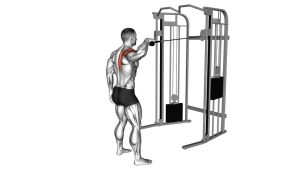
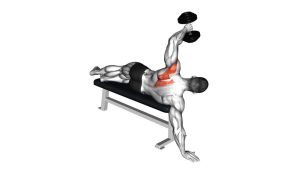
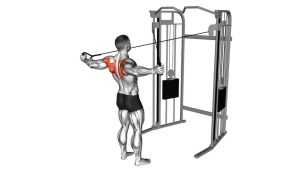
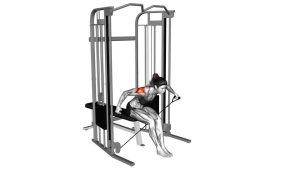
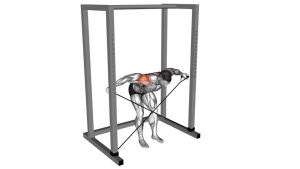
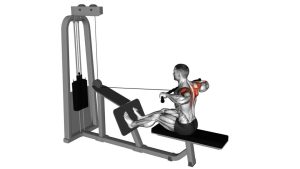
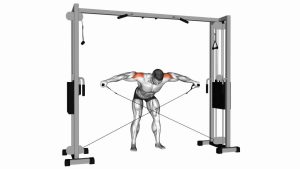
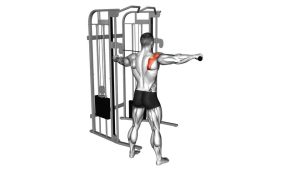
This exercise works best when the movement stays controlled, smooth, and driven by the shoulders rather than momentum. The goal is to open the arms out to the sides in a reverse-fly path while keeping a slight elbow bend and a stable torso. You should feel the rear delts doing most of the work, with mild assistance from the upper back. Keep the motion strict, avoid shrugging, and focus on lifting only as high as you can without turning it into a trap-dominant swing.
Quick Overview
| Body Part | Rear Shoulders |
|---|---|
| Primary Muscle | Posterior deltoids (rear delts) |
| Secondary Muscle | Rhomboids, middle traps, rotator cuff, upper back stabilizers |
| Equipment | Dual cable machine, bench, cable handles |
| Difficulty | Beginner to Intermediate |
Sets & Reps (By Goal)
- Muscle growth: 3–4 sets × 10–15 reps with controlled tempo and 45–75 sec rest
- Shoulder balance / accessory work: 2–4 sets × 12–20 reps with light-to-moderate load
- Technique practice: 2–3 sets × 10–12 reps with slow reps and strict form
- Upper-body finisher: 2–3 sets × 15–20 reps with short rest and constant tension
Progression rule: Add reps before adding weight. If the traps start taking over or the torso begins to swing, the load is too heavy for clean rear-delt work.
Setup / Starting Position
- Position the bench: Place a flat bench between the cable stacks so you can sit centered between both pulleys.
- Set the pulleys low: Attach single handles and set each cable at a low position for a smooth rear-delt pulling angle.
- Sit and hinge forward: Sit on the bench, plant your feet firmly, and lean your torso forward with a neutral spine.
- Grab the handles: Let your arms hang down under the shoulders with a soft bend in the elbows.
- Brace lightly: Keep the chest stable, neck neutral, and shoulders set without excessive shrugging.
Tip: A slight forward torso angle helps line up the rear delts with the cable path and reduces the urge to turn the rep into a row.
Execution (Step-by-Step)
- Start in the stretched position: Arms hang below you with tension on the cables and your torso locked in place.
- Raise the arms outward: Sweep the arms out to the sides in a reverse-fly arc while keeping the elbows slightly bent.
- Lead with the upper arms: Think about moving from the rear shoulders, not pulling with the hands.
- Pause near the top: Stop around shoulder height or when your rear delts are fully contracted without shrugging.
- Lower with control: Return slowly to the start and keep tension on the cables instead of letting the stack drop.
Pro Tips & Common Mistakes
- Keep a fixed elbow bend: Avoid turning the rep into an elbow-driven pull.
- Do not shrug the shoulders: Let the rear delts work instead of handing the rep off to the upper traps.
- Use a moderate range: Lift until the rear delts contract hard, not until your form breaks.
- Stay bent over and stable: Do not rock your torso to create momentum.
- Control the lowering phase: The eccentric is where a lot of rear-delt stimulus happens.
- Think “wide arc,” not “pull back”: That cue usually keeps the exercise closer to a fly and away from a row.
- Start lighter than expected: Rear-delt isolation usually needs less weight than most lifters assume.
FAQ
What muscle should I feel the most during the cable seated rear lateral raise?
You should mainly feel the rear delts working, with some support from the mid-back. If you mostly feel your traps or neck, the load is likely too heavy or your shoulders are shrugging.
Is this better than dumbbell rear delt raises?
It can be, especially if you want more consistent tension through the rep. Cables often make it easier to keep tension on the rear delts at both the bottom and the top of the movement.
How heavy should I go?
Use a weight that lets you stay strict and controlled. Rear delts respond well to clean reps, moderate loads, and higher-quality tension rather than heavy swinging.
Can beginners do this exercise?
Yes. Beginners can use this movement effectively as long as they focus on posture, cable setup, and smooth motion instead of trying to lift too much weight.
Where should I place this in my workout?
It works well on shoulder day, upper-body day, or pull day as a rear-delt accessory. Many lifters place it after pressing or rowing work to bring up rear-shoulder development.
Recommended Equipment
- Cable Machine Handles — useful for a comfortable grip and smoother cable control during rear-delt fly variations
- Adjustable Weight Bench — gives you a stable seat and works for many other cable and free-weight exercises
- Lifting Straps — helpful if grip fatigue limits your cable shoulder work before the target muscles do
- Resistance Bands Set — useful for rear-delt warm-ups, activation work, and extra shoulder-volume training
- Cable Attachment Extension Straps — can improve cable angle options and comfort depending on your machine setup
Tip: Choose accessories that improve setup quality and consistency rather than adding unnecessary complexity. The best rear-delt sessions usually come from precise execution, not extra-heavy loading.