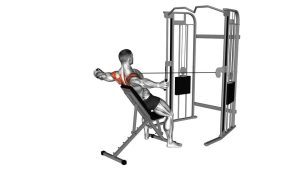
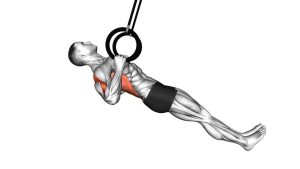
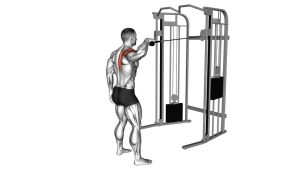
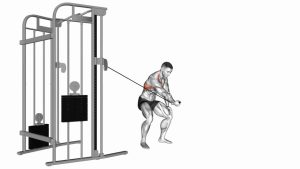
Cable Standing Rear Delt Row (with Rope): Form, Sets, Tips & FAQ
Learn how to perform the Cable Standing Rear Delt Row with Rope for stronger rear delts, better upper-back balance, and healthier shoulder mechanics. Includes setup, step-by-step form, sets by goal, common mistakes, FAQ, and recommended equipment.
Cable Standing Rear Delt Row (with Rope)
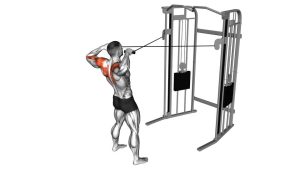
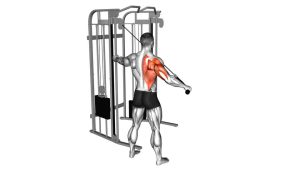
This movement works best when you treat it as a controlled rear-delt exercise, not a heavy back row. The goal is to move the elbows out and back while keeping the shoulders stable and the torso quiet. You should feel the back of the shoulders and upper back working together, with minimal momentum and no jerking through the cable.
Quick Overview
| Body Part | Rear Shoulders |
|---|---|
| Primary Muscle | Rear deltoids (posterior delts) |
| Secondary Muscle | Rhomboids, middle trapezius, teres minor, rotator cuff stabilizers |
| Equipment | Cable machine with rope attachment |
| Difficulty | Beginner to Intermediate |
Sets & Reps (By Goal)
- Muscle growth: 3–4 sets × 10–15 reps, 45–75 seconds rest
- Shoulder balance / posture work: 2–4 sets × 12–20 reps, smooth controlled tempo
- Warm-up / activation: 2–3 sets × 12–15 reps with light weight
- Strength-focused accessory: 3–4 sets × 8–10 reps, controlled but challenging load
Progression rule: Increase reps first, then add a small amount of weight once you can keep the elbows high, the torso steady, and the rear delts doing the work from start to finish.
Setup / Starting Position
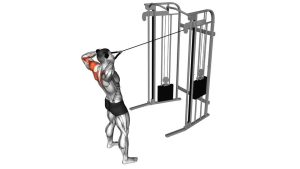
- Attach the rope: Set a rope handle on a cable pulley around upper-chest height.
- Take your stance: Stand facing the machine with feet about shoulder-width apart.
- Grip the rope neutrally: Hold each end of the rope with palms facing each other.
- Create light tension: Step back until the cable is taut and your arms are extended in front of you.
- Brace your body: Keep the chest up, core engaged, and shoulders down without leaning excessively.
- Set the shoulder path: Think about leading the rep with the elbows, not curling the hands toward the body.
Tip: A slight athletic bend in the knees can help you stay stable and avoid using momentum.
Execution (Step-by-Step)
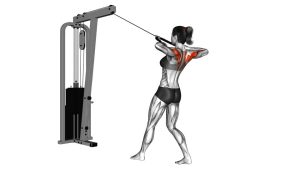
- Start long: Begin with arms extended, chest tall, and shoulders under control.
- Pull with the elbows: Drive your elbows out and back while pulling the rope toward the upper chest or face level.
- Let the rope separate: As the handle comes in, allow the rope ends to split naturally so the shoulders can externally rotate.
- Squeeze the rear delts: Pause briefly when the elbows are back and wide, feeling the back of the shoulders contract.
- Return slowly: Extend the arms forward under control without letting the weight stack slam down.
- Repeat smoothly: Maintain the same line of pull on every rep without shrugging or swinging.
Pro Tips & Common Mistakes
- Lead with the elbows: Think “elbows out and back” instead of “pull with the hands.”
- Do not go too heavy: Excessive load usually turns this into a sloppy upper-back row.
- Keep the chest proud: A lifted chest helps you avoid rounding forward as you pull.
- Do not shrug: Let the rear delts and mid-back work without your upper traps taking over.
- Control the eccentric: The lowering phase is where a lot of shoulder-building value comes from.
- Use a modest range: Pull until you get a hard contraction, but do not jam the shoulders forward on the return.
- Avoid torso swinging: Momentum reduces tension on the target muscles and makes form inconsistent.
- Pair it smartly: This fits well after overhead presses, lateral raises, or other rear-delt isolation work.
FAQ
Where should I feel the cable standing rear delt row?
You should mainly feel it in the rear delts, with support from the rhomboids and middle traps. If you mostly feel your biceps or lower lats, adjust the elbow path and reduce the load.
Is this exercise for shoulders or back?
It is mainly a rear shoulder exercise, but it also trains the upper back. The higher elbow position is what makes it more rear-delt dominant than a standard row.
Should I pull to my chest or my face?
Either can work, as long as your elbows stay high and wide. Most lifters do best pulling somewhere between the upper chest and face level.
Can beginners use this movement?
Yes. Beginners can benefit from it as long as they use a manageable weight and focus on control, alignment, and consistent elbow tracking.
How is this different from a face pull?
A face pull usually emphasizes external rotation and upper-back control a bit more, while this variation often feels more like a rear-delt row with a strong squeeze through the back of the shoulders.
Recommended Equipment
- Tricep Rope Cable Attachment — the key attachment for this exercise and similar cable rear-delt movements
- Extra-Long Rope Attachment — useful if you want more freedom to separate the rope and increase range of motion
- Resistance Bands Set — great for warm-ups, rear-delt activation, and travel-friendly shoulder work
- Home Gym Cable Pulley System — a practical option for training rear delts at home if you do not have a full cable machine
- Wrist Wraps — optional support if heavy cable work irritates your wrists during pulling exercises
Tip: Prioritize a smooth cable setup and a comfortable rope handle first. Better equipment feel usually leads to better shoulder mechanics and cleaner reps.