Lying Around the World : Form, Benefits, Sets & Mobility Tips
Learn how to perform the Lying Around the World shoulder exercise to improve mobility, control, and shoulder comfort. Includes setup, step-by-step form, sets by goal, common mistakes, FAQs, and recommended equipment.
Lying Around the World (Shoulders)
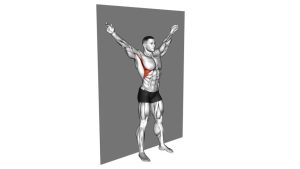
This exercise works best when you stay long through the arms, keep the ribcage quiet, and let the shoulders move without shrugging. Each rep should feel smooth and controlled, not forced. You may feel a light stretch across the chest and front of the shoulders, along with gentle muscular work around the delts, upper back, and rotator cuff. If your lower back arches hard or your shoulders pinch, reduce the circle size and move more slowly.
Quick Overview
| Body Part | Shoulders |
|---|---|
| Primary Muscle | Deltoids (anterior and lateral emphasis during the circular path) |
| Secondary Muscle | Rotator cuff, serratus anterior, trapezius, rhomboids, upper chest |
| Equipment | None required; optional exercise mat or very light dumbbells/plates for progression |
| Difficulty | Beginner (mobility-focused, but requires patience and control) |
Sets & Reps (By Goal)
- Shoulder warm-up: 1–2 sets × 6–10 slow circles per direction
- Mobility improvement: 2–3 sets × 8–12 controlled reps per direction
- Recovery / movement quality: 2–3 sets × 5–8 very slow reps with pauses in tight spots
- Light endurance / control: 2–4 sets × 10–15 reps using bodyweight or very light load
Progression rule: Increase control, smoothness, and range before adding load. If you later use light dumbbells or plates, keep the weight minimal and preserve the same calm tempo.
Setup / Starting Position
- Lie on your back: Position yourself flat on the floor or on an exercise mat with your legs relaxed.
- Set your torso: Keep the ribcage down and core lightly braced so the lower back does not over-arch.
- Start with long arms: Extend your arms overhead or slightly outward with elbows mostly straight and shoulders relaxed.
- Choose your range: Begin with a circle size you can control without pain, pinching, or shrugging.
- Stay neutral: Keep your head relaxed on the floor and avoid jutting the chin upward.
Tip: If floor contact feels uncomfortable, use a mat and start with slightly smaller circles until your mobility improves.
Execution (Step-by-Step)
- Begin overhead: Start with the arms extended and the shoulders relaxed, keeping the chest quiet.
- Sweep outward: Move the arms slowly out to the sides in a large circular arc.
- Continue toward the hips: Let the arms travel down along the sides of the body while keeping the movement smooth and controlled.
- Complete the circle: Continue the arc back up toward the overhead position without rushing.
- Repeat evenly: Perform all reps in one direction, then switch and repeat in the opposite direction if desired.
Pro Tips & Common Mistakes
- Move slowly: This drill is about control, not momentum.
- Keep the circle honest: Use the biggest pain-free arc you can manage without losing posture.
- Don’t shrug: Let the shoulder blades glide naturally, but avoid lifting the shoulders toward the ears.
- Control the ribs: Do not turn the movement into a chest flare or lower-back arch.
- Use both directions: Circling clockwise and counterclockwise can expose different stiffness patterns.
- Progress carefully: Only add very light resistance once bodyweight reps feel clean and easy.
FAQ
What is the main benefit of Lying Around the World?
Its biggest benefit is improved shoulder mobility with better control. It teaches the shoulders to move through a large circular path while the torso stays stable.
Should I use weight for this exercise?
Most people should start with bodyweight only. Once the movement feels smooth and pain-free, very light dumbbells or plates can be added for a gentle progression.
Where should I feel it?
You may feel light muscular work in the shoulders and upper back, plus a mild stretch across the chest and front delts. You should not feel sharp pinching in the shoulder joint.
Is this a strength exercise or a mobility drill?
It is primarily a mobility and control drill. It can build some muscular endurance, but its main value is improving movement quality and shoulder comfort.
Can beginners do this exercise?
Yes. It is beginner-friendly as long as the range stays comfortable and the tempo stays slow. Smaller circles are perfectly acceptable when learning.
Recommended Equipment (Optional)
- Non-Slip Exercise Yoga Mat — adds comfort for floor-based shoulder mobility work
- Resistance Band Set — useful for pairing with shoulder activation and warm-up drills
- Light Neoprene Dumbbell Set — a simple progression option once bodyweight circles are easy to control
- Lacrosse Massage Ball — helpful for self-release work around the upper back, chest, and rear shoulder area
- Trigger Point Massage Ball Set — useful for targeting tight knots and improving tissue comfort before mobility work
A mat, light dumbbells, and basic recovery tools are more than enough for this movement. Keep the setup simple and prioritize quality reps over extra equipment.