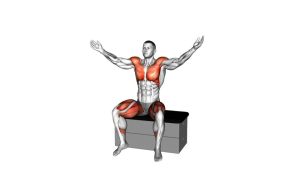
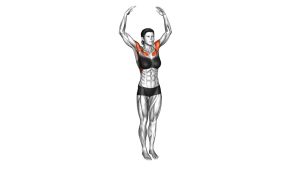
Arm Circles: Proper Form, Shoulder Benefits, Sets, Tips & FAQ
Learn how to do Arm Circles with proper form to improve shoulder mobility, warm up the delts, and build better upper-body control. Includes setup, execution steps, sets by goal, mistakes, FAQs, and recommended equipment.
Arm Circles
Arm Circles work best as a shoulder warm-up, movement prep drill, or a light endurance exercise for the upper body. Even though the movement looks easy, holding the arms at shoulder height while maintaining controlled circles can quickly fatigue the delts. The goal is to stay tall, keep the circles consistent, and avoid shrugging or swinging.
Quick Overview
| Body Part | Shoulders |
|---|---|
| Primary Muscle | Deltoids (especially front and side delts) |
| Secondary Muscle | Rotator cuff, upper traps, serratus anterior, upper back stabilizers |
| Equipment | None |
| Difficulty | Beginner |
Sets & Reps (By Goal)
- Warm-up before upper-body training: 1–3 sets × 20–30 seconds forward + 20–30 seconds backward
- Shoulder mobility practice: 2–3 sets × 15–25 circles each direction
- Muscular endurance / burn-out: 2–4 sets × 30–45 seconds each direction
- Beginner movement prep: 1–2 sets × 10–15 controlled circles each direction
Progression rule: Start with smaller circles and longer control. Progress by increasing time, circle size slightly, or adding very light resistance only after you can keep perfect shoulder position.
Setup / Starting Position
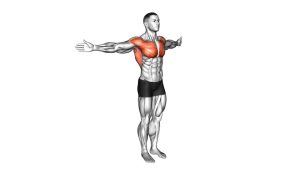
- Stand tall: Place your feet about hip-width to shoulder-width apart and keep your spine neutral.
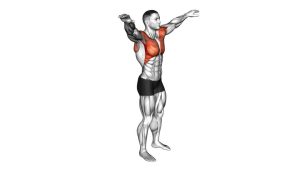
- Raise the arms: Extend both arms straight out to the sides until they are roughly parallel to the floor.
- Set the shoulders: Keep the shoulders down and relaxed instead of shrugging them toward the ears.
- Brace lightly: Engage the core just enough to keep the torso still and prevent leaning.
- Keep the arms long: Elbows can stay straight or softly unlocked, but they should not bend significantly.
Tip: Think of reaching outward through your fingertips to keep tension through the entire arm.
Execution (Step-by-Step)
- Start with small circles: Move both arms in small circular motions while keeping them at shoulder height.
- Rotate from the shoulders: The motion should come from the shoulder joints, not from bending the elbows or flicking the wrists.
- Stay controlled: Keep the tempo smooth and avoid using momentum or swinging the torso.
- Maintain posture: Keep your chest up, ribs stacked, and neck relaxed as the circles continue.
- Reverse direction: After completing the desired number of forward circles, switch to backward circles.
- Finish cleanly: Lower the arms only after the set is done, without letting posture collapse.
Pro Tips & Common Mistakes
- Keep the circles small first: Small circles are easier to control and better for warming up the joint.
- Don’t rush: Fast circles usually reduce shoulder control and turn the movement into momentum.
- Keep arms level: Don’t let them drift downward as fatigue builds.
- Avoid shrugging: The traps should not take over the movement.
- Stay tall: Don’t arch the lower back or lean your torso to compensate.
- Use both directions: Forward and backward circles help create more balanced shoulder prep.
- Add resistance carefully: If using very light dumbbells or bands, keep the motion strict and controlled.
FAQ
What muscles do Arm Circles work?
Arm Circles primarily target the deltoids, especially the front and side heads, while the rotator cuff and upper-back stabilizers assist with shoulder control.
Are Arm Circles good for shoulder warm-ups?
Yes. Arm Circles are commonly used as a warm-up because they increase blood flow, promote shoulder mobility, and prepare the upper body for pressing, lifting, or sports movement.
Should I do big or small circles?
Start with small circles to build control and reduce joint stress. You can gradually make them slightly larger once your shoulders feel warm and stable.
Can beginners do Arm Circles every day?
In many cases, yes. Because the exercise is low impact and uses little to no load, it can be used frequently as part of a warm-up or mobility routine as long as it remains pain-free.
Should I use weights for Arm Circles?
Most people should start with bodyweight only. If you later add resistance, use very light dumbbells or light bands and keep the movement controlled.
Recommended Equipment (Optional)
- Lightweight Dumbbells — useful for advanced arm circle variations when bodyweight becomes too easy
- Shoulder Resistance Bands — great for pairing with shoulder activation, mobility, and warm-up drills
- Figure-8 Resistance Bands — convenient for light upper-body resistance and shoulder prep work
- Non-Slip Exercise Mat — provides better footing and comfort for home warm-up routines
- Warm-Up Bands — useful for combining Arm Circles with dynamic upper-body prep exercises
Tip: Arm Circles are effective without equipment, so tools should support the routine rather than replace proper movement quality.