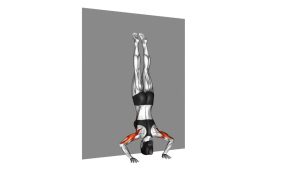
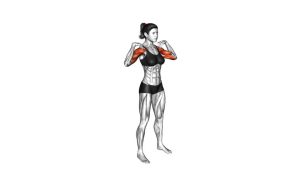
Bodyweight Standing Military Press: Form, Muscles Worked, Sets, Tips & FAQ
Learn how to do the Bodyweight Standing Military Press with proper form. Discover muscles worked, setup, step-by-step execution, sets and reps by goal, common mistakes, FAQs, and recommended equipment.
Bodyweight Standing Military Press
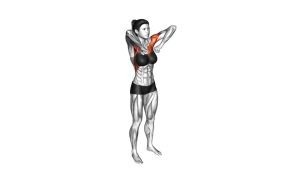
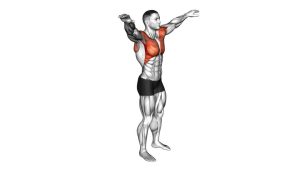
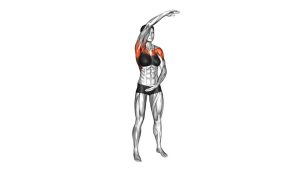
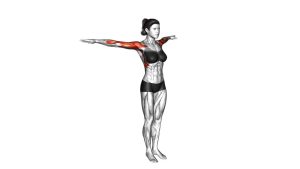
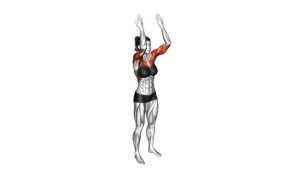
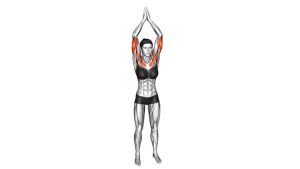
This exercise is best used as a warm-up, movement prep drill, or beginner-friendly shoulder exercise. Because there is no external resistance, the focus shifts to posture, tempo, and shoulder coordination rather than max strength. When performed correctly, you should feel the front and side delts working while the torso stays tall and stable.
Quick Overview
| Body Part | Shoulders |
|---|---|
| Primary Muscle | Anterior deltoid, lateral deltoid |
| Secondary Muscle | Triceps, upper chest, upper traps, core stabilizers |
| Equipment | None |
| Difficulty | Beginner |
Sets & Reps (By Goal)
- Warm-up / activation: 2–3 sets × 10–15 reps with slow, smooth control
- Movement practice: 3–4 sets × 8–12 reps focusing on posture and arm path
- Shoulder endurance: 2–4 sets × 15–20 reps with steady tempo
- Beginner upper-body routine: 2–3 sets × 10–15 reps before loaded pressing work
Progression rule: First improve control, range, and tempo. Then increase reps, pause time overhead, or pair it with light resistance bands for added challenge.
Setup / Starting Position
- Stand tall: Place your feet about shoulder-width apart and keep your weight balanced evenly.
- Brace the core: Tighten your abs lightly and keep the ribs down to avoid lower-back arching.
- Set the arms: Raise your arms to around shoulder height with elbows bent about 90 degrees, like the start of an overhead press.
- Align the wrists and elbows: Keep the forearms roughly vertical and the elbows slightly in front of the body rather than flaring too far out.
- Keep the chest proud: Maintain an upright torso, neutral head position, and relaxed neck.
Tip: Think “stacked posture” before you press—head over ribs, ribs over hips, and no backward lean.
Execution (Step-by-Step)
- Start in the press position: Elbows bent, hands near head level, shoulders engaged, torso upright.
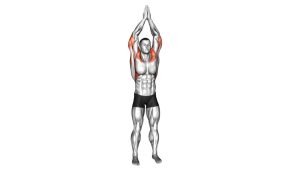
- Press upward: Extend your elbows and drive your hands overhead in a controlled vertical path.
- Reach the top smoothly: Bring the arms overhead without aggressively locking out or shrugging excessively.
- Pause briefly: Hold the top position for a moment while keeping the core braced and posture stable.
- Lower with control: Bend the elbows and return to the starting position slowly, without letting the arms drop.
- Repeat evenly: Perform each rep with the same tempo and shoulder path.
Pro Tips & Common Mistakes
- Keep the spine neutral: Do not lean back to fake overhead range.
- Move through a vertical path: Press up instead of letting the hands drift too far forward.
- Use a controlled tempo: Smooth reps train better mechanics than fast, sloppy ones.
- Do not shrug too early: Let the delts do the main work while keeping the neck relaxed.
- Keep the elbows under control: Excessive flaring can reduce pressing efficiency and shoulder comfort.
- Brace the abs: A strong core helps the shoulders press from a stable base.
- Do not rush the lowering phase: Controlled lowering improves shoulder awareness and muscular tension.
FAQ
What muscles does the Bodyweight Standing Military Press work?
It mainly targets the front delts and side delts. The triceps, upper chest, and core also assist during the press.
Is this exercise good for beginners?
Yes. It is an excellent beginner-friendly drill for learning overhead pressing mechanics without external load. It can also be useful before heavier shoulder training.
Can this build muscle without weights?
By itself, it is better for activation, movement practice, and endurance than for maximum muscle growth. For hypertrophy, combine it with added resistance over time.
Should I lock my elbows fully at the top?
You can reach full extension, but avoid snapping the elbows hard into lockout. Focus on a smooth top position with shoulder control.
What if I feel this more in my neck than my shoulders?
That usually means you are shrugging too much or losing posture. Keep the neck relaxed, ribs down, and movement controlled. Reducing range can also help.
Recommended Equipment
- Resistance Bands Set — useful for progressing from pure bodyweight pressing to light resisted shoulder work
- Light Dumbbells Pair — ideal for transitioning into loaded shoulder presses and raises
- Exercise Mat — provides a comfortable training surface for warm-ups and full upper-body routines
- Wall Mirror for Home Gym — helps you monitor pressing path, posture, and rib position during reps
- Foam Roller — useful for thoracic mobility work that can improve overhead movement quality
Tip: This exercise becomes more effective when paired with shoulder mobility drills and progressive pressing variations.