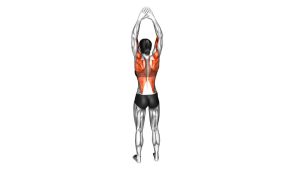
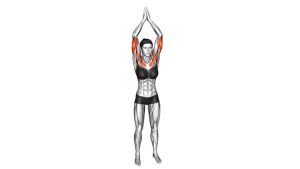
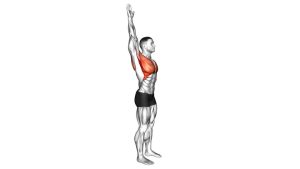
Standing Swimmer: Proper Form, Shoulder Benefits, Sets & Common Mistakes
Learn how to do the Standing Swimmer with proper form to improve shoulder mobility, activation, and control. Includes setup, execution steps, sets by goal, common mistakes, FAQs, and recommended equipment.
Standing Swimmer
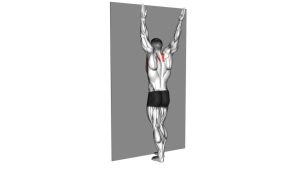
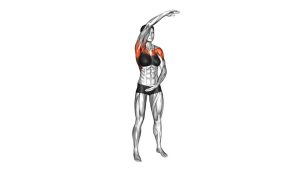
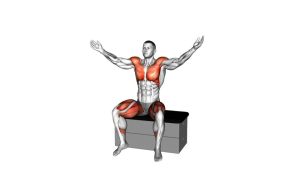
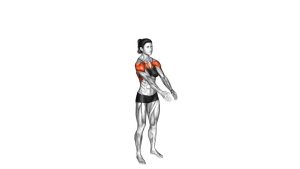
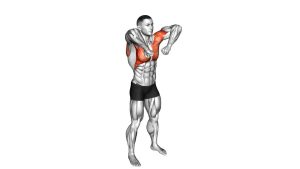
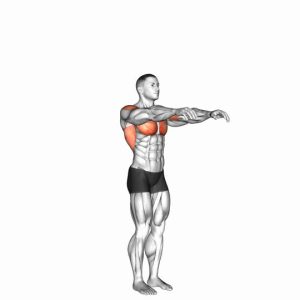
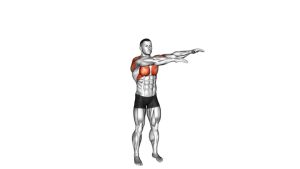
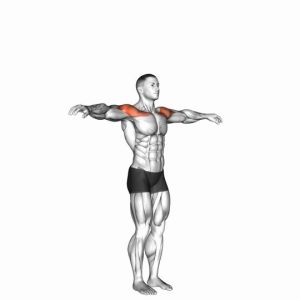
This exercise is ideal before upper-body workouts, mobility sessions, or posture-focused training. The goal is to move the arms in a controlled “swimming” pattern while keeping the torso stable, the ribs down, and the shoulders smooth through the full arc. You should feel the shoulders working, along with light upper-chest and scapular-muscle involvement, but the motion should stay fluid and pain-free.
Quick Overview
| Body Part | Shoulders |
|---|---|
| Primary Muscle | Deltoids (anterior and lateral fibers) |
| Secondary Muscle | Rotator cuff, serratus anterior, upper chest, upper traps |
| Equipment | None |
| Difficulty | Beginner (great for warm-ups, mobility work, and movement prep) |
Sets & Reps (By Goal)
- Warm-up before upper-body training: 2–3 sets × 8–12 reps per arm
- Shoulder mobility work: 2–4 sets × 10–15 reps per arm with slow, smooth tempo
- Activation before pressing or overhead work: 2–3 sets × 6–10 controlled reps per arm
- Movement quality / recovery sessions: 1–3 sets × 8–12 easy reps per arm
Progression rule: Increase control, range, or pause quality before increasing volume. This drill should stay smooth and technical, not rushed or forced.
Setup / Starting Position
- Stand tall: Place your feet about hip-width to shoulder-width apart.
- Brace lightly: Keep your ribs down, core engaged, and glutes lightly active.
- Relax the shoulders: Avoid shrugging before the movement even starts.
- Start with one arm ready to move: Keep the elbow mostly straight and the wrist neutral.
- Keep posture stacked: Head neutral, chest lifted naturally, and lower back not over-arched.
Tip: If you struggle with control, perform the motion slower and use a mirror to keep the shoulders level.
Execution (Step-by-Step)
- Raise the arm forward and upward: Begin lifting the arm in front of the body toward an overhead position.
- Continue into a smooth circular path: Guide the arm through a controlled swimmer-like arc while keeping the torso still.
- Reach overhead without shrugging: Let the shoulder rotate naturally, but do not jam the arm upward.
- Move through the back side of the circle: Bring the arm down and around with control instead of dropping it.
- Finish and repeat: Return to the start position smoothly, then continue for all reps before switching sides.
Pro Tips & Common Mistakes
- Move slowly: The value comes from control, not speed.
- Keep the ribs down: Don’t fake overhead range by arching your lower back.
- Let the shoulder rotate naturally: Don’t force a stiff path if your mobility is limited.
- Avoid shrugging: Keep the neck relaxed and shoulders away from the ears.
- Don’t bend the elbow too much: A long arm increases coordination and mobility demand.
- Use pain-free range: Smooth partial reps are better than forcing a full circle.
- Pair it well: This drill works great before presses, raises, rows, or overhead mobility work.
FAQ
What is the Standing Swimmer good for?
It helps improve shoulder mobility, movement control, and warm-up readiness for upper-body sessions. It is especially useful before overhead work, pressing, and posture-focused training.
Is the Standing Swimmer a strength exercise?
Not primarily. It is better classified as a mobility and activation drill. It can create light muscular fatigue, but its main purpose is improving movement quality and shoulder preparation.
Should I do both arms at the same time?
You can, but many people learn the pattern better one arm at a time. Single-arm reps make it easier to focus on shoulder path, posture, and control.
How big should the arm circle be?
Only as big as you can control without pain, shrugging, or spinal compensation. A smaller clean circle is better than a large sloppy one.
Can beginners use this as a daily shoulder drill?
Yes. When done with controlled range and low fatigue, it works well as part of a daily warm-up or mobility routine.
Recommended Equipment (Optional)
- Shoulder Resistance Bands — useful for adding light activation work before or after Standing Swimmers
- Therapy Bands — ideal for rotator cuff prep, shoulder rehab-style drills, and gentle resistance work
- Stretching Strap — helpful for improving shoulder range of motion and flexibility between training sessions
- Mobility Stick / Stretching Bar — great for pass-throughs, shoulder dislocates, and general mobility practice
- Peanut Massage Ball — useful for soft-tissue work around the upper back, rear shoulders, and thoracic area
Tip: Use equipment to support shoulder prep and recovery, not to force painful range.