Sky Punch: Proper Form, Sets, Benefits, Tips & FAQ
Learn how to do the Sky Punch with proper form for shoulder activation, endurance, and warm-up prep. Includes setup, step-by-step execution, sets by goal, mistakes to avoid, FAQs, and recommended equipment.
Sky Punch
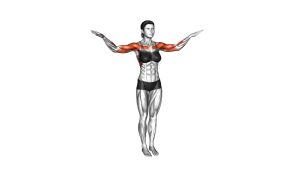
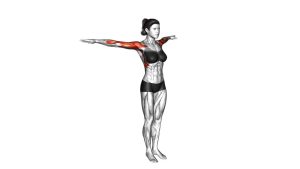
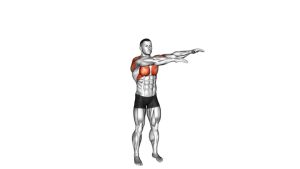
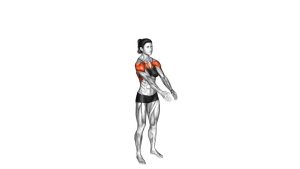
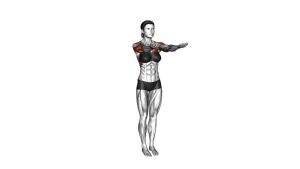
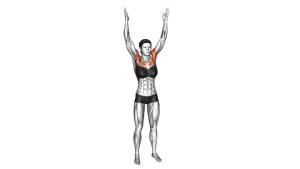
This exercise works best as a shoulder activation, movement prep, or light conditioning drill. It is not about heavy loading. Instead, the focus is on clean overhead motion, quick but controlled rhythm, and keeping the arms moving without leaning back or losing posture. You should feel the shoulders and arms working, with the core helping stabilize the body.
Quick Overview
| Body Part | Shoulders |
|---|---|
| Primary Muscle | Anterior deltoids |
| Secondary Muscle | Lateral deltoids, triceps, upper chest, core stabilizers |
| Equipment | None (optional: light dumbbells or light resistance bands) |
| Difficulty | Beginner |
Sets & Reps (By Goal)
- Warm-up / activation: 2–3 sets × 20–30 alternating punches
- Shoulder endurance: 2–4 sets × 30–45 seconds
- Light conditioning: 3–4 sets × 40–60 seconds
- Technique practice: 2–3 sets × 12–20 controlled reps per arm
Progression rule: First increase time or total reps while keeping posture clean. After that, you can add very light resistance if the overhead pattern stays smooth.
Setup / Starting Position
- Stand tall: Place your feet about hip- to shoulder-width apart.
- Brace lightly: Tighten the core just enough to keep the ribs from flaring.
- Relax the shoulders: Let the arms hang naturally at your sides with a slight bend in the elbows.
- Set your posture: Keep the chest neutral, head tall, and eyes forward.
- Prepare the rhythm: Think of alternating your arms smoothly, one up as the other returns.
Tip: If you tend to arch the lower back overhead, keep the glutes lightly engaged and the ribs stacked over the hips.
Execution (Step-by-Step)
- Start the first punch: Drive one arm upward in a straight or slightly forward overhead path.
- Reach fully: Extend through the arm without forcefully jamming the elbow or shrugging hard.
- Return quickly: Bring that arm back down under control as the other arm begins its upward punch.
- Alternate continuously: Keep switching arms in a smooth, athletic rhythm.
- Stay tall: Avoid leaning back, twisting excessively, or bouncing through the torso.
- Finish clean: Stop before form breaks down or shoulder motion becomes sloppy.
Pro Tips & Common Mistakes
- Punch up, not out: Keep the motion primarily vertical instead of turning it into a front raise.
- Don’t overarch: Leaning back shifts the work away from the shoulders.
- Use a steady rhythm: Fast is fine, but sloppy speed defeats the purpose.
- Keep the neck relaxed: Avoid excessive shrugging and trap dominance.
- Stay light: This drill is usually best with bodyweight or very light resistance.
- Breathe naturally: Don’t hold your breath while alternating reps.
FAQ
What is the Sky Punch good for?
The Sky Punch is useful for shoulder warm-ups, overhead coordination, light conditioning, and improving arm rhythm before training or sports.
Where should I feel this exercise?
You should mainly feel it in the front of the shoulders, with some assistance from the side delts, triceps, and upper chest. Your core should help keep the body steady.
Can beginners do Sky Punches?
Yes. It is beginner-friendly when done without resistance and with a comfortable range of motion. Start slowly and focus on posture before increasing speed.
Should I use weights for this exercise?
Usually, bodyweight is enough for warm-up and endurance work. If you add resistance, keep it very light so the movement stays fast, smooth, and shoulder-friendly.
Is this a muscle-building shoulder exercise?
Not primarily. It is better suited for activation, endurance, and movement prep than for maximal hypertrophy. For muscle growth, pair it with presses, raises, and other progressive strength exercises.
Recommended Equipment (Optional)
- Resistance Bands Set — useful for shoulder warm-ups, activation drills, and light overhead resistance
- Figure-8 Shoulder Bands — convenient for rhythmic arm-drive and shoulder endurance work
- Light Neoprene Dumbbells — a good option if you want to progress from bodyweight to light loaded punches
- Foam Roller — helpful for upper-back mobility before shoulder warm-up work
- Light Posture Corrector — optional awareness tool for reducing rounded-shoulder posture outside training
Tip: Keep any added resistance light. The goal is still smooth arm speed, clean posture, and shoulder comfort.