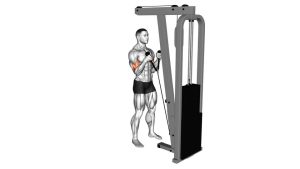
Cable Curl with Multipurpose V-Bar: Form, Forearm Focus, Sets & FAQ
Learn how to perform the Cable Curl with Multipurpose V-Bar for stronger forearms, brachialis, and elbow flexors. Includes setup, form tips, sets by goal, common mistakes, FAQs, and recommended equipment.
Cable Curl with Multipurpose V-Bar
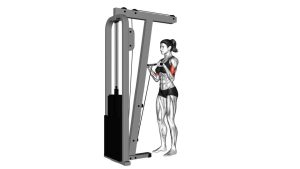
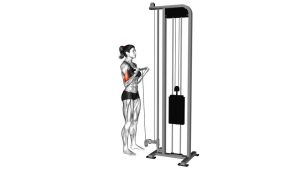
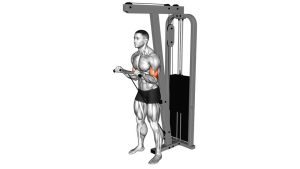
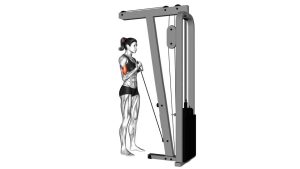
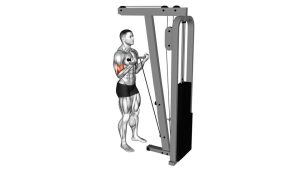
This exercise works best when the elbows stay close to the torso and the wrists remain neutral from start to finish. The cable provides steady resistance through the full range of motion, making it easier to maintain tension than with many free-weight curl variations. If you perform it correctly, you should feel the work primarily through the upper forearms and front of the upper arms, not in the shoulders or lower back.
Quick Overview
| Body Part | Forearms |
|---|---|
| Primary Muscle | Brachioradialis |
| Secondary Muscle | Brachialis, biceps brachii, forearm flexors |
| Equipment | Cable machine with low pulley and multipurpose V-bar attachment |
| Difficulty | Beginner to Intermediate |
Sets & Reps (By Goal)
- Muscle growth: 3–4 sets × 8–12 reps with controlled tempo and 60–90 seconds rest
- Forearm and grip-focused accessory work: 2–4 sets × 10–15 reps with strict form and 45–75 seconds rest
- Strength emphasis: 3–5 sets × 6–8 reps using heavier weight without body swing
- Finisher / pump work: 2–3 sets × 12–20 reps with smooth reps and short rest periods
Progression tip: Add reps first, then increase load in small steps. Keep the elbows quiet and the wrists neutral before chasing heavier weight.
Setup / Starting Position
- Attach the handle: Connect a multipurpose V-bar to the low pulley of a cable machine.
- Take a neutral grip: Stand facing the machine and grasp the angled handles so your palms face each other.
- Set your posture: Stand tall with your chest up, ribs stacked, and shoulders relaxed down and back.
- Position the elbows: Keep your elbows close to your sides and slightly in front of the torso rather than drifting backward.
- Start under tension: Let the arms extend fully without losing cable tension or rounding your shoulders forward.
Tip: Step back just enough to keep the cable loaded at the bottom. That helps you avoid a dead zone before the curl begins.
Execution (Step-by-Step)
- Brace and stay tall: Tighten your midsection lightly and keep your torso still.
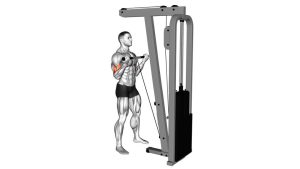
- Curl the handle upward: Flex at the elbows and bring the V-bar toward your upper abdomen or lower chest.
- Keep the grip neutral: Do not twist the wrists or bend them back to create extra leverage.
- Pause at the top: Squeeze the arms briefly when the forearms reach full contraction.
- Lower with control: Return the handle slowly until the arms are fully extended again without letting the stack yank you down.
- Repeat smoothly: Maintain the same elbow path and tempo on every rep.
Pro Tips & Common Mistakes
- Lead with the elbows, not the torso: The body should stay quiet while the elbows do the work.
- Use a neutral wrist: Let the brachialis and brachioradialis handle the load instead of cheating with wrist movement.
- Control the eccentric: A slower lowering phase usually improves both tension and technique.
- Do not lean back: Excessive torso swing turns the curl into a momentum rep.
- Do not jam the shoulders forward: Keep the chest open and shoulder blades stable throughout.
- Use full range: Get close to full extension at the bottom and a full squeeze at the top without losing posture.
- Match the weight to the goal: Heavier is not always better if it changes the elbow path or tempo.
FAQ
What does the Cable Curl with Multipurpose V-Bar mainly target?
This variation strongly emphasizes the brachialis and brachioradialis, while the biceps still assist. The neutral grip makes it especially useful for building forearm-influenced arm thickness.
Is this better than a straight-bar cable curl for forearms?
For many lifters, yes. The neutral grip often feels more natural on the wrists and can place more emphasis on the brachioradialis than a fully supinated curl.
Where should I feel this exercise?
You should usually feel it through the upper forearms and front of the upper arms. If you mostly feel your shoulders or lower back, your form likely needs adjustment.
Should I go heavy on V-bar cable curls?
You can load them moderately heavy, but only if you can keep strict elbow control and avoid leaning back. Clean reps beat sloppy reps here.
Can beginners use this exercise?
Yes. It is beginner-friendly because the cable provides a smooth resistance curve, and the neutral grip is often comfortable for people who dislike fully supinated curls.
Recommended Equipment
- Multipurpose V-Bar Cable Attachment — the main handle used for this exercise; ideal for neutral-grip curls, pushdowns, and other cable movements
- Heavy-Duty Cable Machine Handles — useful for adding more variation to your arm and upper-body cable training
- Wrist Wraps — helpful if you want extra wrist stability during heavier curl sets
- Cable Attachment Set — a practical bundle if you want multiple handles for curls, pushdowns, rows, and extensions
- Wrist / Forearm Compression Support — optional support for lifters who want light compression around the wrist and lower forearm
Tip: Choose attachments with comfortable grip texture, solid weld quality, and smooth cable-machine compatibility rather than buying based on appearance alone.