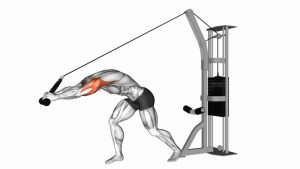
Cable Triceps Kickback: Proper Form, Sets, Tips & FAQ
Learn the Cable Triceps Kickback with proper form, setup, execution steps, sets by goal, common mistakes, FAQs, and recommended equipment for stronger, more defined triceps.
Cable Triceps Kickback
This exercise is best performed with strict technique, moderate load, and smooth tempo. You should feel the triceps doing the work from the start of the rep to full extension. If your elbow drifts, your torso twists, or you need momentum to move the handle, the weight is probably too heavy. Clean reps will build better triceps size, control, and mind-muscle connection.
Quick Overview
| Body Part | Triceps |
|---|---|
| Primary Muscle | Triceps brachii |
| Secondary Muscle | Rear delts, forearms, core stabilizers |
| Equipment | Cable machine with single handle |
| Difficulty | Beginner to Intermediate |
Sets & Reps (By Goal)
- Muscle growth: 3–4 sets × 10–15 reps per arm with 45–75 seconds rest
- Muscle endurance / pump: 2–4 sets × 15–20 reps per arm with 30–45 seconds rest
- Technique focus: 2–3 sets × 8–12 reps per arm using a lighter load and slower tempo
- Finisher after pressing work: 2–3 sets × 12–20 reps per arm with strict form
Progression rule: Increase reps first, then add a small amount of weight only when you can keep the upper arm fixed and fully extend each rep without swinging.
Setup / Starting Position
- Attach a single handle to a low cable pulley.
- Stand facing the machine and take the handle in one hand.
- Step back into a split stance or staggered stance for balance.
- Hinge forward slightly at the hips while keeping your chest up and spine neutral.
- Tuck the working elbow close to your torso and bend it to about 90 degrees.
- Set the upper arm in place so it stays stable throughout the rep.
Tip: A slight forward lean usually makes it easier to line up the cable with your arm path and keep tension on the triceps.
Execution (Step-by-Step)
- Brace your core: Lock in your stance and keep your torso steady.
- Start from the bent-elbow position: Keep the elbow tucked and the upper arm still.
- Extend the forearm backward: Press the handle behind you until the arm is nearly straight.
- Squeeze the triceps at lockout: Pause briefly without shrugging or rotating the shoulder.
- Return under control: Bend the elbow slowly back to the starting position.
- Repeat smoothly: Keep tension on the triceps and avoid letting the cable yank your arm forward.
Pro Tips & Common Mistakes
- Keep the upper arm still: Only the forearm should move during the rep.
- Do not swing the handle: Momentum reduces triceps tension and makes the exercise less effective.
- Use full extension: Finish the rep by straightening the arm and squeezing the triceps hard.
- Do not overload the cable: This movement works best with control, not excessive weight.
- Keep your wrist neutral: Avoid bending or curling the wrist to cheat the rep.
- Stay square through the torso: Twisting your body shifts tension away from the triceps.
- Control the negative: The return phase helps build tension and improves technique.
FAQ
What muscles does the Cable Triceps Kickback work?
The exercise primarily targets the triceps brachii. It also involves the rear delts, forearms, and core muscles for stabilization during the bent-over position.
Is the Cable Triceps Kickback better than the dumbbell version?
The cable version often provides more constant tension through the full range of motion, especially near lockout. Many lifters prefer it for a stronger contraction and smoother resistance.
Should I use heavy weight for cable kickbacks?
Usually no. This is an isolation exercise, so moderate or light-to-moderate weight with strict form is usually more effective than going heavy and using momentum.
Can beginners do Cable Triceps Kickbacks?
Yes. Beginners can use this exercise to learn triceps isolation, as long as they use a manageable weight and focus on keeping the elbow fixed.
Where should I feel this exercise?
You should mainly feel it in the back of the upper arm. At full extension, there should be a clear triceps squeeze without shoulder discomfort or lower-back strain.
Recommended Equipment
- Single D-Handle Cable Attachment — ideal for one-arm cable kickbacks and other unilateral arm work
- Adjustable Weight Bench — useful if you want extra torso support for stricter kickback variations
- Lifting Straps — can help if grip fatigue limits higher-rep cable arm training
- Elbow Sleeves — optional support for lifters who want extra warmth and comfort around the elbow joint
- Home Gym Cable Machine — a versatile option for performing triceps kickbacks and many other cable exercises at home
Tip: For this exercise, a good single-handle attachment and a smooth cable path matter more than using excessive weight.