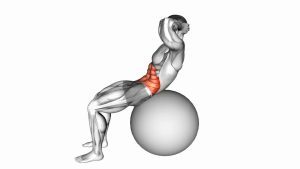
Dumbbell Overhead Sit-Up with Legs on Bench: Form, Sets, Tips & FAQ
Build stronger abs with the Dumbbell Overhead Sit-Up with Legs on Bench. Learn proper setup, controlled reps, core cues, mistakes, and gear.
Dumbbell Overhead Sit-Up with Legs on Bench
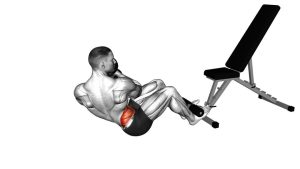
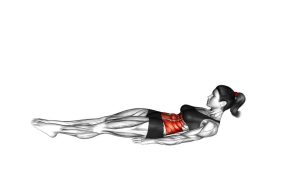
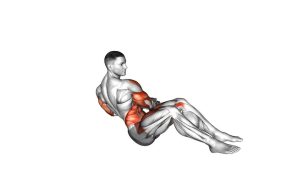
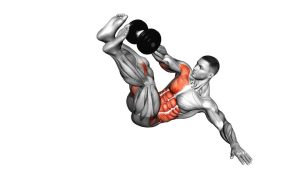
This exercise works best when the dumbbell stays steady overhead and the torso moves as one controlled unit. First, the upper back lifts from the floor. Then, the trunk curls upward until the body reaches a tall seated position. Finally, the torso lowers with control until the back returns to the floor. Since the load is overhead, the core must resist swinging, arching, and rushing.
Quick Overview
| Body Part | Core |
|---|---|
| Primary Muscle | Rectus abdominis |
| Secondary Muscle | Obliques, hip flexors, transverse abdominis, anterior shoulders, serratus anterior |
| Equipment | Dumbbell, flat bench, exercise mat |
| Difficulty | Intermediate |
Sets & Reps (By Goal)
- Core strength: 3–4 sets × 6–10 reps with a controlled 2–3 second lowering phase.
- Muscle endurance: 2–3 sets × 10–15 reps using a lighter dumbbell and smooth breathing.
- Technique practice: 2–3 sets × 5–8 reps while focusing on a stable overhead position.
- Advanced core control: 3–5 sets × 6–8 reps with a slow tempo and strict dumbbell control.
Progression rule: Add reps before adding weight. Additionally, only increase the dumbbell load when you can keep the arms steady and lower without collapsing onto the floor.
Setup / Starting Position
- Lie on your back: Position yourself on the floor with a bench placed in front of your legs.
- Place your legs on the bench: Rest the lower legs on the bench with the knees bent.
- Hold the dumbbell securely: Grip one dumbbell with both hands and extend the arms overhead.
- Set your trunk: Keep the ribs controlled, brace the abs lightly, and avoid excessive lower-back arching.
- Start with control: Keep the dumbbell steady, the legs supported, and the movement ready to begin from the floor.
Execution (Step-by-Step)
- Begin from the floor: Keep the dumbbell overhead and brace your core before lifting.
- Curl the torso upward: Lift the head, shoulders, and upper back while keeping the dumbbell aligned overhead.
- Continue into the sit-up: Rise until your torso reaches a tall seated position.
- Control the top: Pause briefly while keeping the dumbbell stable and the legs resting on the bench.
- Lower slowly: Reverse the motion with control until the back returns to the floor.
- Reset before the next rep: Rebrace, stabilize the arms, and repeat without using momentum.
Pro Tips & Common Mistakes
- Use a light dumbbell first: Because the load is overhead, even a small weight can feel challenging.
- Do not rush the lowering phase: The eccentric return builds control and protects the spine from impact.
- Avoid swinging the arms: If the dumbbell moves aggressively, reduce the weight immediately.
- Keep the legs quiet: The bench support should help stability, not create kicking or bouncing.
- Brace before every rep: A clean brace helps prevent excessive lower-back arching.
- Finish tall at the top: However, avoid overreaching the dumbbell forward just to complete the rep.
- Control the neck: Keep the head moving naturally with the torso instead of yanking it forward.
FAQ
What muscles does the Dumbbell Overhead Sit-Up with Legs on Bench work?
It mainly targets the rectus abdominis. Additionally, the obliques, hip flexors, transverse abdominis, shoulders, and serratus anterior assist with control and stability.
Is this exercise beginner-friendly?
It is better for intermediate users because the overhead dumbbell increases the demand on the core and shoulders. Beginners should first master regular sit-ups or bodyweight bench-supported sit-ups.
Should the dumbbell stay overhead the whole time?
Yes. Based on the visible movement, the dumbbell remains overhead during the sit-up and the return. Therefore, keep the arms long and stable instead of swinging the weight.
Why are the legs placed on a bench?
The bench-supported leg position helps stabilize the lower body. As a result, the torso can focus on a controlled sit-up pattern with less lower-body movement.
What is the biggest mistake with this exercise?
The biggest mistake is using too much weight and turning the rep into a swinging motion. Instead, use a manageable dumbbell and prioritize smooth control.
Recommended Equipment
- Adjustable Dumbbell — useful for progressing the exercise gradually without needing many separate weights
- Flat Weight Bench — provides stable leg support during the bench-supported sit-up setup
- Thick Exercise Mat — improves floor comfort during the starting and lowering phases
- Rubber Hex Dumbbell — offers a solid grip and stable shape for controlled weighted core work
- Ab Workout Mat — adds extra support for repeated sit-up variations and core sessions
Tip: Choose equipment that lets you move smoothly. Moreover, avoid heavy dumbbells until your overhead position and sit-up control are consistent.