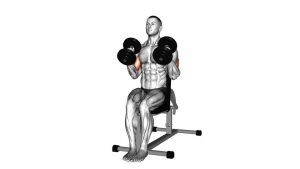
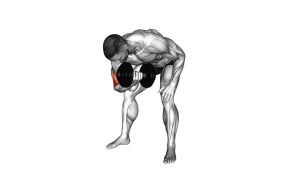
Dumbbell Seated Double Concentration Curl: Form, Sets, Tips & FAQ
Learn the Dumbbell Seated Double Concentration Curl to isolate the biceps with strict form. Includes setup, step-by-step execution, sets and reps by goal, common mistakes, FAQs, and recommended equipment.
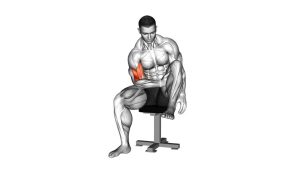
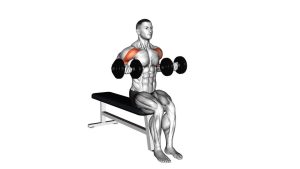
Dumbbell Seated Double Concentration Curl
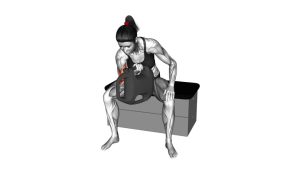
This variation is especially useful for lifters who want better mind-muscle connection, cleaner technique, and more direct biceps tension. Because both arms work at the same time while the elbows stay anchored, the exercise encourages strict execution and makes it easier to notice compensation such as torso swinging, shoulder lifting, or rushing the lowering phase.
Quick Overview
| Body Part | Biceps |
|---|---|
| Primary Muscle | Biceps brachii |
| Secondary Muscle | Brachialis and brachioradialis |
| Equipment | Two dumbbells and a flat bench |
| Difficulty | Beginner to Intermediate |
Sets & Reps (By Goal)
- Muscle growth: 3–4 sets × 8–12 reps, 60–90 sec rest
- Strict form practice: 2–3 sets × 10–15 reps, light-to-moderate load, 45–60 sec rest
- Biceps pump / finisher: 2–3 sets × 12–15 reps, controlled tempo, 30–45 sec rest
- Strength-focused arm accessory: 3–4 sets × 6–8 reps, slightly heavier load, 75–90 sec rest
Progression rule: First improve rep quality, top-end squeeze, and eccentric control. Then add reps, and only after that increase load.
Setup / Starting Position
- Sit on a flat bench: Place your feet firmly on the floor and spread your knees enough to create room for your arms.
- Lean slightly forward: Keep your chest open and spine neutral rather than rounding heavily over the dumbbells.
- Brace the elbows: Press each elbow or lower triceps area lightly against the inside of the corresponding thigh.
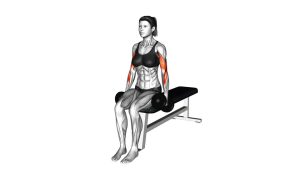
- Start with arms extended: Let both dumbbells hang below you with a neutral-to-supinated grip.
- Set the wrists: Keep them mostly straight and stable before beginning the curl.
Tip: The tighter your elbow position stays, the more this becomes a true biceps isolation movement.
Execution (Step-by-Step)
- Lock in your posture: Stay seated, lean forward slightly, and keep both elbows planted against the thighs.
- Curl both dumbbells upward: Flex at the elbows and bring the weights toward your upper chest in a smooth arc.
- Keep the elbows fixed: Do not let them slide back, drift outward, or lift away from the thighs.
- Squeeze at the top: Pause briefly when your biceps are fully shortened and the dumbbells are near chest level.
- Lower under control: Slowly return to the bottom without dropping the weights or losing tension.
- Repeat cleanly: Maintain the same path and tempo for each rep rather than chasing momentum.
Pro Tips & Common Mistakes
- Anchor the elbows: This is the main feature of the exercise. Once the elbows move, you lose part of the isolation benefit.
- Do not swing the torso: Momentum turns a strict curl into a sloppy cheat rep.
- Use full control on the eccentric: Lowering slowly can improve tension and technique consistency.
- Keep wrists stacked: Excessive wrist bending can reduce comfort and control.
- Do not rush the top: A brief squeeze at peak contraction helps make the rep more effective.
- Choose the right load: This movement usually works best with moderate weight and very clean form.
- Avoid shoulder shrugging: Let the biceps do the work instead of pulling with the upper traps or front delts.
FAQ
What makes the seated double concentration curl different from a regular dumbbell curl?
The elbows are braced against the inner thighs, which limits body English and makes the movement much stricter. That usually increases isolation and improves biceps focus.
Should I curl both dumbbells at the same time?
Yes, in this variation both arms move together. That creates a balanced workload and a strong pump, but it also means you need to stay disciplined with form on both sides.
How heavy should I go on this exercise?
Use a weight that allows smooth reps, a visible squeeze at the top, and a controlled lowering phase. If you need to rock your body to finish reps, the weight is too heavy.
Is this a good exercise for biceps growth?
Yes. It is a strong hypertrophy option because it reduces momentum and keeps direct tension on the biceps, especially when performed with controlled tempo and enough weekly volume.
Where should I feel it most?
You should feel the work mainly in the front of the upper arms, especially the biceps. Some forearm involvement is normal, but the shoulders should not dominate the movement.
Recommended Equipment
- Adjustable Dumbbells — versatile for progressive overload and convenient for home arm training
- Flat or Adjustable Weight Bench — gives you a stable seated position for strict concentration-curl setup
- Wrist Wraps — helpful if you want extra wrist support during higher-rep curl work
- Dumbbell Grips — can improve handle comfort and reduce grip fatigue on longer arm sessions
- Exercise Mat — useful for protecting flooring and creating a cleaner home-gym space
Tip: For this exercise, the biggest performance upgrade is usually a good pair of dumbbells and a stable bench.