Mountain Climber Over Bench: Core Form, Sets, Tips & FAQ
Learn the Mountain Climber Over Bench for stronger abs, hip flexors, and conditioning with step-by-step form, sets, tips, mistakes, and equipment.
Mountain Climber Over Bench
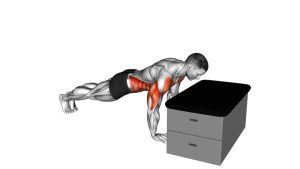
This exercise works best when your upper body stays stable and your knee drive comes from the hips instead of the lower back. Keep your ribs controlled, shoulders firm, and hips level while alternating legs. The goal is not only speed; the goal is a clean plank position with powerful but controlled knee movement.
Quick Overview
| Body Part | Core |
|---|---|
| Primary Muscle | Rectus abdominis and deep core stabilizers |
| Secondary Muscle | Hip flexors, obliques, shoulders, chest, quads, and glutes |
| Equipment | Flat bench or sturdy elevated surface |
| Difficulty | Beginner to Intermediate |
Sets & Reps (By Goal)
- Core control: 3 sets × 8–12 reps per side with slow alternating knee drives.
- Conditioning: 3–5 sets × 20–40 seconds with steady rhythm and short rest.
- Beginner practice: 2–3 sets × 6–10 reps per side with a full reset after each rep.
- Fat-loss circuit: 30 seconds work, 30 seconds rest for 4–6 rounds.
Progression rule: First improve control, then increase speed. Do not progress to faster reps if your hips bounce, your lower back sags, or your shoulders collapse into the bench.
Setup / Starting Position
- Place your forearms on the bench: Keep elbows about shoulder-width apart and press the forearms gently into the bench.
- Step both feet back: Extend your legs behind you until your body forms a straight line from head to heels.
- Brace your core: Pull the ribs down slightly and keep the pelvis controlled so the lower back does not arch.
- Set your shoulders: Keep shoulders active and stable without shrugging toward the ears.
- Look down naturally: Keep your neck neutral and avoid lifting your head excessively.
Tip: Use a heavy, stable bench. If the bench slides, place it against a wall or use a non-slip mat underneath.
Execution (Step-by-Step)
- Start in a strong bench plank: Keep your body long, core braced, and feet planted behind you.
- Drive one knee forward: Bring one knee toward your chest while keeping the opposite leg extended.
- Control your hips: Avoid twisting, bouncing, or letting the hips rise too high.
- Return the leg back: Extend the working leg back to the starting plank position with control.
- Alternate sides: Repeat with the opposite knee while maintaining the same stable upper-body position.
- Continue for time or reps: Keep breathing and move at a pace that allows clean form.
Pro Tips & Common Mistakes
- Keep the plank line: Do not let your hips drop toward the floor during the knee drive.
- Avoid bouncing: Move smoothly so your core controls the motion instead of momentum.
- Do not over-round the spine: Bring the knee forward without crunching the upper body excessively.
- Press through the forearms: Active shoulders help protect the neck and upper back.
- Use a stable bench: A sliding bench can make the movement unsafe and reduce control.
- Match speed to skill: Slow reps build control; faster reps build conditioning only when form stays clean.
FAQ
Is the Mountain Climber Over Bench easier than regular mountain climbers?
Yes. The elevated bench angle usually makes the movement easier than floor mountain climbers because it reduces the load on the upper body and gives more control over the knee drive.
What muscles does this exercise work?
It mainly trains the abs and deep core stabilizers. It also works the hip flexors, obliques, shoulders, chest, quads, and glutes as supporting muscles.
Should I do this exercise fast or slow?
Start slow to learn control. Once your plank stays strong and your hips stay level, you can increase speed for conditioning.
Why do I feel this in my hip flexors?
Hip flexor involvement is normal because the knee drive requires hip flexion. However, your abs should still stay active to stabilize the trunk.
Who should avoid this exercise?
People with shoulder pain, acute lower-back pain, unstable wrists or elbows, or difficulty holding a plank should use caution and choose a simpler core drill first.
Recommended Equipment
- Flat Workout Bench — provides the elevated support needed for the forearm plank position.
- Non-Slip Exercise Mat — helps keep your feet secure and reduces sliding during fast reps.
- Elbow Support Pad — adds comfort when holding the forearms on a firm bench surface.
- Core Sliders — useful for advanced sliding mountain climber variations.
- Interval Training Timer — helpful for conditioning circuits and timed mountain climber sets.