Suspender One-Arm Biceps Curl: Form, Muscles Worked, Sets, Tips & FAQ
Learn how to do the Suspender One-Arm Biceps Curl with proper form. Discover muscles worked, setup, step-by-step execution, sets and reps by goal, common mistakes, FAQs, and recommended equipment.
Suspender One-Arm Biceps Curl
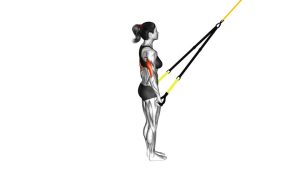
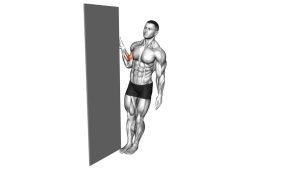
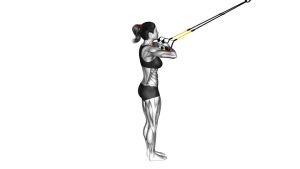
This exercise is excellent for building unilateral arm strength and exposing side-to-side differences in pulling control. Because only one arm is working, the movement also demands anti-rotation stability through the trunk and careful shoulder positioning. The best reps are smooth and strict, with the elbow flexing under control while the body stays firm like a plank.
Quick Overview
| Body Part | Biceps |
|---|---|
| Primary Muscle | Biceps brachii |
| Secondary Muscle | Brachialis, brachioradialis, forearms, core stabilizers, rear shoulder stabilizers |
| Equipment | Suspension trainer / suspender straps |
| Difficulty | Intermediate (harder with a lower body angle and stricter control) |
Sets & Reps (By Goal)
- Muscle growth: 3–4 sets × 8–12 reps per arm (60–90 sec rest)
- Strength and control: 3–5 sets × 5–8 reps per arm (90–120 sec rest)
- Technique practice: 2–3 sets × 6–10 reps per arm with a more upright body angle
- Endurance / pump work: 2–3 sets × 12–15 reps per arm (45–75 sec rest)
Progression rule: First increase control, range, and rep quality. Then make the exercise harder by walking the feet forward and leaning farther back to increase bodyweight resistance.
Setup / Starting Position
- Adjust the straps: Set the suspension handles to around mid-length so you have room to lean back and curl smoothly.
- Grip one handle: Hold a single handle with a neutral or slightly supinated grip, depending on the strap setup.
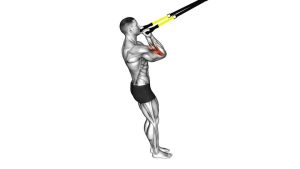
- Position your body: Walk your feet forward and lean back until your working arm is fully extended and your body forms a straight line.
- Brace the trunk: Tighten your abs and glutes to prevent rotation or sagging through the hips.
- Square the shoulders: Keep the chest open and the shoulder of the working arm packed down, not shrugged up.
Tip: The more horizontal your body is, the harder the exercise becomes. Beginners should start more upright.
Execution (Step-by-Step)
- Start at full extension: Let the working arm extend fully while maintaining a rigid body line from head to heels.
- Initiate the curl: Flex the elbow and pull your body toward the handle using your biceps, keeping the elbow relatively fixed.
- Stay stable: Resist twisting the torso or hiking the shoulder as you move upward.
- Reach peak contraction: Continue until your hand comes close to your face or temple and your biceps are fully shortened.
- Pause briefly: Squeeze the biceps for a moment without losing body alignment.
- Lower under control: Slowly extend the arm back to the start position, keeping tension through the entire eccentric phase.
- Repeat evenly: Perform all reps on one side or alternate sides depending on your program.
Pro Tips & Common Mistakes
- Keep the body stiff: Think of a moving plank, not a loose hanging curl.
- Do not yank the handle: Use smooth elbow flexion instead of momentum.
- Avoid shoulder shrugging: Keep the shoulder packed to maintain better arm mechanics.
- Control the eccentric: The lowering phase is where a lot of growth stimulus happens.
- Do not rotate the torso: Stay square to the anchor point to keep the biceps doing the work.
- Match both sides: Use the weaker arm to set the rep standard so one side does not dominate.
- Adjust difficulty intelligently: Foot position changes the resistance more than most people expect.
FAQ
What muscles does the Suspender One-Arm Biceps Curl work?
The main target is the biceps brachii. It also involves the brachialis, brachioradialis, forearms, and core stabilizers because you must control your body position throughout the rep.
Is this harder than a regular suspension biceps curl?
Yes. Using one arm increases the load per side and adds a strong anti-rotation demand, making the exercise more challenging than a two-arm suspension curl.
How can I make this exercise easier?
Stand more upright, reduce your lean, shorten the range slightly, or use a two-arm suspension curl first until you build enough control and strength.
How can I make it harder?
Walk your feet forward, lean farther back, slow the eccentric, add a pause at peak contraction, or perform more strict reps with no torso movement.
Is this exercise good for fixing arm imbalances?
Yes. Because each arm works independently, it is a useful unilateral exercise for improving side-to-side strength differences and movement control.
Recommended Equipment
- Suspension Trainer System — the main tool needed for suspension curls, rows, presses, and bodyweight strength work
- Door Anchor for Suspension Trainer — useful for home setups when you do not have a permanent anchor point
- Workout Grips / Training Gloves — helps reduce grip fatigue and improves comfort during higher-volume arm sessions
- Resistance Bands Set — great for warm-ups, biceps activation, and adding variety to arm training
- Exercise Mat — provides more stable footing and comfort during home suspension training
Choose a secure anchor point and inspect your straps regularly. Suspension exercises are only as safe as the setup holding them.