Kettlebell Incline Alternate Curl: Proper Form, Sets, Tips & FAQ
Learn the Kettlebell Incline Alternate Curl to build bigger biceps with strict form and a deep stretch. Includes setup, execution, sets by goal, common mistakes, FAQs, and recommended equipment.
Kettlebell Incline Alternate Curl
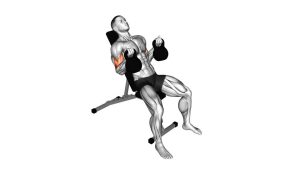
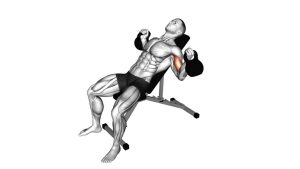
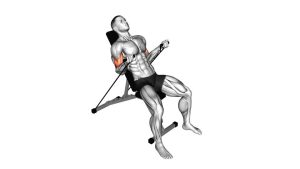
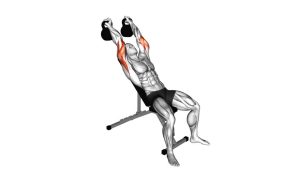
This variation is especially useful for lifters who want more tension on the biceps long head and better isolation than a standard standing curl. Because the bench stabilizes the torso, it becomes easier to notice and correct cheating patterns like shoulder rolling, elbow drifting, or using body momentum. Done correctly, each rep should feel smooth, controlled, and heavily focused on the upper arms.
Quick Overview
| Body Part | Biceps |
|---|---|
| Primary Muscle | Biceps brachii |
| Secondary Muscle | Brachialis, brachioradialis, forearm flexors |
| Equipment | Kettlebells, incline bench |
| Difficulty | Beginner to Intermediate |
Sets & Reps (By Goal)
- Muscle growth: 3–4 sets × 8–12 reps per arm, 60–90 sec rest
- Technique and control: 2–3 sets × 10–15 reps per arm, light-to-moderate load, 45–75 sec rest
- Strength-focused arm work: 3–5 sets × 6–8 reps per arm, 90 sec rest
- Finisher / pump work: 2–3 sets × 12–15 reps per arm, short rest, strict tempo
Progression rule: First improve control, range of motion, and top-end squeeze. Then increase reps before moving up in weight.
Setup / Starting Position
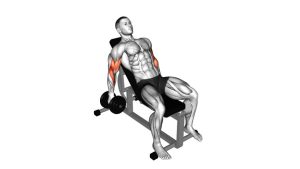
- Set the bench: Adjust an incline bench to roughly 45–60 degrees so your torso is supported.
- Sit back fully: Keep your head, upper back, and shoulders comfortably against the pad.
- Hold a kettlebell in each hand: Let the arms hang straight down with palms facing mostly forward or slightly inward depending on grip comfort.
- Open the chest: Pull the shoulders gently back and down to avoid rounding forward.
- Start with both arms extended: Elbows should stay close to your sides, with the upper arms slightly behind the torso because of the incline.
Tip: Start lighter than you would for standing curls. The incline position makes even moderate weights feel more demanding.
Execution (Step-by-Step)
- Brace and stay still: Keep your torso pressed into the bench and your feet planted firmly on the floor.
- Curl one kettlebell upward: Bend the elbow and bring the bell toward shoulder height without swinging or lifting the shoulder forward.
- Squeeze at the top: Pause briefly when the biceps are fully contracted, keeping tension on the arm.
- Lower slowly: Control the kettlebell back down until the arm is nearly straight and the biceps are fully stretched.
- Switch arms: Begin the same motion with the opposite arm while the first arm remains extended and relaxed.
- Continue alternating: Repeat side to side until all reps are completed with the same strict rhythm.
Pro Tips & Common Mistakes
- Use the stretch: Let the arm straighten fully at the bottom without losing shoulder position.
- Keep the upper arm quiet: Too much elbow movement turns it into a front-delt-assisted curl.
- Lift under control: Don’t rush the first half of the rep out of the stretched position.
- Lower slower than you lift: A controlled eccentric improves tension and keeps form clean.
- Don’t twist excessively: Use a natural grip path that feels smooth on the wrist and elbow.
- Avoid going too heavy: Heavy bells often cause cheating, shortened reps, and shoulder compensation.
- Stay glued to the bench: If your torso comes off the pad, the load is probably too heavy.
FAQ
What muscles does the kettlebell incline alternate curl work?
It mainly targets the biceps brachii, with assistance from the brachialis, brachioradialis, and forearm muscles. The incline setup increases the stretch on the biceps, especially the long head.
Why use an incline bench for curls?
The incline bench places the arms slightly behind the body, which increases the bottom-position stretch and reduces the ability to cheat with body momentum. That makes the movement more strict and more effective for isolation.
Is alternating better than curling both arms together?
Alternating reps can make it easier to focus on each side, keep form tighter, and reduce the urge to swing both weights at once. It is a great option for controlled hypertrophy work.
How heavy should I go on this exercise?
Use a load that lets you reach a full stretch, controlled top squeeze, and slow lowering phase without your shoulders rolling forward or your torso lifting off the bench.
Can beginners do kettlebell incline alternate curls?
Yes. Beginners can use light kettlebells and focus on clean reps. It is often better to start lighter than expected because the incline position makes the exercise harder than standing curls.
Recommended Equipment
- Adjustable Kettlebell — ideal for progressing curl weight without buying multiple separate bells
- Cast Iron Kettlebell Pair — useful for balanced bilateral arm training and consistent loading
- Adjustable Incline Weight Bench — essential for setting the correct torso angle and keeping the movement strict
- Weightlifting Grips — helpful if grip fatigue limits biceps work before the target muscles are fully trained
- Exercise Floor Mat — improves setup comfort and protects flooring when using kettlebells near the bench
Tip: For this exercise, the most important tools are a solid incline bench and kettlebells you can control with strict form.