Cable Preacher Curl: Proper Form, Muscles Worked, Sets, Tips & FAQ
Learn how to do the Cable Preacher Curl with strict form to isolate the biceps through a full range of motion. Includes muscles worked, setup, step-by-step execution, sets by goal, common mistakes, FAQ, and recommended equipment.
Cable Preacher Curl
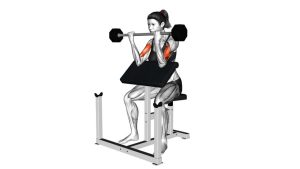
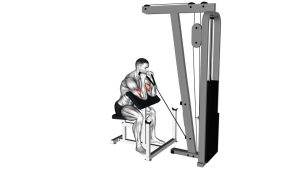
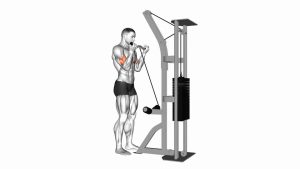
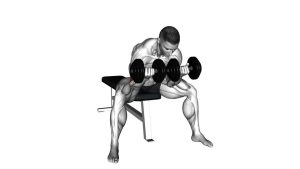
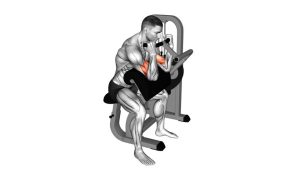
The Cable Preacher Curl works best when you keep the motion strict and controlled. Your upper arms should stay planted on the pad while your forearms move through a smooth curl. Because the cable keeps tension on the biceps throughout the rep, this variation can feel challenging even with lighter loads. Focus on lifting with the biceps, pausing briefly at the top, and lowering the handle slowly to maximize muscular tension without using momentum.
Quick Overview
| Body Part | Biceps |
|---|---|
| Primary Muscle | Biceps brachii |
| Secondary Muscle | Brachialis, brachioradialis, forearm flexors |
| Equipment | Cable machine, preacher bench, straight bar or curl-bar cable attachment |
| Difficulty | Beginner to Intermediate |
Sets & Reps (By Goal)
- Muscle growth: 3–4 sets × 8–12 reps with controlled tempo and 60–90 sec rest
- Strength-focused arm work: 4–5 sets × 6–8 reps with strict form and 90–120 sec rest
- Mind-muscle connection / pump: 2–4 sets × 12–15 reps with lighter weight and short rest
- Finisher or accessory work: 2–3 sets × 10–15 reps after compound pulling or arm work
Progression rule: Add reps before adding load. Increase weight only when you can keep your elbows fixed, control the eccentric, and reach a clean top contraction without swinging.
Setup / Starting Position
- Set the station: Position a preacher bench in front of a low cable pulley so the line of pull matches your curling path.
- Choose your attachment: Use a straight bar, EZ-style cable bar, or similar handle that feels comfortable on your wrists.
- Sit and brace: Sit firmly with your chest against the preacher pad and your feet planted for stability.
- Place the upper arms: Rest the backs of your upper arms fully on the pad so the elbows stay supported throughout the set.
- Start in the stretched position: Grip the handle with palms up and begin with the arms nearly straight, keeping slight softness in the elbows.
Tip: Set the bench height so your armpits sit comfortably near the top edge of the pad without the shoulders rolling forward.
Execution (Step-by-Step)
- Lock in your upper arms: Press the upper arms into the preacher pad and keep the torso still.
- Initiate the curl: Flex the elbows and pull the attachment upward in a smooth arc without lifting the elbows off the pad.
- Keep wrists stable: Avoid excessive wrist bending; keep the hands and forearms aligned with the cable.
- Squeeze at the top: Curl until the biceps are fully shortened, then pause briefly for a controlled contraction.
- Lower slowly: Return the handle under control until the elbows are nearly extended and the biceps feel fully stretched.
- Repeat with strict tempo: Use the same path each rep and avoid bouncing out of the bottom.
Pro Tips & Common Mistakes
- Use full range of motion: Let the biceps lengthen at the bottom, but do not jam the elbows into full lockout.
- Control the eccentric: Lowering slowly often makes this exercise more effective than trying to lift heavier.
- Don’t lift the elbows: Raising the upper arms off the pad turns the curl into a less strict variation.
- Avoid momentum: Keep the torso quiet and do not yank the cable to start the rep.
- Keep tension on the biceps: Think about curling through the forearms while the biceps do the work.
- Choose the right attachment: If a straight bar bothers your wrists, try an EZ-style attachment for a more natural grip angle.
- Use moderate weight: This movement rewards precision more than load.
FAQ
What makes the cable preacher curl different from a dumbbell or barbell preacher curl?
The cable provides constant tension through the entire rep, including the top and mid-range. Many lifters feel this gives them a smoother resistance profile and better biceps engagement.
Where should I feel the cable preacher curl the most?
You should mainly feel it in the biceps, with some assistance from the brachialis and forearms. If you mostly feel your shoulders, your setup or form likely needs adjustment.
Can beginners use the cable preacher curl?
Yes. It is beginner-friendly as long as you use a manageable weight and focus on keeping the upper arms fixed on the pad. The bench support actually helps many beginners learn stricter curling mechanics.
Should I fully lock out my elbows at the bottom?
You can reach a strong stretch, but avoid aggressively snapping into lockout. Keep the bottom position controlled so the elbows and tendons are not taking unnecessary stress.
Is this exercise good for building bigger biceps?
Yes. The Cable Preacher Curl is excellent for biceps hypertrophy because it reduces cheating, improves isolation, and keeps tension on the muscle throughout the set.
Recommended Equipment
- Preacher Curl Bench — the main support station for strict biceps isolation and stable upper-arm positioning
- EZ Curl Cable Attachment — offers a more wrist-friendly grip angle for cable curls
- Straight Bar Cable Attachment — a classic attachment for strict supinated cable curling
- Adjustable Weight Bench — useful if you are building a home setup around arm and upper-body training
- Lifting Straps — optional for reducing grip fatigue during high-volume pulling and arm sessions
Tip: The most important tools for this exercise are a stable preacher pad and an attachment that lets you curl without wrist discomfort.