Barbell Lying Close-Grip Press: Proper Form, Sets, Reps, Tips & FAQ
Learn how to perform the Barbell Lying Close-Grip Press with proper form to build triceps strength and upper-body pressing power. Includes setup, execution steps, sets and reps by goal, mistakes, FAQs, and recommended equipment.
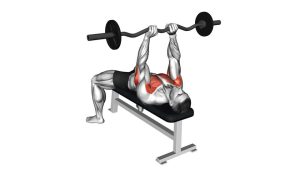
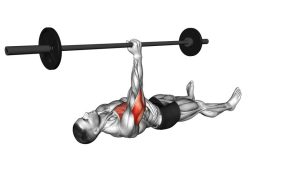
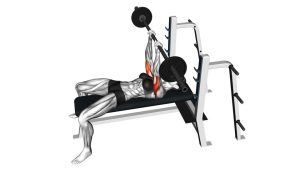
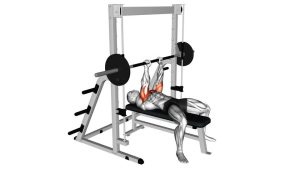
Barbell Lying Close-Grip Press
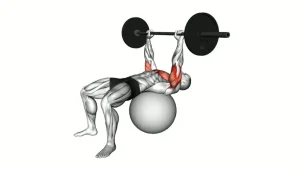
This exercise blends the benefits of a barbell press with a stronger emphasis on the triceps brachii. Compared with a standard bench press, the closer hand position reduces chest dominance and increases elbow-extension demand. It is an excellent option for lifters who want bigger arms, stronger pressing mechanics, and better carryover to heavy bench press lockouts.
Quick Overview
| Body Part | Triceps |
|---|---|
| Primary Muscle | Triceps brachii |
| Secondary Muscle | Chest (pectorals), anterior deltoids, forearms |
| Equipment | Barbell, flat bench, weight plates, rack or spotter |
| Difficulty | Intermediate |
Sets & Reps (By Goal)
- Strength: 4–5 sets × 4–6 reps with 2–3 minutes rest
- Muscle growth: 3–4 sets × 6–10 reps with 60–90 seconds rest
- Bench lockout support: 3–5 sets × 5–8 reps with controlled tempo
- Technique practice: 2–3 sets × 8–12 reps using moderate load and strict elbow position
Progression rule: Increase load gradually only when you can maintain a steady bar path, full control on the descent, and a strong lockout without elbow flare or wrist collapse.
Setup / Starting Position
- Set the bar in a rack: Position the barbell at a height that allows an efficient unrack without losing shoulder tightness.
- Lie flat on the bench: Keep your head, upper back, and glutes in contact with the bench while planting both feet firmly on the floor.
- Grip the bar narrowly: Place your hands inside shoulder width or just around shoulder width, depending on wrist comfort and limb length.
- Retract your shoulder blades: Pull the shoulders back and down to create a stable pressing base.
- Start at lockout: Unrack the bar and hold it above the chest with straight arms, stacked wrists, and elbows pointed slightly inward.
Tip: A close grip should still feel strong and natural. If your wrists feel jammed or painful, widen your grip slightly.
Execution (Step-by-Step)
- Lower the bar with control: Bring the bar down toward the lower chest or upper sternum while keeping the elbows tucked close to the torso.
- Pause briefly near the bottom: Maintain tension through the forearms, triceps, and chest without bouncing the bar off the body.
- Press upward powerfully: Drive the bar back up by extending the elbows and pressing in a mostly vertical bar path.
- Finish at lockout: Straighten the arms fully while keeping the shoulders stable and the wrists stacked.
- Repeat smoothly: Use the same bar path and elbow position on every rep for consistent triceps loading.
Pro Tips & Common Mistakes
- Keep elbows tucked: This is one of the biggest keys to making the movement triceps-focused.
- Do not grip too close: An overly narrow grip can irritate the wrists and reduce pressing strength.
- Control the lowering phase: Dropping the bar quickly reduces tension and can stress the elbows or shoulders.
- Press through the triceps: Think about driving the bar up by extending the elbows, not just pushing with the chest.
- Avoid bouncing: The bar should lightly touch or approach the chest under control, never crash into it.
- Keep your wrists neutral: Bent-back wrists reduce force transfer and increase joint stress.
- Use a spotter for heavy work: Close-grip pressing can get challenging fast near failure.
FAQ
What muscles does the Barbell Lying Close-Grip Press work the most?
The exercise primarily targets the triceps, especially during the pressing and lockout phase. The chest and front delts assist, but the close hand position increases elbow-extension demand and shifts more work to the upper arms.
Is this the same as a close-grip bench press?
Yes, this is essentially a close-grip bench press variation. The name highlights the lying position and the narrow barbell grip, but the mechanics are the same: tucked elbows, controlled descent, and strong triceps-driven lockout.
How close should my hands be on the bar?
Most lifters do best with a grip that is inside shoulder width or around shoulder width, not excessively narrow. The right grip lets you keep your wrists neutral and elbows tucked without discomfort.
Should I touch the bar to my chest?
In most cases, yes—lightly touch the lower chest or upper sternum under control. Do not bounce the bar. If shoulder or wrist discomfort appears, slightly adjust grip width or reduce range based on your structure and comfort.
Is this exercise good for building a stronger bench press?
Absolutely. It is especially useful for improving lockout strength, strengthening the triceps, and building better elbow control during pressing movements.
Recommended Equipment
- Olympic Barbell — the main tool for performing the movement with stable loading and progression
- Flat Weight Bench — provides the stable lying position needed for safe pressing mechanics
- Barbell Collars — helps keep plates secure during training, especially with heavier sets
- Power Rack — improves safety for unracking, reracking, and pressing without a spotter
- Wrist Wraps — optional support for lifters who need extra wrist stability during heavier close-grip pressing
Tip: Prioritize a stable bench, a reliable rack, and correct grip width before adding more load. Better setup usually means better pressing performance.