Dumbbell Lying Extension (Across Face): Form, Muscles Worked, Sets, Tips & FAQ
Learn the Dumbbell Lying Extension (Across Face) for triceps growth and elbow control. Step-by-step form, muscles worked, sets by goal, common mistakes, FAQs, and recommended equipment.
Dumbbell Lying Extension (Across Face)
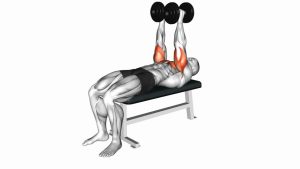
This exercise works best with moderate loads, a controlled eccentric, and a clean diagonal path. The goal is to isolate the triceps by bending and extending the elbow while keeping the upper arm as stable as possible. You should feel tension mostly in the back of the upper arm, especially near the long head, rather than in the shoulder or wrist.
Quick Overview
| Body Part | Triceps |
|---|---|
| Primary Muscle | Triceps brachii (especially the long head) |
| Secondary Muscle | Anconeus, forearm stabilizers, front deltoid stabilizers |
| Equipment | Flat bench and one dumbbell |
| Difficulty | Beginner to Intermediate |
Sets & Reps (By Goal)
- Muscle growth: 3–4 sets × 8–15 reps per arm, 60–90 sec rest
- Strength-focused accessory work: 3–4 sets × 6–10 reps per arm, 75–120 sec rest
- Technique and control: 2–3 sets × 10–12 reps per arm with slow lowering, 45–75 sec rest
- Finisher / pump work: 2–3 sets × 12–20 reps per arm, shorter rest, strict form
Progression rule: Increase reps first, then add a small amount of weight once you can keep the elbow stable, the wrist neutral, and the lowering phase controlled.
Setup / Starting Position
- Lie flat on a bench: Plant both feet firmly on the floor and keep your torso steady.
- Hold one dumbbell: Use a neutral grip with your palm facing inward.
- Press the dumbbell to the top: Start with the working arm extended above the upper chest or shoulder line.
- Set the elbow position: Keep the upper arm slightly angled inward and avoid flaring the elbow too far out.
- Brace lightly: Keep your shoulder packed down into the bench and your wrist straight.
Tip: Start with your weaker arm first so both sides get matched quality work.
Execution (Step-by-Step)
- Lock in the top position: Begin with the dumbbell steady above you and the elbow softly extended.
- Lower across the face: Bend the elbow and guide the dumbbell diagonally toward the opposite side of your face or shoulder.
- Keep the upper arm quiet: Let the elbow do most of the moving while the shoulder stays as still as possible.
- Reach a deep but safe stretch: Pause briefly when the triceps are fully loaded without losing control.
- Extend back up: Straighten the elbow and return the dumbbell along the same diagonal path to the start position.
- Repeat smoothly: Maintain tension and avoid bouncing or rushing between reps.
Pro Tips & Common Mistakes
- Use a controlled eccentric: Lowering slowly usually makes this exercise much more effective than simply chasing heavier weight.
- Keep the wrist neutral: A bent wrist can reduce force transfer and create unnecessary discomfort.
- Do not flare the elbow excessively: Too much elbow drift reduces isolation and can irritate the joint.
- Avoid turning it into a pullover: The shoulder should not dominate the movement.
- Do not rush the bottom: The stretched position is useful, but only when you stay in control.
- Train both arms evenly: Unilateral work is great for finding and correcting side-to-side strength differences.
FAQ
What does the “across face” path change?
It changes the line of the lowering phase so the dumbbell travels diagonally instead of straight down. Many lifters use this variation to get a strong stretch and a slightly different triceps feel than a standard skull crusher.
Is this better than regular lying dumbbell extensions?
Not always better, but different. The across-face version can feel smoother for some lifters and may help target the triceps effectively with a unilateral setup. The best option is the one you can perform pain-free with consistent control.
Should I use one dumbbell or two?
One dumbbell at a time is often easier for this exact variation because it lets you focus on the diagonal path and control the elbow position more precisely.
Where should I feel it most?
You should feel the exercise mainly in the triceps, especially along the back of the upper arm. If you mostly feel your shoulder, wrist, or elbow joint, your technique or load likely needs adjustment.
Can beginners do this exercise?
Yes, as long as the weight is light enough to control and the range of motion stays comfortable. Beginners should focus on clean reps before increasing load.
Recommended Equipment
- Adjustable Dumbbell — practical for progressive overload without needing a full rack of dumbbells
- Flat Weight Bench — provides a stable base for strict lying triceps work
- Elbow Sleeves — useful for warmth and extra support during higher-volume arm sessions
- Wrist Wraps — helpful if you want extra wrist stability on heavier extension work
- Fixed Hex Dumbbell — a simple option for lifters who prefer a solid, no-adjustment handle feel
Choose tools that help you stay stable and pain-free. For this exercise, good control matters more than using the heaviest weight possible.