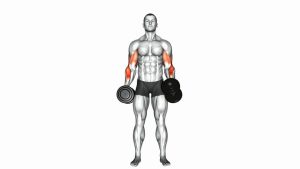
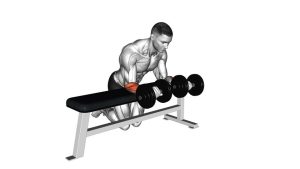
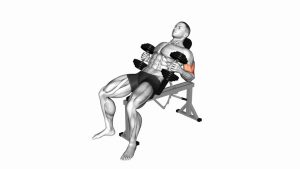
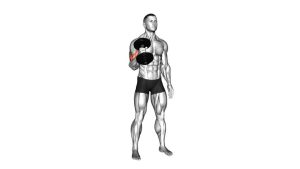
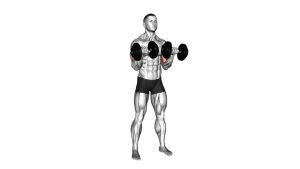
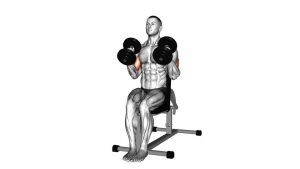
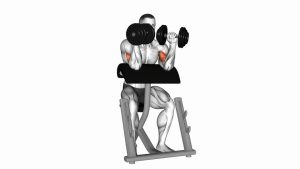
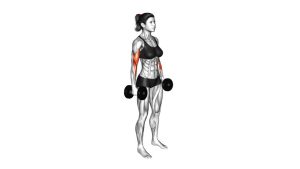
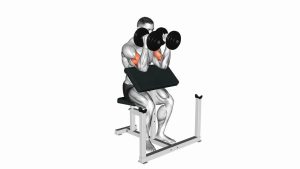
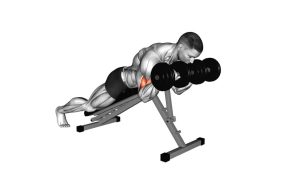
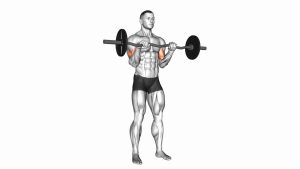
Dumbbell Seated Reverse-Grip Concentration Curl: Form, Sets, Tips & FAQ
Learn the Dumbbell Seated Reverse-Grip Concentration Curl for forearm and brachioradialis growth. Includes proper form, sets by goal, common mistakes, FAQs, and recommended Amazon equipment.
Dumbbell Seated Reverse-Grip Concentration Curl
This exercise is best performed with moderate weight, a controlled tempo, and a strong focus on keeping the elbow fixed in place. Compared with a standard concentration curl, the reverse grip reduces biceps dominance and increases the challenge on the forearms and brachioradialis. It works especially well as a finishing movement for arm day or as a focused accessory for forearm development.
Quick Overview
| Body Part | Forearms |
|---|---|
| Primary Muscle | Brachioradialis |
| Secondary Muscle | Forearm extensors, brachialis, biceps brachii |
| Equipment | One dumbbell and a flat bench or sturdy seat |
| Difficulty | Beginner to Intermediate |
Sets & Reps (By Goal)
- Muscle growth: 3–4 sets × 8–12 reps per arm, 60–90 sec rest
- Forearm focus / mind-muscle control: 2–4 sets × 10–15 reps per arm, 45–75 sec rest
- Strength-focused accessory work: 3 sets × 6–8 reps per arm, 75–120 sec rest
- Finisher at end of arm day: 2–3 sets × 12–15 reps per arm with strict tempo
Progression rule: Increase reps first, then load. This exercise responds best to strict form, smooth lowering, and consistent tension rather than heavy cheating reps.
Setup / Starting Position
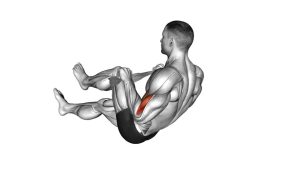
- Sit on a bench or sturdy seat: Plant your feet firmly and spread your knees enough to create space for the working arm.
- Hold one dumbbell with a pronated grip: Your palm should face downward, not upward or neutral.
- Brace the elbow: Press the back of your upper arm or elbow area lightly against the inside of your thigh.
- Lean forward slightly: Keep your chest proud and spine neutral rather than rounding aggressively.
- Start at full extension: Let the dumbbell hang under control near your lower shin/ankle area without losing tension.
Tip: Use a lighter dumbbell than you would for a normal concentration curl. The reverse grip makes the exercise noticeably harder.
Execution (Step-by-Step)
- Lock in your position: Keep the elbow pinned to the inner thigh and the wrist mostly neutral.
- Curl the dumbbell upward: Bend the elbow slowly while keeping the palm facing down throughout the rep.
- Avoid swinging: Do not let the shoulder roll forward or the torso rock backward to help the lift.
- Squeeze near the top: Bring the dumbbell up as far as you can without losing the reverse-grip alignment.
- Lower with control: Take 2–3 seconds to return to the starting position and fully extend the arm without relaxing completely.
- Repeat evenly: Maintain the same rep path and tempo on every repetition before switching arms.
Pro Tips & Common Mistakes
- Use a true reverse grip: Don’t let the hand rotate into a neutral or supinated position during the lift.
- Keep the wrist stacked: A small natural angle is fine, but excessive wrist bending reduces efficiency and may irritate the joint.
- Control the eccentric: The lowering phase is where a lot of the forearm stimulus comes from.
- Don’t go too heavy: This movement breaks down quickly when load is too high.
- Keep the elbow fixed: If the elbow floats off the thigh, the exercise becomes less strict and less isolated.
- Train both sides evenly: Match reps and tempo to prevent right-left imbalances in forearm development.
- Pair it intelligently: It works well after hammer curls, reverse curls, wrist curls, or pull-day grip work.
FAQ
What muscles does the dumbbell seated reverse-grip concentration curl target most?
The main emphasis is on the brachioradialis and other forearm muscles involved in elbow flexion and wrist stabilization. The biceps still assist, but less than in a standard palms-up concentration curl.
Is this better for forearms than a regular concentration curl?
For forearm and brachioradialis emphasis, yes. The reverse grip shifts more of the challenge away from the biceps-dominant position and makes the forearm work harder to stabilize and move the weight.
How heavy should I go on this exercise?
Start lighter than you think. This is a strict isolation movement, and clean reps matter more than heavy reps. Choose a weight you can control without wrist collapse or body swing.
Should I train this early or late in my workout?
Most lifters do best placing it mid-to-late in the session after bigger curls or pulling work. It is excellent as an accessory or finishing exercise for forearms and arms.
What if I feel wrist discomfort during the reverse grip?
Reduce the load, keep the wrist more neutral, and shorten the range slightly until the movement feels smooth. If discomfort continues, switch to a hammer-grip variation or address wrist mobility and overuse before pushing harder.
Recommended Equipment
- Adjustable Dumbbells — versatile loading option for progressing this exercise at home
- Adjustable Weight Bench — gives you a stable seat and supports a comfortable arm-training setup
- Wrist Wraps — useful if you want a little extra wrist support during reverse-grip work
- Fat Grip Attachments — can increase grip and forearm demand when used selectively
- Dumbbell Rack — keeps your training area organized and makes arm-day setup faster
Tip: For this movement, the most valuable purchases are usually a good dumbbell setup, a stable bench, and optional wrist-support accessories if reverse-grip work feels demanding on the joints.