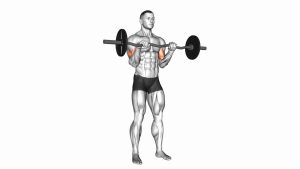
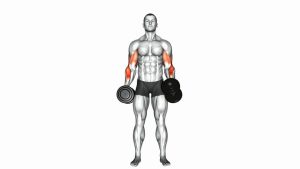
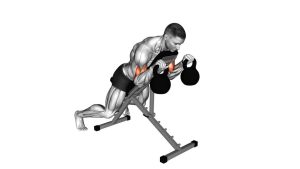
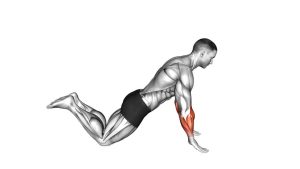
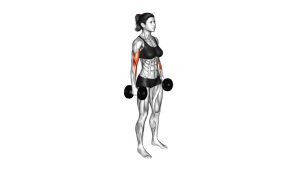
Bottle Weighted Reverse Curl: Forearm Form, Sets, Tips & FAQ
Learn the Bottle Weighted Reverse Curl to build forearms, brachioradialis strength, wrist control, and grip endurance using a simple water bottle at home.
Bottle Weighted Reverse Curl
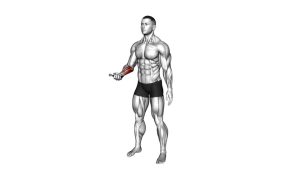
This exercise focuses on controlled elbow flexion with the hand in a reverse-grip position. Because the palm faces downward, the biceps cannot dominate the movement as much as they would during a standard curl. That makes the forearm muscles work harder, especially the brachioradialis on the thumb-side of the forearm. It is a great option for improving forearm thickness, grip endurance, wrist stability, and overall lower-arm strength without needing gym equipment.
Quick Overview
| Body Part | Forearms |
|---|---|
| Primary Muscle | Brachioradialis |
| Secondary Muscle | Wrist extensors, biceps brachii, brachialis, grip muscles |
| Equipment | Water bottle, filled bottle, or light household weight |
| Difficulty | Beginner |
Sets & Reps (By Goal)
- Beginner learning: 2–3 sets × 10–12 reps per arm using a light bottle.
- Forearm endurance: 2–4 sets × 15–20 reps with smooth control and short rest.
- Forearm strength: 3–4 sets × 8–12 reps using a heavier filled bottle.
- Grip conditioning: 2–3 sets × 12–15 reps with a firm squeeze on every rep.
- Warm-up before arm training: 1–2 sets × 12–15 light reps before curls, rows, or pull work.
Progression rule: First improve control, then increase reps, then use a heavier bottle. Do not progress by swinging the weight or bending the wrist to finish the curl.
Setup / Starting Position
- Choose your bottle: Use a water bottle that feels light enough to control through the full range of motion.
- Stand tall: Keep your feet about hip-width apart, ribs stacked, chest relaxed, and shoulders down.
- Grip the bottle: Hold the bottle with a reverse grip so your palm faces down or slightly backward.
- Set your elbow position: Keep the elbow close to your side instead of letting it flare outward.
- Brace lightly: Tighten your core just enough to prevent leaning or swinging.
- Start with the arm extended: Let the bottle hang near your thigh while keeping the wrist neutral.
Your wrist should stay strong and straight. Think of your hand, wrist, and forearm as one solid line.
Execution (Step-by-Step)
- Begin from the bottom: Start with your arm extended and the bottle held firmly in a reverse grip.
- Curl upward: Bend your elbow and lift the bottle toward your upper body without swinging your torso.
- Keep the wrist neutral: Do not let the wrist fold backward or curl forward to cheat the movement.
- Control the top position: Stop when your forearm reaches a comfortable curl height and the forearm is fully engaged.
- Squeeze briefly: Hold for about 1 second while keeping your elbow close to your side.
- Lower slowly: Return the bottle back down with control instead of dropping it.
- Repeat cleanly: Reset the wrist and shoulder before every rep.
Pro Tips & Common Mistakes
- Keep your palm down: The reverse grip is what shifts more work into the forearms.
- Do not swing: If your torso rocks, the bottle is too heavy or the reps are too fast.
- Control the lowering phase: The eccentric part builds strength and tendon control.
- Keep elbows tucked: Letting the elbows move forward turns the curl into a shoulder-assisted motion.
- Avoid wrist collapse: A bent wrist reduces forearm tension and may irritate the joint.
- Squeeze the bottle: A firm grip increases forearm activation and improves grip endurance.
- Use both sides evenly: Train the left and right arm with the same reps and tempo.
- Go lighter for better form: This exercise works best when it is strict, not heavy and messy.
FAQ
What muscles does the Bottle Weighted Reverse Curl work?
It mainly works the brachioradialis, a major forearm muscle involved in elbow flexion. It also trains the wrist extensors, brachialis, grip muscles, and a smaller amount of biceps involvement.
Is a bottle enough to build forearms?
Yes, especially for beginners or high-rep forearm endurance work. A bottle may not replace heavy gym training forever, but it is useful for learning control, building consistency, and training at home.
Should my wrist move during the exercise?
No. Keep the wrist mostly neutral and stable. The main movement should happen at the elbow. If the wrist bends too much, use a lighter bottle or reduce the range of motion.
Can I do this exercise every day?
You can do light sets frequently, but avoid hard daily training if your forearms, elbows, or wrists feel sore. For strength or hypertrophy, 2–4 times per week is usually enough.
Is this exercise good for grip strength?
Yes. Because you must hold and stabilize the bottle throughout the curl, the grip muscles work continuously. Squeezing the bottle firmly can make the exercise even more effective for grip endurance.
Recommended Equipment
- Adjustable Dumbbells — useful when you outgrow bottle resistance and want progressive loading.
- Forearm Wrist Roller — excellent for wrist extensor, wrist flexor, and grip strength training.
- Hand Grip Strengthener — helps improve crushing grip and forearm endurance outside curl training.
- Wrist Wraps — optional support for people who need extra wrist stability during loaded exercises.
- Grip-Friendly Water Bottle — practical for home reverse curls when you want a simple household training tool.
Tip: Start with the bottle first. Upgrade to dumbbells or forearm tools only when your technique stays clean.