Cable Rear Drive: Form, Muscles Worked, Sets, Tips & FAQ
Learn how to do the Cable Rear Drive with proper form. Build stronger triceps with step-by-step cues, sets by goal, common mistakes, FAQs, and recommended equipment.
Cable Rear Drive
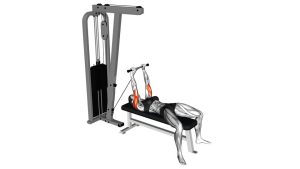
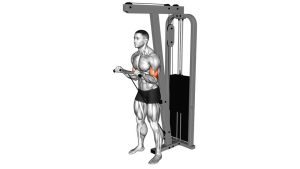
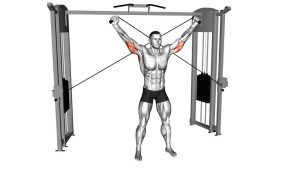
This movement works best when performed with strict control, not heavy momentum. Because the cable keeps tension on the arm throughout the motion, the Cable Rear Drive is useful for improving triceps contraction, arm definition, shoulder stability, and clean mind-muscle connection.
Quick Overview
| Body Part | Triceps |
|---|---|
| Primary Muscle | Triceps brachii, with strong long-head involvement |
| Secondary Muscle | Posterior deltoid, rear shoulder stabilizers, rotator cuff, upper back stabilizers |
| Equipment | Cable machine with single handle attachment |
| Difficulty | Beginner to Intermediate |
Sets & Reps (By Goal)
- Muscle growth: 3–4 sets × 10–15 reps per arm, 45–75 sec rest
- Triceps isolation: 2–4 sets × 12–20 reps per arm, slow tempo
- Strength control: 3–5 sets × 8–12 reps per arm, moderate weight
- Finisher: 2–3 sets × 15–25 reps per arm, light weight and constant tension
Progression rule: Add reps first, then increase cable weight only when you can keep your torso still and your elbow position consistent.
Setup / Starting Position
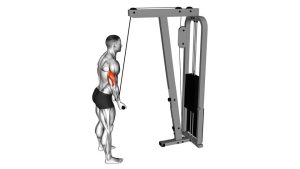
- Set the cable: Position the pulley around chest to shoulder height.
- Attach a single handle: Hold the handle with one hand using a firm neutral grip.
- Stand tall: Face slightly away from the cable stack so the cable pulls your arm forward.
- Brace your body: Keep your ribs down, core tight, and feet stable.
- Set the arm: Keep a slight bend in the elbow and let the arm start slightly forward of the torso.
- Lock your posture: Shoulders stay down and back without shrugging.
Execution (Step-by-Step)
- Start under tension: Let the cable gently pull the arm forward while keeping your torso still.
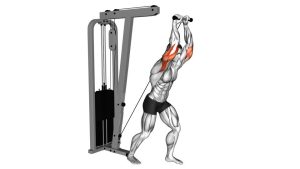
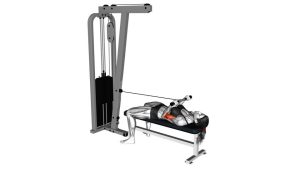
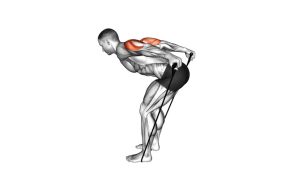
- Drive the arm back: Pull the handle backward in a smooth arc until your hand moves near or slightly behind your hip line.
- Keep the elbow position fixed: Avoid turning the movement into a row or a swinging arm pull.
- Squeeze the triceps: Pause briefly at the back of the motion and contract the back of the upper arm.
- Return slowly: Let the cable bring your arm forward under control without losing shoulder position.
- Repeat cleanly: Maintain the same path every rep and avoid rotating your torso.
Pro Tips & Common Mistakes
- Use light-to-moderate weight: This is an isolation movement, not a max-strength lift.
- Keep the elbow slightly bent: Do not fully lock out aggressively or let the elbow collapse.
- Do not swing: Momentum reduces triceps tension and shifts stress into the shoulder.
- Avoid torso rotation: Your arm moves; your ribs and hips stay quiet.
- Control the return: The eccentric phase is where many people lose tension.
- Keep shoulders relaxed: Do not shrug or pull with the neck.
- Think “back of the arm”: Focus on squeezing the triceps instead of just moving the handle.
FAQ
What muscle does the Cable Rear Drive work?
The Cable Rear Drive primarily targets the triceps brachii, especially the back of the upper arm. It also involves the posterior deltoid and shoulder stabilizers to help control the arm path.
Is the Cable Rear Drive good for building bigger triceps?
Yes. It is especially useful as an accessory or finisher exercise because the cable provides constant tension. For best results, use controlled reps, moderate weight, and higher rep ranges.
Should I go heavy on this exercise?
Not too heavy. If the weight causes swinging, torso twisting, or shoulder shrugging, reduce the load. This exercise works best with strict control and a strong squeeze at the back of each rep.
Is this exercise the same as a triceps kickback?
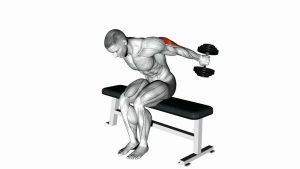
It is similar, but the cable version keeps more consistent resistance through the movement. Unlike a dumbbell kickback, the cable can maintain tension even when the arm returns forward.
Can beginners do the Cable Rear Drive?
Yes. Beginners can use this exercise if they start light and focus on posture, cable control, and clean arm movement. It is best learned slowly before adding weight.
Recommended Equipment
- Cable Machine Single Handle Attachment — essential for single-arm Cable Rear Drive execution.
- Cable Ankle Strap Attachment — can be used as an alternative soft strap handle for cable arm work.
- Adjustable Cable Pulley System — useful for performing cable triceps exercises at home.
- Weightlifting Gloves — improves grip comfort during cable handle exercises.
- Resistance Bands Set With Handles — a cable-free alternative for practicing rear-drive arm mechanics.
Tip: Choose attachments that allow a comfortable neutral grip and smooth movement without wrist strain.