Dumbbell Close-Grip Press: Form, Benefits, Sets, Tips & FAQ
Learn how to do the Dumbbell Close-Grip Press with proper form to build stronger triceps, chest, and pressing control. Includes setup, execution, mistakes, FAQs, and equipment.
Dumbbell Close-Grip Press
This exercise is excellent for building triceps strength because it combines the heavier loading potential of a press with the close-elbow position of a triceps-focused movement. The neutral grip also makes the press comfortable for many lifters who feel shoulder irritation during barbell close-grip bench presses.
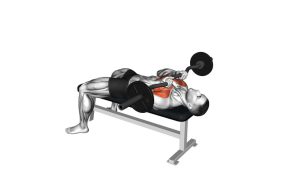
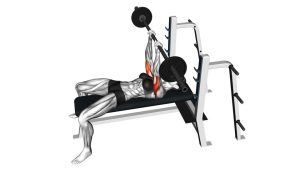
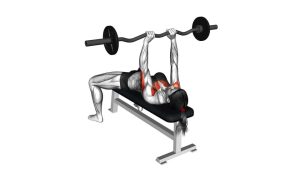
In the video, the lifter lies flat on a bench with both dumbbells held close above the chest. As the weights lower, the elbows bend and stay tucked near the torso. At the bottom, the dumbbells stop just above the chest, then the lifter presses upward smoothly until the arms are nearly straight. The movement stays controlled from start to finish, with no bouncing, swinging, or excessive elbow flare.
Quick Overview
| Body Part | Triceps |
|---|---|
| Primary Muscle | Triceps brachii |
| Secondary Muscle | Pectoralis major, anterior deltoids, wrist and shoulder stabilizers |
| Equipment | Dumbbells and flat bench |
| Difficulty | Beginner to Intermediate |
Sets & Reps (By Goal)
- Muscle growth: 3–4 sets × 8–12 reps with controlled lowering and strong lockout tension.
- Strength building: 4–5 sets × 5–8 reps using heavier dumbbells while keeping elbows tucked.
- Beginner practice: 2–3 sets × 10–15 reps with light-to-moderate weight and perfect control.
- Triceps finisher: 2–3 sets × 12–15 reps near the end of an upper-body or arm workout.
- Pressing warm-up: 2 sets × 10 reps using light dumbbells to activate triceps and stabilize the shoulders.
Progression rule: Add reps first, then increase dumbbell weight. Do not increase load if your elbows flare, wrists bend backward, or the dumbbells drift too wide.
Setup / Starting Position
- Choose your dumbbells: Start with a weight you can control for smooth reps without shoulder strain.
- Lie on a flat bench: Keep your head, upper back, and hips supported on the bench.
- Plant your feet: Place both feet firmly on the floor to create a stable base.
- Set your shoulders: Gently pull the shoulder blades back and down before pressing.
- Hold the dumbbells close: Use a neutral grip with palms facing each other and dumbbells near the center of the chest.
- Stack your joints: Keep wrists straight and positioned directly above the elbows.
- Brace lightly: Keep your ribs controlled and avoid excessive lower-back arching.
Tip: The closer elbow position is what makes this exercise triceps-focused. If the elbows flare wide, it becomes more like a regular dumbbell bench press.
Execution (Step-by-Step)
- Start at the top: Hold both dumbbells above the chest with arms nearly straight and palms facing each other.
- Lower under control: Bend your elbows and bring the dumbbells down toward the mid-to-lower chest.
- Keep elbows tucked: Let the elbows travel close to your ribs instead of flaring out to the sides.
- Stop above the chest: Lower until the dumbbells are close to the chest, but do not bounce or relax at the bottom.
- Press upward: Drive the dumbbells back up by extending the elbows and squeezing the triceps.
- Control the top: Finish with arms nearly straight, but avoid aggressively locking the elbows.
- Repeat smoothly: Maintain the same close grip, steady tempo, and stable shoulder position for every rep.
Pro Tips & Common Mistakes
Pro Tips
- Keep the dumbbells close: The narrow path increases triceps involvement.
- Use a neutral grip: Palms facing each other usually feels more natural on the wrists and shoulders.
- Control the lowering phase: Do not drop the dumbbells quickly toward the chest.
- Press through the elbows: Think about extending the arms instead of only pushing the weights away.
- Keep the shoulders quiet: Your shoulders should stay stable, not roll forward at the top.
- Use full but safe range: Lower deep enough to challenge the triceps, but stop before shoulder discomfort.
Common Mistakes
- Flaring the elbows: This shifts the focus away from the triceps and may stress the shoulders.
- Letting wrists bend backward: Keep wrists stacked to protect the joints and improve pressing power.
- Bouncing off the chest: This removes tension and can increase injury risk.
- Using too much weight: Heavy dumbbells often cause poor control, wide elbows, and unstable reps.
- Clashing the dumbbells hard: Let the dumbbells stay close, but do not smash them together at the top.
- Losing bench stability: Keep feet planted and avoid twisting while pressing.
FAQ
What muscles does the Dumbbell Close-Grip Press work?
The main muscle worked is the triceps brachii. The chest and front shoulders also assist, but the close grip and tucked elbows make the movement more upper-arm focused than a standard dumbbell bench press.
Is the Dumbbell Close-Grip Press good for triceps growth?
Yes. It is a strong triceps-building exercise because it allows you to use more load than many isolation movements while still emphasizing elbow extension. It works well in hypertrophy programs when performed with controlled reps.
Should the dumbbells touch during the exercise?
They can stay close or lightly touch, but you should not slam them together. The goal is control, alignment, and triceps tension, not forcing the dumbbells into each other.
How is this different from a regular dumbbell bench press?
A regular dumbbell bench press usually uses a wider elbow position and focuses more on the chest. The Dumbbell Close-Grip Press keeps the elbows closer to the torso, which shifts more work to the triceps.
Can beginners do this exercise?
Yes. Beginners can use light dumbbells and focus on slow, clean movement. The neutral grip is often easier to control than a barbell close-grip bench press.
Where should I feel the exercise?
You should feel strong tension in the back of the upper arms, especially during the press upward and near the top. You may also feel the chest and front shoulders assisting.
What is the best bench angle for this exercise?
A flat bench is the standard option. You can also use a slight incline to change the pressing angle, but the flat version is usually best for learning the movement and keeping the triceps focus clear.
Recommended Equipment
- Adjustable Dumbbells — ideal for progressing the Dumbbell Close-Grip Press without needing many separate pairs.
- Flat Weight Bench — provides the stable base needed for safe dumbbell pressing.
- Adjustable Weight Bench — useful for flat, incline, and other dumbbell pressing variations.
- Weightlifting Wrist Wraps — helpful for keeping wrists supported during heavier pressing sets.
- Rubber Hex Dumbbells — durable dumbbells with a stable shape for home or gym training.
Choose equipment that allows stable pressing, smooth weight progression, and safe setup. For this exercise, control matters more than using the heaviest possible dumbbells.