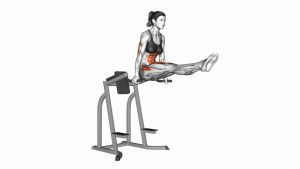
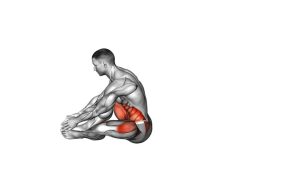
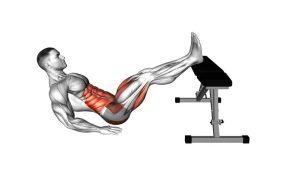
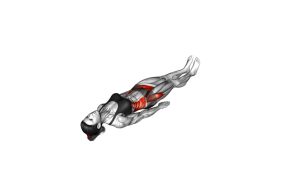
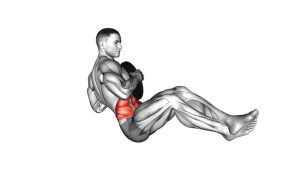
Jackknife Sit-Up: Form, Benefits, Sets, Tips & FAQ
Learn how to do the Jackknife Sit-Up with proper form. Build stronger abs, improve core control, avoid common mistakes, and follow sets, reps, FAQs, and equipment tips.
Jackknife Sit-Up
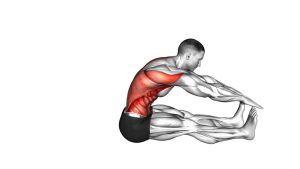
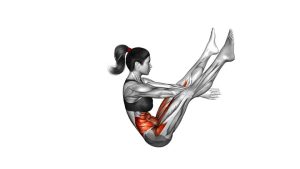
This exercise works best when every rep looks smooth, controlled, and balanced. Your upper body and lower body should rise at the same time. Your arms reach forward as your legs lift, and your body forms a strong V-shape at the top. Because the movement uses a long lever position, it is more demanding than a basic crunch or standard sit-up.
Use the Jackknife Sit-Up when you want to train abdominal strength, compression control, and bodyweight coordination. It fits well in home workouts, ab finishers, calisthenics sessions, and athletic core routines. However, it should not be rushed. Clean technique matters more than high reps.
Quick Overview
| Body Part | Abs |
|---|---|
| Primary Muscle | Rectus abdominis |
| Secondary Muscle | Hip flexors, obliques, transverse abdominis, quadriceps stabilizers |
| Equipment | Bodyweight only; exercise mat optional |
| Difficulty | Intermediate to advanced |
Sets & Reps (By Goal)
- Core strength: 3–4 sets × 6–10 controlled reps with 60–90 seconds rest.
- Muscle endurance: 2–4 sets × 10–15 reps with 45–75 seconds rest.
- Ab finisher: 2–3 sets × 8–12 reps near the end of your workout.
- Beginner progression: 2–3 sets × 5–8 bent-knee reps before attempting the full version.
- Advanced control: 3–5 sets × 6–8 slow reps with a 1-second pause at the top.
Progression rule: Add reps only when you can lift and lower without swinging, collapsing, or arching the lower back. Progress slowly because the long-lever position increases core demand quickly.
Setup / Starting Position
- Lie flat on your back: Use a mat if needed. Keep your body long from fingertips to toes.
- Extend your arms overhead: Keep the arms straight and close to the ears without shrugging the shoulders.
- Straighten your legs: Keep the legs together or slightly apart. Point the toes gently if that helps you stay controlled.
- Brace your core: Lightly tighten your abs before moving. Do not let your ribs flare upward.
- Set your neck position: Keep the neck neutral. Avoid pulling the head forward before the body moves.
The starting position should feel long, controlled, and stable. If your lower back arches strongly before the first rep, bend your knees slightly or use a smaller range of motion.
Execution (Step-by-Step)
- Brace before lifting: Exhale slightly and create abdominal tension before your arms and legs leave the floor.
- Lift both ends together: Raise your torso and legs at the same time. Your arms should travel forward as your legs come up.
- Reach toward your feet: Bring your hands toward your toes, shins, or ankles depending on your mobility and strength.
- Create a V-shape: At the top, balance briefly on your hips while your abs contract hard.
- Pause with control: Hold the top for a short moment without bouncing or using momentum.
- Lower slowly: Return your torso, arms, and legs toward the floor at the same pace.
- Reset fully: Reach long again before starting the next rep. Keep the movement clean from rep to rep.
Pro Tips & Common Mistakes
Pro Tips
- Move both halves together: Your torso and legs should rise as one coordinated unit.
- Use your exhale: Breathe out as you fold upward. This helps your abs contract more effectively.
- Keep reps smooth: A slower rep usually builds more control than a fast rep.
- Reach forward, not just upward: Think about closing the space between your ribs and pelvis.
- Control the bottom: The lowering phase builds strength, so avoid dropping your legs.
Common Mistakes
- Swinging the arms: Throwing the arms creates momentum and reduces abdominal tension.
- Dropping the legs: This can pull on the lower back and reduce control.
- Overusing the hip flexors: The abs should lead the movement, not just the thighs.
- Pulling the neck forward: Keep the neck relaxed and let the torso rise naturally.
- Skipping the reset: Each rep should begin from a controlled long-body position.
- Training too close to failure: Form breaks quickly when fatigue is high, so stop before sloppy reps appear.
FAQ
What muscles does the Jackknife Sit-Up work?
The Jackknife Sit-Up mainly works the rectus abdominis. It also involves the hip flexors, obliques, transverse abdominis, and stabilizing muscles around the pelvis. Because both the upper and lower body move together, the exercise demands strong coordination.
Is the Jackknife Sit-Up good for beginners?
It can be too difficult for complete beginners. A better starting point is a bent-knee jackknife, tuck-up, dead bug, reverse crunch, or basic crunch. Once you can control those exercises, the full Jackknife Sit-Up becomes safer and more effective.
Why do I feel this exercise in my hip flexors?
Some hip flexor involvement is normal because the legs lift during the movement. However, your abs should still feel like the main working area. If the hips dominate, bend the knees, shorten the range, or slow down the lowering phase.
Can Jackknife Sit-Ups help build visible abs?
They can strengthen and develop the abdominal muscles. Visible abs also depend on nutrition, body-fat level, total training volume, and consistency. Use this exercise as part of a balanced core and full-body program.
How can I make Jackknife Sit-Ups easier?
Bend your knees, reach toward your shins instead of your toes, reduce the range of motion, or perform one leg at a time. These variations reduce the lever length and make the movement easier to control.
How can I make Jackknife Sit-Ups harder?
Slow down the lowering phase, pause at the top, keep the legs straighter, or hold a light medicine ball. Only add difficulty when your lower back stays controlled and your reps remain smooth.
Recommended Equipment (Optional)
- Exercise Mat — adds comfort and support for floor-based ab training.
- Thick Yoga Mat — useful if your spine or hips need extra cushioning during sit-up variations.
- Medicine Ball — can be used later for advanced weighted jackknife variations.
- Core Sliders — helpful for related core progressions, mountain climbers, and body-saw drills.
- Ab Wheel Roller — supports advanced anti-extension core training alongside jackknife work.
Tip: Equipment is optional. For most people, a quality mat is the only tool needed to perform the Jackknife Sit-Up comfortably and consistently.