Weighted Twisting Crunch on Bench: Form, Benefits, Sets & Tips
Learn the weighted twisting crunch on bench for stronger abs and obliques. Includes setup, step-by-step form, sets, mistakes, FAQs, and gear.
Weighted Twisting Crunch (on Bench)
This exercise is best used when you already know how to perform a regular crunch without pulling on your neck or arching your lower back. The added weight increases abdominal tension, while the twist creates a stronger oblique demand. However, the goal is not to sit all the way up or rotate aggressively. Instead, the movement should stay short, controlled, and focused on the ribs moving toward the opposite side of the pelvis.
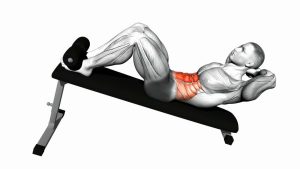
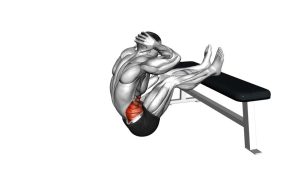
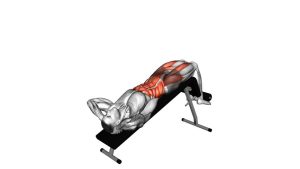
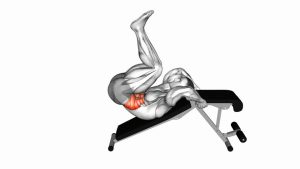
In the video, the movement is performed from a lying position on a bench. The lifter holds a weight securely, lifts the shoulders from the bench, rotates to one side, returns under control, and then repeats toward the opposite side. The lower body stays stable, which keeps the work concentrated in the abs and obliques rather than turning the exercise into a hip-driven sit-up.
Quick Overview
| Body Part | Core |
|---|---|
| Primary Muscle | Rectus abdominis and obliques |
| Secondary Muscle | Transverse abdominis, hip flexors, deep spinal stabilizers |
| Equipment | Flat bench and weight plate or dumbbell |
| Difficulty | Intermediate |
Sets & Reps (By Goal)
- Core control: 2–3 sets × 8–10 reps per side using a slow tempo.
- Oblique strength: 3–4 sets × 10–12 reps per side with moderate resistance.
- Muscle endurance: 2–3 sets × 12–20 total alternating reps with a lighter weight.
- Finisher: 1–2 sets × 20–30 controlled alternating reps near the end of a core session.
Progression rule: Add reps before adding load. When every rep stays smooth, controlled, and free from neck pulling or lower-back strain, increase the weight slightly.
Setup / Starting Position
- Lie on a flat bench: Position your back on the bench with your head, shoulders, and torso supported at the start.
- Secure your lower body: Keep your feet stable and your knees bent. Your hips should not shift side to side during the twist.
- Hold the weight safely: Use a light plate or dumbbell. Keep it close to your chest or slightly in front of your upper torso.
- Set your ribs down: Brace your core gently before you start. Do not flare the ribs or over-arch your lower back.
- Relax your neck: Keep the chin slightly tucked and avoid pulling the head forward. Your abs should lift the torso, not your neck.
Start with a very light load if this is your first time doing the movement. The twist should come from the upper trunk, not from throwing the arms across the body.
Execution (Step-by-Step)
- Brace before lifting: Exhale lightly and tighten your abs as if preparing for a small crunch.
- Lift the shoulders: Curl your upper back off the bench. Keep the lower back mostly stable instead of sitting all the way up.
- Rotate to one side: Turn your ribcage diagonally toward the opposite hip or knee. Let the weight follow your torso naturally.
- Pause at the top: Hold briefly while squeezing the abs and obliques. Keep the twist controlled, not forced.
- Lower with control: Return your torso to the bench slowly. Do not drop back or let the weight pull you down.
- Repeat to the other side: Perform the next rep by rotating in the opposite direction with the same range and tempo.
Pro Tips & Common Mistakes
- Keep the weight controlled: The weight should move because your torso rotates. Do not swing it with your arms.
- Use a short crunch range: This is not a full sit-up. Lift only enough to contract the abs and create a clean twist.
- Rotate through the ribs: Think about turning your ribcage, not just moving your hands from side to side.
- Avoid neck strain: Keep the head aligned with the upper spine. Do not lead the movement with your chin.
- Control the descent: The lowering phase builds strength. Do not collapse back onto the bench.
- Do not over-rotate: A moderate twist is enough. Excessive rotation under load can irritate the lower back.
- Keep the hips stable: If your hips rock or your feet slide, reset your lower-body position before continuing.
- Breathe with the rep: Exhale as you crunch and rotate. Inhale as you return to the starting position.
FAQ
What muscles does the weighted twisting crunch on bench work?
It works the rectus abdominis during the crunch and the obliques during the rotation. The transverse abdominis and deep spinal stabilizers also help control the torso and keep the movement steady.
Should I use a dumbbell or a weight plate?
Both can work. A weight plate is often easier to hold close to the chest, while a dumbbell may feel more compact. Choose the option that lets you keep the movement controlled without swinging.
Is the weighted twisting crunch good for obliques?
Yes. The twisting portion makes the obliques work harder than in a standard crunch. For best results, rotate through the torso and avoid simply moving the arms across the body.
How heavy should the weight be?
Start light. Many lifters only need a small plate or light dumbbell to feel the exercise. If you cannot pause at the top or lower slowly, the weight is too heavy.
Is this exercise safe for the lower back?
It can be safe when performed with a small range, slow tempo, and moderate load. However, people with back pain or sensitivity to loaded spinal rotation should choose a safer alternative or get professional guidance.
What is the biggest mistake with this exercise?
The biggest mistake is swinging the weight instead of using the abs and obliques. When momentum takes over, the exercise becomes less effective and more stressful on the spine.
Recommended Equipment
- Flat Workout Bench — provides a stable surface for controlled bench-based core exercises.
- Weight Plate — easy to hold close to the chest during weighted crunch variations.
- Hex Dumbbell — a compact loading option for progressive weighted ab training.
- Thick Exercise Mat — useful for warm-ups, floor crunches, and safer core accessory work.
- Adjustable Weight Bench — allows multiple core angles and other strength-training exercises.
Tip: Equipment should support better control, not make the exercise heavier too soon. Choose a stable bench and a manageable weight before increasing difficulty.