Band Kneeling Crunch: Proper Form, Benefits, Sets, Tips & FAQ
Learn the Band Kneeling Crunch for stronger abs with step-by-step form, sets by goal, common mistakes, FAQs, and home workout equipment tips.
Band Kneeling Crunch
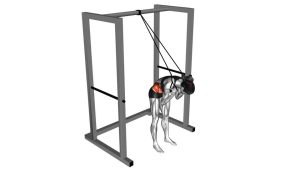
This exercise works best when the movement comes from the abdominal wall rather than from a big hip hinge. Because the band pulls from a high angle, it gives constant resistance as the torso curls forward. As a result, the exercise can feel similar to a cable crunch, but it is easier to perform at home or in a small training space.
For best results, keep the elbows close to the head, maintain a steady kneeling base, and move through each repetition with a smooth curl, short squeeze, and controlled return. Additionally, avoid rushing the upward phase because that portion helps build better core control.
Quick Overview
| Body Part | Abs |
|---|---|
| Primary Muscle | Rectus abdominis |
| Secondary Muscle | Obliques, deep core stabilizers, hip flexors as light stabilizers |
| Equipment | Resistance band and a secure high anchor point |
| Difficulty | Beginner to intermediate |
Sets & Reps (By Goal)
- Core control and technique: 2–3 sets × 10–12 reps with a slow tempo and light band tension.
- Muscle growth for abs: 3–4 sets × 10–15 reps with moderate band tension and a firm squeeze at the bottom.
- Core endurance: 2–4 sets × 15–20 reps with smooth breathing and consistent range.
- Warm-up activation: 1–2 sets × 8–12 reps before heavier compound training.
- Home ab finisher: 2–3 sets × 12–20 reps with short rest and clean control.
Progression rule: First improve control, then add reps, and finally increase band tension. However, do not increase resistance if it causes hip hinging, arm pulling, or lower-back discomfort.
Setup / Starting Position
- Anchor the band high: Secure the resistance band above head level on a stable rack, door anchor, or similar fixed point.
- Kneel facing the anchor: Place both knees on the floor with the body facing the band attachment.
- Hold the band near your head: Bring the hands close to the sides of the head or temple area, similar to the visible position in the video.
- Set the hips over the knees: Keep the lower body stable so the crunch does not turn into a backward-and-forward rocking motion.
- Create light starting tension: Move far enough from the anchor so the band is already slightly stretched before the first rep.
- Brace gently: Keep the ribs controlled, shoulders relaxed, and neck neutral before curling forward.
Tip: Use a pad, folded towel, or exercise mat under your knees if the floor feels uncomfortable. This helps you focus on abdominal flexion instead of knee pressure.
Execution (Step-by-Step)
- Start tall: Begin in a kneeling position with the torso upright or slightly inclined forward while the band stays tight.
- Lock the hand position: Keep the hands near the head and avoid turning the movement into an arm pull.
- Curl the upper body down: Flex through the spine by bringing the ribs toward the pelvis.
- Keep the hips stable: Let the torso round forward while the hips remain mostly stacked over the knees.
- Reach peak contraction: Continue curling until the abs feel strongly shortened and the chest moves closer toward the thighs.
- Pause briefly: Hold the bottom position for about 1 second without bouncing.
- Return with control: Slowly extend the spine back to the starting position while resisting the band’s pull.
- Reset before the next rep: Regain your tall kneeling posture, breathe, and repeat with the same smooth path.
Pro Tips & Common Mistakes
- Think “ribs to pelvis”: This cue helps you crunch with the abs rather than fold from the hips.
- Do not pull with your arms: Your hands hold the band, but your abs should create the main movement.
- Keep the elbows close: Let the elbows travel with the torso instead of flaring and tugging the band downward.
- Avoid sitting back: If the hips move far behind the knees, the exercise becomes less focused on spinal flexion.
- Control the return: The upward phase matters because it trains the abs to resist the band.
- Use enough tension, not maximum tension: Too much band resistance can make you jerk, shrug, or compensate.
- Keep the neck relaxed: Do not yank the head down with your hands. Instead, let the head follow the spine naturally.
- Breathe out as you crunch: Exhaling during the downward curl often improves abdominal contraction.
- Pause at the bottom: A short squeeze makes the movement more effective and reduces momentum.
- Stay consistent rep to rep: Each repetition should look controlled, with the same start, curl, squeeze, and return.
FAQ
What muscles does the Band Kneeling Crunch work?
The Band Kneeling Crunch mainly works the rectus abdominis, which is the front abdominal muscle responsible for spinal flexion. In addition, the obliques and deeper core muscles help stabilize the torso during the movement.
Is the Band Kneeling Crunch the same as a cable crunch?
It uses a very similar movement pattern, but the resistance comes from a band instead of a cable stack. Because band tension changes as it stretches, the exercise may feel slightly different from a machine-based cable crunch.
Where should I feel this exercise?
You should feel the exercise mostly through the front of the abs. However, if you feel it mainly in your hip flexors, arms, neck, or lower back, reduce the resistance and focus on curling the ribs toward the pelvis.
Should my hips move during the kneeling band crunch?
The hips should stay relatively stable. A small natural shift can happen, but the exercise should not become a large hip hinge or a rocking motion. Therefore, keep the knees planted and the hips controlled.
Can beginners do the Band Kneeling Crunch?
Yes, beginners can perform it if they use a light band and learn the movement slowly. Start with shorter sets, use a controlled range, and avoid heavy resistance until the form feels smooth.
How do I make the exercise harder?
You can use a stronger band, step slightly farther from the anchor, add a longer pause at the bottom, or slow down the return phase. Nevertheless, increase difficulty only if your hips remain stable and your abs stay in control.
How do I make the exercise easier?
Use a lighter band, move closer to the anchor, reduce the range of motion, or perform fewer reps per set. Additionally, practice slow bodyweight kneeling crunches before adding more resistance.
Recommended Equipment (Optional)
- Resistance Bands Set — useful for adjusting tension and progressing the kneeling crunch over time
- Door Anchor for Resistance Bands — helps create a high anchor point for home band crunches
- Exercise Mat — provides knee comfort and improves floor support during kneeling exercises
- Foam Knee Pad — helpful if you train on hard floors or need extra kneeling comfort
- Resistance Band Handles — can make band gripping more comfortable during repeated crunch sets
Tip: Always check that the band and anchor are secure before starting. If the anchor slips, the movement becomes unsafe and the exercise quality drops immediately.