Standing Alternating Front Knee Kick: Form, Benefits, Sets & Tips
Learn the Standing Alternating Front Knee Kick for hip flexors, quads, balance, and core control with step-by-step form, sets, tips, FAQs, and gear.
Standing Alternating Front Knee Kick
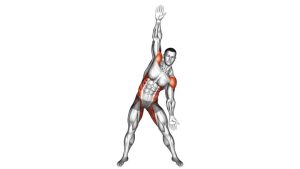
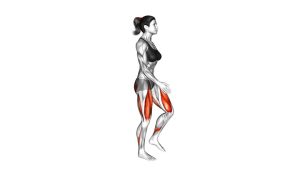
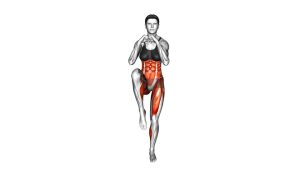
This exercise begins from a tall standing position. Then, one arm lifts for balance as the opposite leg drives forward with a bent knee. After the leg lowers under control, the body resets and repeats on the other side. Because the movement is low impact, it works well as a warm-up, coordination drill, beginner leg exercise, or light cardio movement.
Quick Overview
| Body Part | Legs |
|---|---|
| Primary Muscle | Hip flexors and quadriceps |
| Secondary Muscle | Abs, glutes, calves, and shoulder stabilizers |
| Equipment | No equipment required |
| Difficulty | Beginner |
Sets & Reps (By Goal)
- Dynamic warm-up: 2–3 sets × 8–12 reps per side at a smooth pace
- Balance and coordination: 3 sets × 6–10 reps per side with slower control
- Light cardio conditioning: 3–5 rounds × 30–45 seconds with 30–60 seconds rest
- Beginner leg activation: 2–4 sets × 10–15 total alternating reps
Progression rule: First improve posture, balance, and rhythm. Then, gradually increase reps, tempo, or total working time.
Setup / Starting Position
- Stand tall: Place your feet about hip-width apart with your torso upright.
- Brace lightly: Keep your ribs stacked over your pelvis and tighten your abs gently.
- Relax your shoulders: Let your arms hang naturally before each repetition begins.
- Look forward: Keep your head neutral and your eyes fixed on one point for balance.
- Prepare to alternate: Shift your weight onto one leg without leaning backward.
Execution (Step-by-Step)
- Lift one arm: Raise one arm out and upward to help stabilize your body.
- Shift your weight: Balance on the standing leg while keeping your torso tall.
- Drive the opposite knee forward: Lift the working leg with a bent knee toward the front of your body.
- Control the top position: Pause briefly without snapping, twisting, or leaning back.
- Lower with control: Bring the foot back to the floor softly and return to standing.
- Repeat on the other side: Alternate sides using the same controlled pattern.
Pro Tips & Common Mistakes
- Stay upright: Avoid leaning backward as the knee lifts.
- Move with control: Do not throw the leg forward or rush the lowering phase.
- Use the arms naturally: Let the arms help balance instead of staying stiff.
- Keep the standing foot stable: Press evenly through the heel, big toe, and little toe.
- Avoid knee collapse: Keep the standing knee aligned with the toes.
- Do not over-kick: Lift only as high as you can without losing posture.
- Breathe steadily: Exhale as the knee drives forward, then inhale as you reset.
FAQ
Is this a front kick or a knee raise?
Based on the visible video, it is closer to a controlled front knee raise / front kick prep drill. The knee bends and drives forward, but there is no clear hard snapping extension.
What muscles does the Standing Alternating Front Knee Kick work?
It mainly works the hip flexors and quadriceps. Additionally, the abs, glutes, calves, and shoulders help with balance and body control.
Is this exercise good for beginners?
Yes. Since it uses no equipment and stays low impact, beginners can use it to improve coordination, leg control, balance, and warm-up quality.
Should I kick high?
No. Height is not the main goal. Instead, lift only as high as you can while keeping your torso upright, your standing leg stable, and your movement smooth.
Can I use this exercise for cardio?
Yes. When performed continuously with clean form, it can become a light cardio drill. However, avoid turning it into a sloppy swinging motion.
Recommended Equipment (Optional)
- Exercise Mat — adds comfort and traction for standing bodyweight drills
- Non-Slip Training Shoes — supports balance during alternating knee-drive movements
- Mini Resistance Bands — useful for hip activation before front knee kick drills
- Adjustable Ankle Weights — optional progression for advanced control work only
- Balance Pad — helps progress single-leg stability and control
Tip: Add equipment only after the bodyweight version feels stable, smooth, and pain-free.