Sitting In-Out Leg Raise on a Padded Stool: Form, Sets, Tips & FAQ
Learn the Sitting In-Out Leg Raise on a padded stool to strengthen abs, hip flexors, and core control with proper form, sets, tips, and FAQs.
Sitting In-Out Leg Raise on a Padded Stool
This exercise is useful for building abdominal endurance, hip flexor strength, and seated core stability. Since the hands support the body beside the hips, the upper body helps stabilize while the lower body performs the main movement. However, the abs should remain active from the first extended position until the final return.
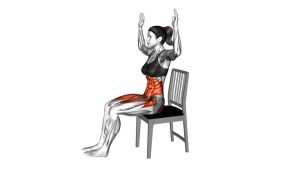
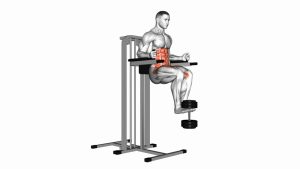
In the visible movement, the athlete sits on a padded stool, leans the torso slightly backward, supports the body with both hands, extends the legs forward, and then pulls both knees toward the chest. After a brief controlled tuck, the legs extend outward again without dropping to the floor.
Quick Overview
| Body Part | Core |
|---|---|
| Primary Muscle | Rectus abdominis |
| Secondary Muscle | Hip flexors, obliques, deep core stabilizers, quadriceps |
| Equipment | Padded stool, flat bench, or sturdy elevated seat |
| Difficulty | Intermediate, because the feet stay elevated and the core remains under constant tension |
Sets & Reps (By Goal)
- Core control: 2–3 sets × 8–12 slow reps, resting 45–75 seconds between sets.
- Ab endurance: 3–4 sets × 12–20 reps, using a smooth tempo and no bouncing.
- Strength-focused core work: 3–5 sets × 6–10 controlled reps, holding the tuck for 1–2 seconds.
- Beginner modification: 2–3 sets × 6–8 reps with a shorter leg extension and slower breathing.
- Finisher option: 2 rounds of 20–30 seconds, keeping every rep clean and controlled.
Progression rule: First improve control, then increase reps. After that, extend the legs farther or slow the outward phase. Do not progress by swinging faster.
Setup / Starting Position
- Sit near the front edge: Position yourself on a padded stool or sturdy bench with enough room for your legs to move freely.
- Place your hands beside your hips: Press your palms or fingers into the seat for balance and support.
- Lean back slightly: Keep the torso angled back, but avoid collapsing through the chest or rounding excessively.
- Brace your core: Tighten your abs before the legs move so the lower back stays controlled.
- Extend both legs forward: Keep the feet elevated and the knees straight or slightly soft in the “out” position.
- Keep your shoulders relaxed: Use the arms for support, but do not shrug or lock tension into the neck.
Tip: The padded stool should feel stable. If it slides, rocks, or feels narrow, use a stronger flat bench instead.
Execution (Step-by-Step)
- Start in the extended position: Sit tall, lean back slightly, support yourself with your hands, and hold both legs forward with the feet off the floor.
- Begin the inward pull: Bend both knees and bring them toward your chest while keeping the movement smooth.
- Keep the torso stable: Allow a small natural change in posture, but do not rock aggressively forward and backward.
- Reach the tuck position: Pull the knees close enough to feel strong abdominal contraction without jamming the hips.
- Pause briefly: Hold the “in” position for a moment while keeping the feet elevated.
- Extend the legs outward: Slowly push both legs forward again until they return to the extended position.
- Control the finish: Stop before the feet touch the floor, then repeat the next rep with the same tempo.
Pro Tips & Common Mistakes
- Keep constant tension: Do not rest the feet on the floor between reps unless you are modifying the exercise.
- Move both legs together: Keep the knees and feet traveling symmetrically to avoid twisting through the hips.
- Do not overuse momentum: Swinging makes the exercise easier and reduces abdominal tension.
- Control the outward phase: The extension is where many people lose form, so slow it down.
- Avoid excessive lower-back arching: If the back arches hard when the legs extend, shorten the range.
- Keep the chest lifted: A slight lean is useful, but a collapsed torso reduces control.
- Use your hands wisely: Your hands stabilize the body; they should not push so hard that the abs stop working.
- Breathe steadily: Exhale as the knees come in, then inhale lightly as the legs extend out.
FAQ
What muscles does the Sitting In-Out Leg Raise work?
It mainly trains the rectus abdominis, especially through repeated trunk stabilization and knee tucking. In addition, the hip flexors, obliques, deep core muscles, and quadriceps assist during the leg movement.
Is this exercise good for lower abs?
Yes, it can strongly challenge the lower portion of the abdominal wall because the legs stay elevated. However, the abs work as one connected muscle group, so focus on pelvic control and smooth movement rather than trying to isolate only one area.
Should my feet touch the floor between reps?
Ideally, no. Keeping the feet elevated maintains constant core tension. However, beginners may lightly tap the floor between reps if they need a safer modification.
Why do I feel this mostly in my hip flexors?
The hip flexors naturally help lift and pull the legs. Still, if they dominate completely, shorten the leg extension, lean back less, and focus on bracing the abs before every rep.
Can beginners do the Sitting In-Out Leg Raise?
Beginners can perform a modified version with a smaller range of motion, slower reps, and brief foot taps. Once control improves, they can keep the feet elevated for the full set.
What is the biggest mistake in this exercise?
The biggest mistake is using momentum. When the legs swing quickly, the abs lose tension and the lower back may take more stress. Therefore, each rep should stay slow, balanced, and deliberate.
Recommended Equipment
- Adjustable Workout Bench — gives a stable elevated surface for seated core exercises and leg raise variations.
- Padded Workout Stool — useful when practicing the exercise exactly in a seated elevated position.
- Exercise Mat — helpful for warm-ups, floor core drills, and safer landing space around the bench.
- Adjustable Ankle Weights — optional advanced progression once bodyweight reps are fully controlled.
- Resistance Bands Set — useful for pairing this core drill with hip flexor, glute, and full-body stability work.
Tip: Choose stable equipment first. A strong bench or stool matters more than extra resistance because this exercise depends on balance, control, and clean leg movement.