Dumbbell Crunch Hold with Legs Off: Core Form, Sets, Tips & FAQ
Build stronger abs with the Dumbbell Crunch Hold with Legs Off. Learn proper setup, core bracing, sets, mistakes, FAQs, and gear tips.
Dumbbell Crunch Hold with Legs Off
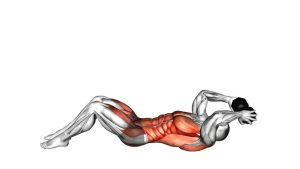
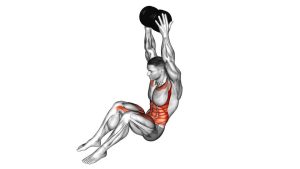
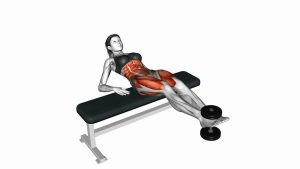
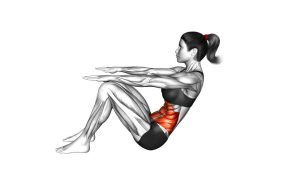
This exercise is best performed with slow control, steady breathing, and constant abdominal tension. Instead of chasing a large crunch, the goal is to keep the shoulders lifted, the dumbbell stable, and the legs hovering without letting the lower back arch. As a result, the movement trains both upper-ab tension and lower-ab control at the same time.
Quick Overview
| Body Part | Core |
|---|---|
| Primary Muscle | Rectus abdominis |
| Secondary Muscle | Hip flexors, transverse abdominis, obliques, deep core stabilizers |
| Equipment | Dumbbell and exercise mat |
| Difficulty | Intermediate because the legs stay elevated while the dumbbell adds extra stability demand |
Sets & Reps (By Goal)
- Core endurance: 3–4 sets × 15–30 second holds, resting 45–75 seconds between sets.
- Strength control: 3–5 sets × 10–20 second holds with a moderate dumbbell and strict positioning.
- Beginner progression: 2–3 sets × 8–15 second holds with a light dumbbell or bent knees.
- Finisher option: 2–3 rounds near the end of an ab workout, stopping before form breaks down.
Progression rule: First increase hold time, then improve leg control, and only then use a heavier dumbbell. However, never increase load if your lower back lifts from the floor.
Setup / Starting Position
- Lie on your back: Start on a flat surface or exercise mat with your torso centered and your legs extended.
- Hold the dumbbell securely: Grip one dumbbell with both hands and position it above your chest with the arms mostly extended.
- Brace your core: Pull the ribs down slightly and prepare to keep your lower back controlled against the floor.
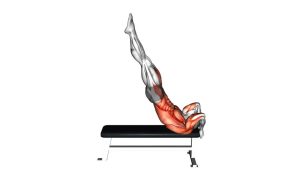
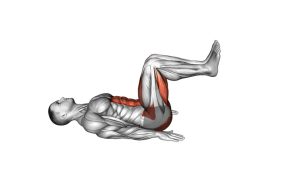
- Lift the legs: Raise both legs off the floor and keep them hovering in a controlled position.
- Lift into the crunch: Bring the head, shoulders, and upper back slightly off the floor while keeping the dumbbell steady above the torso.
The video shows a controlled hold rather than repeated crunch reps. Therefore, treat the setup as a stable position you must maintain, not a fast movement you rush into.
Execution (Step-by-Step)
- Start with control: Brace your abs before lifting so the legs and shoulders rise without swinging.
- Hold the dumbbell steady: Keep the weight above the chest or upper torso without letting it drift forward or backward.
- Elevate the shoulders: Maintain a small crunch position with the upper back off the floor.
- Keep both legs off the ground: Hold the legs extended and hovering while preventing the lower back from arching.
- Breathe under tension: Take short, controlled breaths while keeping the ribs down and the abs engaged.
- Finish cleanly: Lower the shoulders and legs with control when you can no longer hold the position safely.
Pro Tips & Common Mistakes
- Keep the movement isometric: This exercise is mainly a hold, so avoid turning it into fast crunch repetitions.
- Do not let the dumbbell drift: A moving dumbbell makes the hold harder to control and may pull you out of position.
- Protect the lower back: If your back arches, raise the legs slightly higher or bend the knees to reduce the lever length.
- Avoid neck pulling: The neck should stay long while the abs lift the upper body, not the head alone.
- Use a light-to-moderate dumbbell: Better control beats heavier loading for this exercise.
- Control the finish: Do not drop the legs or slam the shoulders down at the end of the hold.
- Build time gradually: Add a few seconds per set only when every hold stays clean and stable.
FAQ
What muscles does the Dumbbell Crunch Hold with Legs Off work?
It mainly targets the rectus abdominis, especially because the shoulders stay lifted in a crunch position. Additionally, the hip flexors, transverse abdominis, and obliques help keep the legs elevated and the trunk stable.
Is this exercise a crunch or a hollow body hold?
It combines both ideas. The upper body stays in a crunch position, while the legs-off position creates a hollow-body-style core challenge. Because the video shows a sustained hold, it should be treated as an isometric core exercise.
How heavy should the dumbbell be?
Start light enough that you can keep the dumbbell steady and maintain your leg position. If the weight causes swinging, neck tension, or back arching, it is too heavy for clean execution.
Should my legs be straight the whole time?
In the visible exercise, the legs are elevated and extended. However, beginners can bend the knees slightly to reduce difficulty while still training the same core-control pattern.
Why does my lower back arch during this hold?
Your legs may be too low, the dumbbell may be too heavy, or your hold may be too long. Therefore, raise the legs slightly, shorten the set, or use a lighter dumbbell until your core can control the position.
Can I use this exercise in a home ab workout?
Yes. Since it only requires a dumbbell and floor space, it works well for home training. For best results, place it after basic core activation drills or near the end of an ab session as a controlled finisher.
Recommended Equipment
- Hex Dumbbell — useful for adding controlled resistance to the crunch hold.
- Adjustable Dumbbell — allows easy load changes as your core strength improves.
- Exercise Mat — provides cushioning for the back, shoulders, and hips during floor holds.
- Ab Workout Mat — supports more comfortable crunch-style positions and repeated core sessions.
- Yoga Blocks — helpful as optional height markers for leg-position control and progression practice.
Tip: Choose equipment that helps you control the position better. Moreover, avoid using a heavier dumbbell until your legs, torso, and lower back position stay stable throughout the full hold.