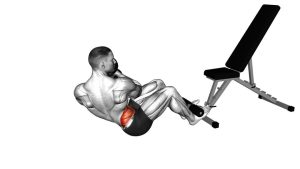
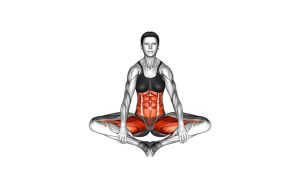
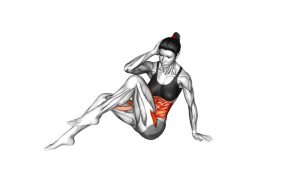
Dumbbell Single-Arm Starfish Crunch: Core Form, Sets, Tips & FAQ
Build stronger abs and obliques with the Dumbbell Single-Arm Starfish Crunch. Learn proper form, sets, mistakes, FAQs, and equipment tips.
Dumbbell Single-Arm Starfish Crunch
This exercise works best when every rep stays smooth and controlled. Instead of swinging the dumbbell or kicking the leg upward, lift through the core and guide the weight toward the opposite foot with precision. As a result, the movement becomes more effective for abdominal tension and safer for the lower back.
Quick Overview
| Body Part | Core |
|---|---|
| Primary Muscle | Rectus abdominis and obliques |
| Secondary Muscle | Hip flexors, deep core stabilizers, serratus anterior, shoulder stabilizers |
| Equipment | One dumbbell and an exercise mat |
| Difficulty | Intermediate because the movement requires load control, diagonal coordination, and core stability |
Sets & Reps (By Goal)
- Core control: 2–3 sets × 6–8 reps per side with a slow tempo
- Muscle endurance: 3 sets × 10–12 reps per side using a light dumbbell
- Strength focus: 3–4 sets × 6–10 reps per side with controlled resistance
- Beginner progression: 2 sets × 5–6 reps per side without rushing the lowering phase
Progression rule: Increase control before increasing weight. Additionally, use a heavier dumbbell only when you can lift and lower without swinging, arching, or losing the diagonal path.
Setup / Starting Position
- Lie on your back: Position yourself flat on the floor with your body opened into a wide starfish shape.
- Hold one dumbbell: Extend one arm overhead while gripping the dumbbell firmly and keeping the shoulder controlled.
- Open the opposite side: Keep the opposite arm extended outward on the floor for balance and support.
- Extend both legs: Keep the legs long and separated enough to create the starfish position.
- Brace lightly: Set your ribs down, engage your abs, and prepare to lift the dumbbell arm toward the opposite leg.
The setup should feel stable before the rep starts. Therefore, avoid beginning with the dumbbell pulling your shoulder backward or your lower back already lifted off the floor.
Execution (Step-by-Step)
- Start from the starfish position: Keep the dumbbell arm overhead, the opposite arm out for balance, and both legs extended.
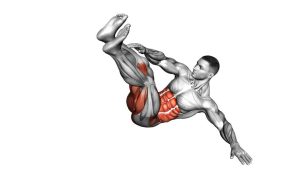
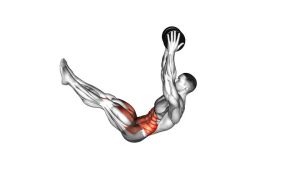
- Lift diagonally: Crunch upward while bringing the dumbbell arm toward the opposite leg.
- Raise the opposite leg: Lift the leg toward the dumbbell while keeping it mostly straight or only slightly bent.
- Meet near the top: Bring the dumbbell hand and opposite foot close together without forcing a hard reach.
- Pause briefly: Hold the top position for a moment while keeping the abs tight and the movement controlled.
- Lower with control: Return the dumbbell arm and leg back to the starfish position slowly.
- Repeat on the same side: Complete the target reps, then switch sides if training both diagonals.
Pro Tips & Common Mistakes
- Move across the body: Aim the dumbbell toward the opposite foot instead of crunching straight up.
- Use a light dumbbell first: Heavy weight can turn the exercise into a swing rather than a controlled core movement.
- Control the lowering phase: The descent matters because it keeps tension on the abs and protects the lower back.
- Keep the non-working arm grounded: Use it for stability, but avoid pushing so hard that it replaces core effort.
- Avoid neck pulling: Let the torso lift through abdominal contraction, not through neck strain.
- Do not chase toe contact: Touching the foot is not required. Instead, focus on controlled diagonal compression.
- Keep the dumbbell steady: A steady weight shows better shoulder and core control.
FAQ
What muscles does the Dumbbell Single-Arm Starfish Crunch work?
It mainly works the rectus abdominis and obliques. Additionally, the hip flexors help raise the leg, while the shoulder stabilizers control the dumbbell during the diagonal crunch.
Is this exercise beginner-friendly?
It is better for intermediate users because the dumbbell adds resistance and coordination demand. However, beginners can practice the same pattern without weight first.
Should the dumbbell touch the foot?
Not necessarily. The goal is to move the dumbbell and opposite leg toward each other with control. Therefore, a near touch is enough if your form stays clean.
Why do I feel this in my hip flexors?
Some hip flexor activation is normal because the leg is lifting. However, if your hip flexors dominate, slow down, brace harder, and use a smaller range of motion.
How heavy should the dumbbell be?
Use a light dumbbell at first. A good weight allows you to lift, pause, and lower without swinging, twisting aggressively, or losing shoulder control.
Can I do this exercise on both sides?
Yes. For balanced core training, perform the same number of reps with the opposite arm and opposite leg after finishing the first side.
Recommended Equipment
- Hex Dumbbell — provides stable resistance for weighted core exercises
- Adjustable Dumbbell — useful for changing resistance as your core strength improves
- Thick Exercise Mat — adds comfort and support during floor-based crunch variations
- Non-Slip Yoga Mat — helps keep the body stable during diagonal lifting and lowering
- Core Sliders — optional tool for adding other controlled core variations to your routine
Tip: Choose equipment that supports control rather than maximum difficulty. In this exercise, clean movement quality is more important than using a heavy dumbbell.