Cable Kneeling Twist: Form, Core Benefits, Sets, Tips & FAQ
Learn the Cable Kneeling Twist for stronger abs, obliques, and rotational core control. Includes setup, form cues, sets, mistakes, FAQs, and gear.
Cable Kneeling Twist
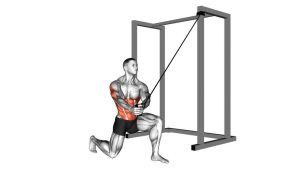
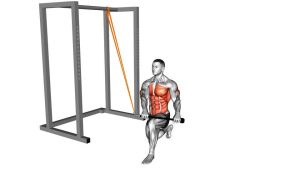
This exercise works best when the cable stays under constant tension and the torso moves as one strong unit. During each repetition, the hands guide the handle across the body while the ribs, shoulders, and upper trunk rotate together. Meanwhile, the front foot and kneeling leg create a stable base so the core can do the main work.
In the uploaded demonstration, the model uses a half-kneeling stance beside a cable machine, keeps both hands on one handle, and performs a smooth twisting motion with no visible rushing. Therefore, this version is best described as a half-kneeling cable rotational twist for core strength, oblique control, and trunk coordination.
Quick Overview
| Body Part | Core |
|---|---|
| Primary Muscle | Obliques and rectus abdominis |
| Secondary Muscle | Transverse abdominis, hip stabilizers, shoulders, and upper-back stabilizers |
| Equipment | Cable machine with single handle attachment |
| Difficulty | Beginner to Intermediate |
Sets & Reps (By Goal)
- Core control: 2–3 sets × 8–10 reps per side with light resistance and slow tempo.
- Oblique strength: 3–4 sets × 10–12 reps per side with moderate cable tension.
- Athletic rotation: 3–4 sets × 8–12 reps per side while keeping the hips stable and the trunk powerful.
- Warm-up activation: 1–2 sets × 8 reps per side using a very light load.
Progression rule: Add resistance only after you can rotate without leaning, twisting the knees, shrugging the shoulders, or losing your half-kneeling balance.
Setup / Starting Position
- Set the cable height: Position the pulley around chest height so the cable travels horizontally during the twist.
- Attach a single handle: Use one cable handle and hold it firmly with both hands.
- Move into half-kneeling: Place one knee on the floor and plant the opposite foot forward for balance.
- Stand beside the cable path: Your body should be sideways to the machine so the cable pulls from one side.
- Brace your core: Keep your ribs stacked over your hips, chest tall, and shoulders relaxed.
- Start with tension: Extend your arms forward enough to feel the cable, but do not let it pull your torso out of position.
If the floor is uncomfortable under the knee, use a foam pad or folded mat. Better comfort usually improves stability and cleaner rotation.
Execution (Step-by-Step)
- Begin tall: Hold the handle with both hands at chest height while keeping the front foot planted and the kneeling leg steady.
- Create light tension: Let the cable pull from the side, then brace your abs before starting the twist.
- Rotate through the torso: Turn your ribs and shoulders together while guiding the handle across your body.
- Keep the hips quiet: Avoid letting the pelvis spin or the front knee collapse inward as the torso rotates.
- Reach the end range with control: Stop when your trunk has rotated fully without leaning or forcing the lower back.
- Pause briefly: Hold the end position for a moment while keeping the cable under control.
- Return slowly: Reverse the motion and bring the handle back to the starting position without letting the cable snap you back.
- Repeat evenly: Complete all reps on one side, then switch your stance and perform the same number of reps on the opposite side.
Pro Tips & Common Mistakes
- Use a light-to-moderate load: Heavy resistance can pull you out of position and turn the movement into a sloppy arm pull.
- Keep your base stable: Press the front foot into the floor and keep the kneeling side steady throughout the rep.
- Rotate, do not lean: Your torso should turn around a strong center line instead of bending sideways.
- Avoid rushing the return: The cable will try to pull you back, so control the eccentric phase carefully.
- Do not over-twist the lower back: Stop the rotation before your lumbar spine feels compressed or strained.
- Relax your neck: Keep your head aligned with your torso and avoid shrugging your shoulders toward your ears.
- Match both sides: Use the same load, stance, reps, and tempo on each side to build balanced rotational strength.
FAQ
What muscles does the Cable Kneeling Twist work?
The Cable Kneeling Twist mainly works the obliques and abs. Additionally, the transverse abdominis, hips, shoulders, and upper-back stabilizers help keep the body balanced during rotation.
Is the Cable Kneeling Twist good for obliques?
Yes. Because the cable pulls from the side and the torso rotates against resistance, this exercise is very useful for training the obliques. However, the movement should stay controlled instead of fast or jerky.
Should I use heavy weight on this exercise?
Usually, no. Start with a manageable weight that allows clean rotation and a stable half-kneeling position. Once your form stays smooth, you can increase the resistance gradually.
Why do I feel this more in my arms than my core?
You may be pulling the handle with your arms instead of rotating your torso. To fix this, keep the arms fairly firm, brace your abs first, and think about turning your ribs and shoulders together.
Can beginners do the Cable Kneeling Twist?
Yes, beginners can perform it with light resistance. Since the half-kneeling position helps limit lower-body movement, it can teach controlled rotation when performed slowly.
How do I make this exercise harder?
First, slow the tempo and add a brief pause at the end of each twist. After that, increase the cable weight slightly. You can also use a taller kneeling posture or longer arm position, but only if you can maintain control.
Recommended Equipment
- Cable Machine Single Handle Attachment — essential for holding the cable securely with both hands during the twist.
- Cable Attachment Handle Set — useful if you want multiple grip options for cable core exercises.
- Kneeling Exercise Pad — protects the knee and helps you keep a stable half-kneeling base.
- Adjustable Cable Machine — helpful for home gym users who want consistent cable resistance.
- Thick Exercise Mat — adds comfort and grip when performing kneeling core movements.
Tip: Choose equipment that allows smooth cable travel and stable kneeling support. If the cable feels jerky or the knee pad slides, reduce the load and improve your setup before adding intensity.