Bent-Knee V Hold: Core Form, Benefits, Sets, Tips & FAQ
Learn the Bent-Knee V Hold to build core strength, balance, and ab control with safe form, sets by goal, mistakes, FAQs, and equipment.
Bent-Knee V Hold
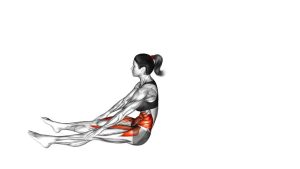
This exercise focuses on controlled tension, not speed. You should feel your abdominal muscles working to keep your torso balanced while your legs stay lifted. In addition, your hip flexors help maintain the bent-knee position. However, your lower back should not collapse or feel compressed. For best results, move slowly, keep your chest lifted, and avoid using momentum.
Quick Overview
| Body Part | Core |
|---|---|
| Primary Muscle | Rectus abdominis |
| Secondary Muscle | Hip flexors, transverse abdominis, obliques, deep core stabilizers |
| Equipment | No equipment required; optional exercise mat for comfort |
| Difficulty | Beginner to Intermediate |
Sets & Reps (By Goal)
- Beginner control: 2–3 sets × 10–20 second holds, with 45–60 seconds rest.
- Core endurance: 3–4 sets × 20–35 second holds, with 45–75 seconds rest.
- Strength and stability: 3–5 sets × 15–30 second holds, keeping a harder lean-back angle.
- Workout finisher: 2–3 rounds × 20–40 seconds, paired with planks or dead bugs.
Progression rule: First increase hold time. Then, once your balance stays clean, lean back slightly farther or extend the legs a little more while keeping the knees softly bent.
Setup / Starting Position
- Sit on the floor: Start seated with your knees bent and your feet close to your body.
- Find your balance point: Lean slightly back until you are balanced on your glutes and sit bones.
- Lift the feet: Raise both feet off the floor while keeping the knees bent.
- Position the arms: Reach your arms forward toward your legs to help balance the body.
- Brace the core: Tighten your abs gently before you begin the hold or extension.
Keep the position compact at first. If your feet drop or your back rounds too much, reduce the lean-back angle.
Execution (Step-by-Step)
- Begin in a compact tuck: Sit tall, lift the feet, and keep the knees bent near the chest.
- Reach the arms forward: Extend your arms in front of your body to improve balance.
- Lean back with control: Slowly angle your torso backward while keeping the core tight.
- Hold the V position: Maintain the bent-knee V shape without letting the feet touch the floor.
- Breathe steadily: Take short, controlled breaths while keeping the abs engaged.
- Return to the tuck: Bring the knees slightly closer and sit a little more upright to reset.
Pro Tips & Common Mistakes
- Keep your knees bent: This version is not a full straight-leg V-sit, so do not force the legs straight.
- Avoid collapsing backward: Lean back only as far as you can control with your abs.
- Do not hold your breath: Breathe steadily to keep the core active without excessive tension.
- Keep the feet lifted: If the feet touch down repeatedly, reduce the hold time.
- Control the return: Do not suddenly drop from the V position into the tuck.
- Relax the neck and shoulders: Your arms help balance, but your traps should not dominate the movement.
- Use a mat if needed: A soft surface can make the seated balance position more comfortable.
FAQ
What muscles does the Bent-Knee V Hold work?
The Bent-Knee V Hold mainly works the rectus abdominis. It also trains the hip flexors, obliques, and deep core muscles because you must balance your body while keeping the legs lifted.
Is the Bent-Knee V Hold good for beginners?
Yes, it can be beginner-friendly when performed with short holds and a compact knee bend. However, beginners should avoid leaning too far back. Instead, they should focus on balance, breathing, and clean core control.
Should my legs be straight during this exercise?
No. In this version, the knees stay bent. Straightening the legs makes the exercise harder and changes it into a more advanced V-sit variation.
Why do I feel this in my hip flexors?
Some hip flexor activation is normal because your legs stay lifted. However, your abs should still feel like the main stabilizer. If your hips dominate the movement, bring your knees closer and shorten the hold.
How can I make the Bent-Knee V Hold harder?
You can make it harder by holding longer, leaning back slightly more, extending your arms farther, or moving the knees a little farther from your chest. Nevertheless, only progress when your lower back stays controlled.
What is the most common mistake?
The most common mistake is using momentum instead of control. Many people swing the legs or collapse backward. Therefore, keep the movement slow and treat every rep like a balance drill.
Recommended Equipment
- Thick Exercise Mat — adds comfort under the hips and tailbone during seated core holds.
- Non-Slip Yoga Mat — helps keep your seated position stable while practicing balance drills.
- Ab Workout Mat — provides targeted support for floor-based abdominal exercises.
- Core Sliders — useful for adding controlled core variations after mastering the V hold.
- Mini Resistance Bands — helpful for warm-ups and lower-body activation before core training.
Equipment is optional for this exercise. However, a supportive mat can make the seated balance position more comfortable and easier to repeat with good form.