Crunch Against Wall: Abs Exercise Guide, Form, Sets, Tips & FAQ
Learn the Crunch Against Wall to target your abs with stable leg support, better control, safe form, sets, tips, mistakes, FAQs, and gear.
Crunch Against Wall
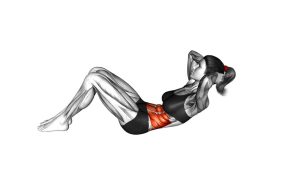
This exercise is useful for beginners who want to learn clean crunch mechanics because the wall provides simple leg support and a stable reference point. It works best when the movement stays short, slow, and controlled. Instead of trying to sit all the way up, focus on drawing the ribs toward the pelvis and lifting the shoulder blades just enough to create a strong abdominal contraction.
Quick Overview
| Body Part | Abs |
|---|---|
| Primary Muscle | Rectus abdominis |
| Secondary Muscle | Obliques, transverse abdominis, hip flexors stabilizing lightly |
| Equipment | No equipment required; wall and exercise mat recommended |
| Difficulty | Beginner |
Sets & Reps (By Goal)
- Beginner core control: 2–3 sets × 8–12 reps with slow, clean reps.
- Ab endurance: 3–4 sets × 12–20 reps with steady breathing and no momentum.
- Warm-up activation: 1–2 sets × 8–10 reps before a core or full-body session.
- Hypertrophy focus: 3–4 sets × 10–15 reps with a 1–2 second squeeze at the top.
Progression rule: Add reps first, then slow the lowering phase, then add a longer top squeeze. Keep the movement strict before increasing difficulty.
Setup / Starting Position
- Lie on your back: Position yourself on the floor with your hips close enough to the wall so your legs can rest vertically.
- Place the legs on the wall: Extend both legs upward and keep the heels or backs of the legs lightly supported against the wall.
- Set the spine: Keep the lower back comfortable and stable. Avoid aggressively flattening or arching the spine.
- Position the arms: Keep the hands lightly near the sides of the head, across the chest, or reaching forward. Do not pull the neck.
- Prepare the core: Exhale gently, brace the abs, and keep the ribs from flaring upward.
Tip: If the hamstrings feel tight, move slightly farther from the wall or allow a small bend in the knees while keeping the exercise controlled.
Execution (Step-by-Step)
- Brace first: Tighten the abs lightly before lifting so the movement starts from the core, not the neck.
- Curl upward: Lift the head, shoulders, and upper back off the floor by bringing the ribs toward the pelvis.
- Keep the legs fixed: Maintain contact with the wall and avoid kicking, swinging, or pushing hard through the feet.
- Squeeze the abs: Pause briefly at the top when the shoulder blades are off the floor and the abs feel fully engaged.
- Lower with control: Return the upper back, shoulders, and head to the floor slowly without collapsing.
- Repeat smoothly: Begin the next rep only after your torso is reset and your breathing is controlled.
Pro Tips & Common Mistakes
- Exhale as you crunch: Breathing out helps the ribs move down and improves abdominal contraction.
- Keep your chin neutral: Leave a small space between the chin and chest instead of forcing the head forward.
- Do not pull the head: Hands should guide lightly or stay away from the neck to prevent strain.
- Avoid using momentum: Fast reps usually reduce ab tension and increase neck or hip involvement.
- Keep the lower body quiet: The wall is there for support, not for pushing yourself upward.
- Focus on rib movement: Think about curling the ribs toward the pelvis rather than lifting the whole torso.
- Control the lowering phase: The eccentric portion builds strength and teaches better core stability.
FAQ
What muscles does the Crunch Against Wall work?
The main target is the rectus abdominis, especially during the curling action of the upper torso. The obliques and deeper core muscles assist with stabilization.
Is the Crunch Against Wall good for beginners?
Yes. The wall support makes the movement easier to control because the legs stay stable. This helps beginners focus on proper abdominal contraction without excessive lower-body movement.
Should my lower back lift off the floor?
No. The focus should be on lifting the head, shoulders, and upper back. The lower back should stay stable and comfortable throughout the exercise.
Why do I feel this in my neck?
Neck strain usually happens when you pull the head forward or lift too high. Keep the chin neutral, relax the jaw, and let the abs create the movement.
Can I do this exercise every day?
You can use it often at low volume, but your abs still need recovery if you train hard. Start with 2–3 sessions per week and increase gradually based on soreness and performance.
Recommended Equipment
- Exercise Mat — provides cushioning for the spine, hips, and shoulders during floor crunches
- Thick Yoga Mat — helpful if you need extra comfort on hard floors
- Ab Mat — supports spinal positioning and can improve comfort during crunch variations
- Core Sliders — useful for progressing into more dynamic core exercises later
- Resistance Bands Set — useful for pairing this movement with anti-rotation and full-core training
Tip: The exercise can be performed without equipment, but a supportive mat makes the movement more comfortable and helps maintain consistent form.