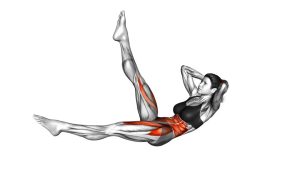
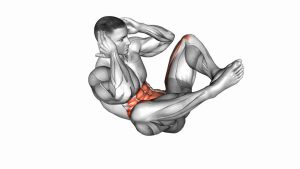
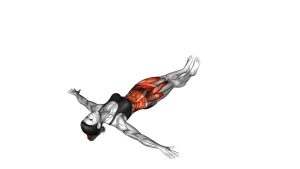
Alternate Bent-Leg 45-Degree Extension: Core Form, Sets, Tips & FAQ
Learn the Alternate Bent-Leg 45-Degree Extension to build lower-ab control, core stability, and hip coordination with safe form and tips.
Alternate Bent-Leg 45-Degree Extension
This exercise works best when the movement is slow, precise, and controlled. It is similar to a dead bug variation, but the arms stay on the floor while the legs alternate. The main purpose is not to move the leg as far as possible; the real goal is to keep the ribs down, brace the abs, and prevent the lower back from arching as each leg extends.
Quick Overview
| Body Part | Core |
|---|---|
| Primary Muscle | Rectus abdominis, especially lower-ab control |
| Secondary Muscle | Transverse abdominis, obliques, hip flexors, quadriceps |
| Equipment | None; optional exercise mat |
| Difficulty | Beginner to intermediate, depending on range and tempo |
Sets & Reps (By Goal)
- Core activation: 2–3 sets × 8–10 reps per side with slow control
- Beginner strength: 2–4 sets × 10–12 alternating reps per side
- Lower-ab endurance: 3–4 sets × 12–16 total reps with steady breathing
- Warm-up or rehab-style control: 1–3 sets × 6–8 reps per side using a smaller range
Progression rule: First improve control, then increase reps, then lower the leg closer to the floor. Never progress by sacrificing lower-back position.
Setup / Starting Position
- Lie on your back: Use a mat if needed. Keep your head, shoulders, and upper back relaxed on the floor.
- Place your arms down: Keep both arms beside your body with palms pressing lightly into the floor for stability.
- Lift both legs: Bring your knees above your hips with both knees bent around 90 degrees.
- Set your ribs and pelvis: Gently pull the ribs down and lightly flatten the lower back toward the floor.
- Brace before moving: Create light abdominal tension as if preparing to resist movement.
Your starting position should feel stable before the first rep. If your back already arches in the setup, lower one foot to the floor and practice a smaller version first.
Execution (Step-by-Step)
- Start in tabletop: Keep both knees bent and lifted while your arms stay grounded beside you.
- Extend one leg: Slowly move one bent leg away from your body toward a 45-degree angle.
- Keep the knee softly bent: Do not aggressively lock the knee; maintain a controlled bent-leg position.
- Control the pelvis: Keep your hips level and avoid twisting, rocking, or arching the lower back.
- Return to center: Bring the working leg back to the starting tabletop position with control.
- Switch sides: Repeat the same motion with the opposite leg while keeping the first leg stable.
- Continue alternating: Move side to side slowly, using the abs to control the legs instead of momentum.
Pro Tips & Common Mistakes
- Move slowly: A slow leg extension makes the abs work harder and reduces momentum.
- Keep the ribs down: Rib flare usually causes the lower back to arch and weakens core control.
- Do not drop the leg too low: Only extend as far as you can while keeping the spine stable.
- Avoid neck tension: Keep your head relaxed and do not lift your chin toward your chest.
- Control the non-working leg: The stationary leg should not drift, shake excessively, or collapse toward the body.
- Exhale during the extension: Breathing out helps the ribs stay down and improves abdominal bracing.
- Do not rush the switch: Return fully to the center before extending the other leg.
FAQ
What muscles does the Alternate Bent-Leg 45-Degree Extension work?
It mainly trains the rectus abdominis and deep core stabilizers. The hip flexors and quadriceps assist the leg movement, while the obliques help prevent the hips from rotating.
Is this exercise good for lower abs?
Yes. It is especially useful for lower-ab control because the abs must resist lower-back arching while one leg extends away from the body.
Should my lower back stay flat on the floor?
Your lower back should stay controlled and stable. A gentle contact with the floor is ideal for most beginners. If your back lifts, shorten the range or keep the leg higher.
Is this the same as a dead bug?
It is a dead bug-style variation. The main difference is that the arms stay on the floor while the legs alternate through a bent-leg extension pattern.
How can I make this exercise harder?
You can slow the tempo, extend the leg lower, add a longer pause, or hold a light stability ball between the hands and knees. Only progress if your lower back stays stable.
Recommended Equipment (Optional)
- Exercise Mat — provides comfort and support for lying core exercises
- Thick Pilates Mat — useful if your spine or hips need extra cushioning
- Mini Exercise Ball — can be used for dead bug variations and core-control progressions
- Adjustable Ankle Weights — optional advanced progression once form is strong and stable
- Resistance Bands Set — helpful for pairing this exercise with hip and core strengthening drills
Tip: Equipment is optional. This exercise is effective with body weight alone when the tempo, breathing, and spinal position are controlled.