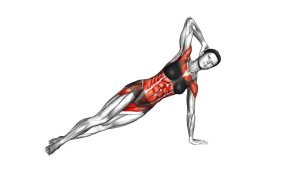
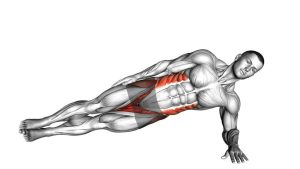
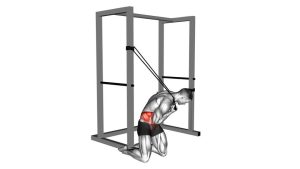
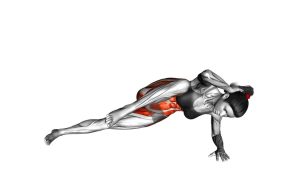
Resistance Band Elbow Plank with Single-Arm Pulldown: Form, Core Benefits & Tips
Build core stability, lats, and anti-rotation strength with the resistance band elbow plank single-arm pulldown. Learn form, sets, tips, and mistakes.
Resistance Band Elbow Plank with Single-Arm Pulldown
This exercise is especially useful for athletes, home training, and anyone who wants to build stronger plank control with more upper-back involvement. Because the band pulls your body toward one side, your core must work harder to keep your hips square. In addition, the pulldown motion strengthens the lats and improves shoulder control without needing a cable machine.
For best results, keep the movement slow, controlled, and strict. Rather than rushing through reps, focus on keeping your body long, your ribs tucked, and your hips level. Moreover, the working arm should pull smoothly while the non-working forearm stays firmly pressed into the floor.
Quick Overview
| Body Part | Core |
|---|---|
| Primary Muscle | Rectus abdominis, transverse abdominis, and obliques |
| Secondary Muscle | Lats, rear delts, rhomboids, serratus anterior, shoulders, glutes, and hip stabilizers |
| Equipment | Resistance band and a secure anchor point |
| Difficulty | Intermediate to advanced |
Sets & Reps (By Goal)
- Core stability: 3 sets × 6–10 reps per side with slow control
- Anti-rotation strength: 3–4 sets × 8–12 reps per side with a 1–2 second pause near the body
- Upper-back and lat activation: 2–4 sets × 10–15 reps per side using moderate band tension
- Conditioning finisher: 2–3 rounds × 20–30 seconds per side while maintaining clean plank form
- Beginner progression: 2–3 sets × 5–8 reps per side from a wider-foot plank stance
Progression rule: First, improve plank stability and control. Then, increase band tension, reps, or hold time. However, avoid progressing if your hips rotate or your lower back drops.
Setup / Starting Position
- Anchor the band: Secure a resistance band in front of your body at a low or floor-level angle.
- Set your plank: Get into an elbow plank with your forearms on the floor and your elbows under your shoulders.
- Grip the band: Hold the band with one hand while the opposite forearm stays planted for support.
- Brace your core: Gently tuck your ribs down, tighten your abs, and squeeze your glutes to protect your lower back.
- Position your feet: Start with your feet slightly wider than hip-width for better balance and anti-rotation control.
- Find a neutral spine: Keep your head, upper back, hips, and heels in one strong line.
Setup matters because the band creates sideways and forward tension. Therefore, your body should feel locked in before the pulling arm starts moving.
Execution (Step-by-Step)
- Begin in a strong elbow plank: Press your supporting forearm into the floor and keep your shoulders stable.
- Reach the working arm forward: Let the band create light tension without allowing your torso to twist.
- Pull the band toward your ribs: Drive your elbow back in a controlled path, as if performing a single-arm row or pulldown.
- Pause briefly: Hold the end position for one second while keeping your hips square to the floor.
- Return with control: Slowly extend the arm forward again and resist the band as it pulls you away.
- Repeat all reps: Finish the set on one side, then switch arms and perform the same number of reps.
Pro Tips & Common Mistakes
Pro Tips
- Use a slow tempo: Pull for 1–2 seconds, pause briefly, then return for 2–3 seconds.
- Keep your hips quiet: Imagine balancing a glass of water on your lower back.
- Brace before every pull: Exhale slightly, tighten your abs, and then begin the pulldown.
- Pull with your back: Lead with the elbow instead of curling the band with your hand.
- Use the right band: Choose tension that challenges you without breaking plank alignment.
- Spread your feet when needed: A wider stance makes the exercise easier and improves stability.
Common Mistakes
- Rotating the hips: This reduces core control and turns the movement into a twisting drill.
- Sagging the lower back: This often means the core is tired or the band is too heavy.
- Pulling too fast: Momentum removes tension from the lats and makes the plank less effective.
- Shrugging the shoulder: Keep the neck long and pull the shoulder blade down and back.
- Using too much range: Only pull as far as you can while staying square and stable.
- Holding the breath: Breathe steadily so your core stays strong without excessive tension.
FAQ
What muscles does the Resistance Band Elbow Plank with Single-Arm Pulldown work?
This exercise mainly works the abs, obliques, and deep core stabilizers. In addition, it trains the lats, rear shoulders, rhomboids, serratus anterior, glutes, and hip stabilizers because your body must resist rotation while the arm pulls the band.
Is this exercise good for core strength?
Yes. It is excellent for core strength because it combines anti-extension and anti-rotation demands. Unlike a basic plank, the band creates uneven resistance, so your core must work harder to keep your body steady.
Is this exercise more like a plank row or a pulldown?
It can feel like both, depending on the band angle. If the band is anchored directly in front and low, the movement resembles a single-arm band row. However, if the anchor angle is slightly higher, it can feel more like a kneeling or plank-based pulldown.
How do I make the movement easier?
Start with a lighter band, widen your feet, shorten the pulling range, or perform the exercise from your knees. Additionally, you can practice a regular elbow plank first before adding the band pull.
How do I make the exercise harder?
Use a heavier band, bring your feet closer together, slow down the return phase, or add a longer pause at the end of each pull. Nevertheless, only increase difficulty when your hips remain stable.
Should beginners do this exercise?
Beginners can use this exercise if they already hold a clean elbow plank. However, complete beginners should first master basic planks, side planks, and simple band rows before combining both patterns.
Where should I feel the exercise?
You should feel strong core tension through the abs and obliques, plus pulling work in the lat and upper back of the working side. If you mostly feel your lower back, reduce the band tension and reset your plank position.
Recommended Equipment
- Resistance Bands with Handles — ideal for controlled single-arm pulldowns, rows, and home strength workouts
- Door Anchor for Resistance Bands — helps create a secure anchor point for band rows and pulldown variations
- Thick Exercise Mat — adds comfort for elbows, forearms, knees, and floor-based core training
- Loop Resistance Bands Set — useful for warm-ups, glute activation, shoulder stability, and core accessory work
- Push-Up Handles — helpful for related plank, shoulder, and upper-body stability variations
Tip: A secure anchor point is essential. Before each set, check that the band is firmly attached and that it will not slip during the pulling phase.