Bodyweight Cossack Squat: Form, Benefits, Sets, Tips & FAQ
Learn the Bodyweight Cossack Squat to build leg strength, hip mobility, and adductor control with safe form, sets, tips, mistakes, FAQs, and equipment.
Bodyweight Cossack Squat
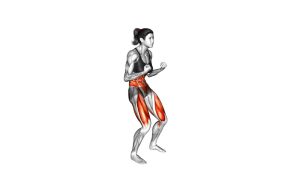
This exercise works best when the movement is slow, balanced, and controlled. The goal is not to drop quickly into the bottom position. Instead, shift your hips to one side, keep the working heel planted, maintain a long spine, and use the straight leg as an active mobility line. The movement should feel like a strong lateral squat combined with an inner-thigh stretch.
Quick Overview
| Body Part | Legs |
|---|---|
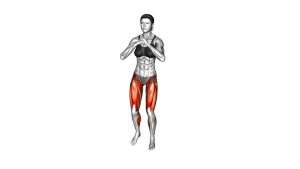
| Primary Muscle | Quadriceps, glutes, adductors |
| Secondary Muscle | Hamstrings, calves, hip stabilizers, core |
| Equipment | Bodyweight only; optional support, yoga mat, or mobility block |
| Difficulty | Intermediate because it requires hip mobility, ankle control, and balance |
Sets & Reps (By Goal)
- Mobility practice: 2–3 sets × 5–8 reps per side with a slow tempo.
- Leg strength: 3–4 sets × 6–10 reps per side with controlled depth.
- Warm-up activation: 1–2 sets × 4–6 reps per side before squats, lunges, or leg training.
- Adductor flexibility: 2–3 sets × 5 reps per side with a 2–4 second pause near the bottom.
Progression rule: Improve control first, then depth, then tempo. Do not add load until both sides move smoothly with stable knees and grounded heels.
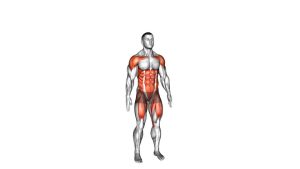
Setup / Starting Position
- Stand wide: Place your feet much wider than shoulder-width.
- Turn the feet slightly out: Use a comfortable angle that allows your knees to track over your toes.
- Brace lightly: Keep your ribs stacked over your hips and your core active.
- Extend your arms forward: Use your arms as a counterbalance to stay upright.
- Start centered: Keep both legs mostly straight before shifting into the first side.
Execution (Step-by-Step)
- Shift your weight: Move your hips toward one side while keeping the opposite leg long.
- Bend the working knee: Sit down into the working leg as the knee tracks in the same direction as the toes.
- Keep the opposite leg straight: Let the straight leg create an inner-thigh stretch without forcing the range.
- Control the bottom position: Keep the working heel planted, chest lifted, and spine neutral.
- Push through the working foot: Drive through the heel and midfoot to return to the center.
- Repeat on the other side: Shift smoothly across and perform the same controlled pattern.
Pro Tips & Common Mistakes
- Move slowly: Cossack squats are more effective when you control the descent and transition.
- Do not force depth: Stop at the deepest position you can control with good alignment.
- Keep the working heel down: Heel lift usually means the range is too deep or ankle mobility is limited.
- Avoid knee collapse: Drive the knee in line with the toes throughout the movement.
- Use support when learning: Hold a rack, wall, or suspension trainer if balance limits your form.
- Keep the straight leg active: Do not let the straight leg become loose or uncontrolled.
- Control your torso: A slight forward lean is normal, but avoid rounding the lower back.
FAQ
What muscles does the Bodyweight Cossack Squat work?
It mainly works the quadriceps, glutes, and adductors. It also trains the hamstrings, calves, hip stabilizers, and core because you must control your body in a wide lateral position.
Is the Cossack Squat good for hip mobility?
Yes. It is excellent for hip mobility because it combines lateral hip movement, deep squat mechanics, and adductor lengthening. It is especially useful for improving control in wide-stance lower-body movements.
Should beginners do Cossack Squats?
Beginners can do them with a reduced range of motion or with support. Start high, move slowly, and focus on knee tracking, heel contact, and balance before trying to reach full depth.
Why does my heel lift during the Cossack Squat?
Heel lift can happen because of limited ankle mobility, weak control, or going too deep too soon. Reduce your depth, widen your stance slightly, and practice slower reps.
Can I add weight to this exercise?
Yes, but only after you can perform controlled bodyweight reps on both sides. A goblet kettlebell or dumbbell is usually the best first loaded progression.
Recommended Equipment (Optional)
- Exercise Yoga Mat — useful for comfortable foot placement and floor-based mobility work
- Mobility Blocks — helpful for modifying depth and supporting balance during practice
- Suspension Trainer — provides support while learning the lateral squat pattern
- Resistance Bands Set — useful for hip warm-ups, glute activation, and mobility drills
- Kettlebell — ideal for progressing to a loaded goblet Cossack squat
Tip: Keep equipment optional. The best progression is better control, smoother depth, and equal strength on both sides before adding load.