Barbell Front Bench Squat: Proper Form, Muscles Worked & Tips
Master the Barbell Front Bench Squat with proper front-rack form, controlled bench contact, effective sets, quad-focused tips, common mistakes, and FAQs.
Barbell Front Bench Squat
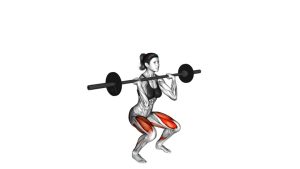
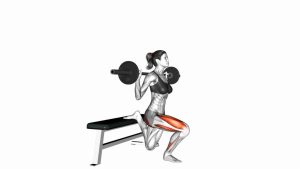
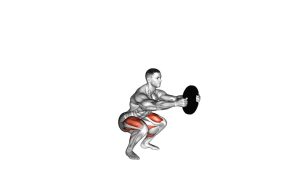
The Barbell Front Bench Squat combines the upright torso mechanics of a front squat with the controlled depth reference of a bench squat. Therefore, it can help lifters develop stronger legs while practicing consistent positioning and controlled movement.
Additionally, the front-loaded barbell challenges the abdominal muscles and upper back to maintain a stable torso. The bench provides a clear stopping point during the descent, which can improve movement consistency when used correctly.
However, the bench should never encourage uncontrolled sitting or bouncing. Instead, maintain muscular tension, control the downward phase, and drive upward using both legs. Because this is a loaded compound exercise, proper setup and manageable resistance are especially important.
Quick Overview
| Body Part | Legs |
|---|---|
| Primary Muscle | Quadriceps (Rectus femoris, Vastus lateralis, Vastus medialis, and Vastus intermedius) |
| Secondary Muscle | Gluteus maximus, adductor magnus, and supporting hip muscles; abdominal muscles and spinal erectors provide trunk stabilization |
| Equipment | Barbell, weight plates, stable flat bench, and squat rack with safety bars |
| Difficulty | Intermediate (requires front-rack control, proper bracing, and coordinated squat mechanics) |
Sets & Reps (By Goal)
- Beginner technique practice: 2–3 sets × 6–8 reps using an empty barbell or very light resistance. Rest 60–90 seconds between sets.
- Muscle strength: 3–5 sets × 3–6 reps using challenging but controlled resistance. Rest 2–3 minutes between sets.
- Muscle hypertrophy: 3–4 sets × 6–10 reps with consistent bench contact and controlled movement. Rest 90–120 seconds between sets.
- Muscular endurance: 2–3 sets × 12–15 reps using lighter weights and smooth repetitions. Rest 45–75 seconds between sets.
- Squat depth and movement control: 2–3 sets × 5–8 reps with a brief, controlled pause near the bench. Rest 60–90 seconds between sets.
Training intensity should match your current experience and technical ability. For example, beginners should prioritize consistent positioning before increasing resistance. Meanwhile, experienced lifters can progressively increase loading without sacrificing balance or front-rack stability.
Progression rule: First master the descent, gentle bench contact, and balanced ascent. Next, increase repetitions or add small weight increments. However, never increase resistance if your elbows drop, heels lift, or torso collapses forward. Rest periods and loading should reflect the difficulty of each set.
Setup / Starting Position
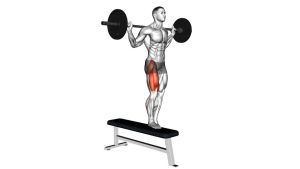
- Position the bench: Place a sturdy flat bench behind your standing position. Choose a height that allows controlled hip and knee flexion without forcing an uncomfortable depth.
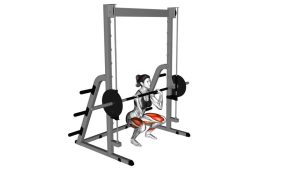
- Prepare the squat rack: Set the barbell supports around shoulder height. Additionally, position the safety bars to catch the barbell during a failed repetition.
- Load the barbell: Start with an appropriate weight and secure the plates using locking collars. Beginners should practice with an empty barbell first.
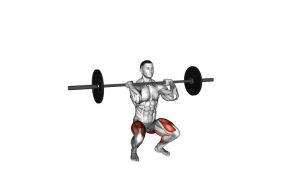
- Establish the front-rack position: Place the barbell across the front shoulders, close to the base of the neck. Support it on the shoulders rather than holding its weight entirely with the hands.
- Choose your grip: The demonstrated variation uses a crossed-arm front-rack grip. Therefore, cross your arms in front of your shoulders and keep your elbows elevated to stabilize the barbell.
- Unrack carefully: Extend your knees and hips to lift the barbell from the rack. Then take small, controlled steps backward until the bench is correctly positioned.
- Set your foot position: Stand approximately shoulder-width apart with your toes pointing slightly outward. Keep both feet completely supported by the floor.
- Brace your torso: Engage your abdominal muscles, maintain a neutral spine, and keep your chest lifted. Avoid excessive lower-back arching.
- Check your alignment: Keep the bench centered behind your hips. Before descending, confirm that your feet, barbell, and bench remain stable.
Front-Rack Position and Bench Alignment
Proper barbell placement is essential because the load sits in front of the torso. Consequently, the upper-back muscles must resist forward rounding throughout the movement.
Furthermore, the bench should provide a predictable contact point without changing your natural squat mechanics. If the bench feels too low, choose a suitable alternative height rather than forcing excessive hip or knee flexion.
Setup tip: Practice several unloaded squats to confirm bench placement. Once your positioning feels consistent, introduce the barbell and repeat the same controlled movement.
Execution (Step-by-Step)
- Establish your starting position: Stand upright with your knees and hips extended. Keep the barbell secure across your front shoulders and look forward naturally.
- Brace before descending: Take a controlled breath and tighten your abdominal muscles. Meanwhile, maintain an elevated elbow position and balanced pressure through both feet.
- Initiate the squat: Bend your hips and knees together. Allow your hips to move backward toward the bench while your knees travel naturally over your toes.
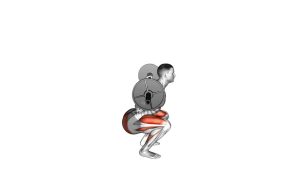
- Lower under control: Continue descending until your glutes approach the bench. Keep the torso relatively upright and prevent the barbell from rolling forward.
- Maintain knee alignment: Guide your knees in the same general direction as your toes. Additionally, keep both heels planted and avoid shifting excessively onto your forefeet.
- Contact the bench gently: Lower until your glutes touch the bench. The contact should be deliberate rather than a hard impact.
- Control the bottom position: Briefly pause while maintaining your abdominal brace and front-rack stability. Avoid completely relaxing your torso or dropping your body weight onto the bench.
- Begin the upward drive: Push firmly through your feet to extend your knees and hips. Keep your chest lifted as you move upward from the bench.
- Maintain the barbell position: As you stand, keep your elbows elevated and your torso stable. Therefore, avoid allowing the barbell to pull your shoulders excessively forward.
- Finish standing tall: Extend your hips and knees until you return to the starting position. However, avoid leaning backward or aggressively locking your knees.
- Reset before repeating: Reestablish your breathing, bracing, and balance before beginning another repetition. After completing the set, return the barbell securely to the rack.
Descent and Bench Contact
The descending phase should remain smooth and deliberate. As your knees and hips bend, keep the barbell supported across the front shoulders. Furthermore, maintain enough trunk tension to control your body immediately before bench contact.
At the bottom, the bench provides a consistent depth reference. However, it should not become an opportunity to collapse, bounce, or completely release muscular tension.
Ascending From the Bench
Begin the ascent by pushing through the floor and extending both legs together. As a result, your hips rise while the torso and barbell move upward. Avoid throwing your shoulders backward to create momentum.
Finally, finish with an upright posture and a stable front-rack position. A controlled repetition should appear balanced from the initial descent through the final standing position.
Pro Tips & Common Mistakes
Pro Tips for Better Barbell Front Bench Squat Form
- Keep your elbows elevated: A stable front-rack position helps prevent the barbell from rolling forward. Therefore, maintain upper-back tension throughout the repetition.
- Maintain full-foot pressure: Distribute your weight across your heels, midfoot, and forefoot. Avoid rocking onto your toes during the ascent.
- Use the bench as a depth reference: Lower gently until your glutes make contact. However, avoid dropping heavily or bouncing off the surface.
- Control your breathing: Brace before descending, maintain trunk stability through the difficult portion, and release your breath in a controlled manner during or after the ascent.
- Keep the torso upright: The front-loaded barbell encourages a relatively vertical torso. Nevertheless, some forward inclination is natural and depends on individual proportions.
- Progress gradually: First improve coordination and squat depth. Afterward, increase loading only when every repetition remains consistent.
Common Mistakes to Avoid
- Dropping onto the bench: Uncontrolled sitting creates unnecessary impact. Instead, lower slowly and establish gentle contact.
- Allowing the knees to collapse inward: Poor knee tracking can compromise movement control. Keep your knees aligned with the general direction of your toes.
- Rounding the upper back: Losing thoracic stability allows the barbell to drift forward. Consequently, maintain your chest position and upper-back engagement.
- Using excessive resistance: Heavy loading can expose weaknesses in bracing and coordination. Therefore, choose a weight you can control throughout the full repetition.
- Relaxing completely on the bench: Releasing core tension makes the next phase less stable. Maintain your brace before initiating the ascent.
- Rocking backward before standing: Excessive momentum changes the intended movement mechanics. Instead, generate force through controlled hip and knee extension.
- Using an unstable bench: A shifting or rolling surface creates unnecessary danger. Always use a secure bench suitable for loaded exercises.
- Ignoring squat rack safety: A front-loaded barbell becomes difficult to manage when balance fails. Therefore, use correctly positioned safety bars and an appropriate training environment.
Coaching tip: Think “brace, sit back under control, touch gently, and drive upward.” This simple sequence reinforces consistent technique without encouraging excessive momentum.
FAQ
Technique and Muscles Worked
What muscles does the Barbell Front Bench Squat work?
The Barbell Front Bench Squat primarily targets the quadriceps, which extend the knees during the upward phase. Additionally, the gluteus maximus and hip adductors contribute to hip extension.
Meanwhile, the abdominals, spinal erectors, and upper-back muscles stabilize the front-loaded barbell. Therefore, this exercise trains both lower-body strength and trunk control.
What is the difference between a Front Bench Squat and a regular Front Squat?
A traditional front squat generally involves descending to a comfortable squat depth without contacting an external surface. In contrast, the Front Bench Squat uses a bench to establish a repeatable stopping point.
As a result, the bench variation can help lifters practice controlled depth and consistent movement. However, the contact must remain deliberate to avoid relying on bouncing or excessive momentum.
Should I sit completely on the bench during the exercise?
The demonstrated movement includes a brief seated contact with the bench. However, you should maintain trunk tension and keep the barbell securely supported throughout the pause.
Furthermore, avoid collapsing backward or completely relaxing your posture. The objective is to control the transition from the seated position into the upward drive.
Why is the barbell held in front of the shoulders?
The front-rack position places the load anterior to the torso. Consequently, the quadriceps and trunk stabilizers work together to maintain balance and control.
Additionally, an elevated elbow position helps keep the barbell supported across the shoulders. If the barbell repeatedly rolls forward, reduce the weight and improve your front-rack setup.
Training, Progression, and Safety
Is the Barbell Front Bench Squat suitable for beginners?
Beginners can learn the general movement using bodyweight or a very light load. However, the loaded barbell variation is better suited to people who already understand basic squat technique and front-rack positioning.
Therefore, practice unloaded bench squats first. Once your balance, breathing, and squat depth become consistent, progress to an empty barbell under appropriate supervision.
How deep should I squat when using a bench?
The bench should allow a comfortable squat depth without excessive rounding of the back or loss of balance. For many lifters, a bench near their controlled parallel-squat depth provides a practical starting point.
However, ideal height varies according to mobility, limb proportions, and experience. Therefore, adjust the setup rather than forcing a predetermined depth.
Can the Barbell Front Bench Squat help build bigger quadriceps?
Yes. The quadriceps contribute substantially to knee extension, making this movement useful for quad-focused strength and hypertrophy. Additionally, controlled repetitions can provide a consistent training stimulus.
For muscle growth, combine suitable resistance with progressive overload and adequate recovery. However, avoid sacrificing technique simply to increase the amount of weight lifted.
How often should I perform Barbell Front Bench Squats?
Many lifters can include this exercise in one or two lower-body sessions per week, depending on their total training workload. Additionally, recovery needs vary with loading intensity and experience.
If your program already includes demanding squats and deadlifts, adjust the additional volume accordingly. Therefore, prioritize recovery and consistent technique over excessive frequency.
What should I do if I feel knee or lower-back pain?
Stop the exercise if you experience sharp, worsening, or unusual pain. First, assess whether the load, bench height, or technique is inappropriate. However, do not attempt to push through painful repetitions.
If discomfort persists, consult a qualified healthcare professional. Additionally, a knowledgeable strength coach may help identify technique issues once medical concerns have been addressed.
Recommended Equipment
- Olympic Barbell — provides the front-loaded resistance needed for barbell squat training; choose a suitable bar with appropriate weight capacity
- Heavy-Duty Flat Weight Bench — establishes a consistent squat depth and provides a stable contact surface during controlled bench squats
- Olympic Weight Plates — allow gradual resistance progression as squat strength, coordination, and movement consistency improve
- Power Rack with Safety Bars — supports controlled barbell unracking and provides essential safety protection during loaded squat training
- Olympic Barbell Locking Collars — help keep weight plates secured on the barbell, reducing unwanted plate movement during exercise
Equipment tip: Prioritize a stable bench, a properly configured squat rack, and a suitable barbell before increasing training resistance. Additionally, check weight capacities and equipment condition before every session. For best results, select equipment that supports safe positioning and consistent technique.