Kettlebell Deadlift: Proper Form, Muscles Worked & Tips
Learn the kettlebell deadlift with proper hip-hinge form, muscles worked, sets, common mistakes, and tips to build stronger glutes, legs, and grip.
Kettlebell Deadlift
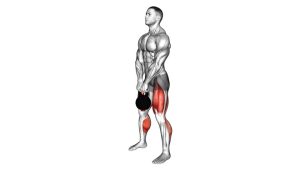
The kettlebell deadlift is an excellent introduction to resistance training because it teaches the essential mechanics of lifting weight from the floor. Unlike a kettlebell swing, this exercise uses a slow, controlled lifting pattern rather than explosive momentum. Consequently, beginners can focus on developing coordination, balance, and proper hip-hinge technique before progressing to more demanding exercises.
Additionally, the movement develops strength in the posterior chain while challenging the quadriceps, abdominal muscles, and grip. When performed correctly, the hips and knees extend together as the torso returns to an upright position. Therefore, the kettlebell deadlift is useful for general strength training, athletic preparation, and learning efficient everyday lifting mechanics.
Quick Overview
| Body Part | Legs |
|---|---|
| Primary Muscle | Gluteus maximus, hamstrings, and quadriceps |
| Secondary Muscle | Erector spinae, abdominal stabilizers, adductor magnus, upper-back stabilizers, and forearm grip muscles |
| Equipment | One kettlebell |
| Difficulty | Beginner to Intermediate, depending on kettlebell weight, mobility, and hip-hinge control |
How the Kettlebell Deadlift Works Your Muscles
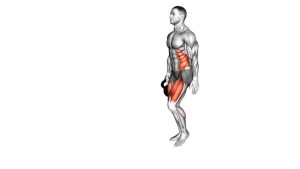
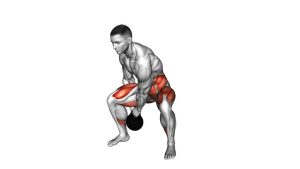
The gluteus maximus produces substantial hip-extension force as the athlete rises from the lowered position. Meanwhile, the quadriceps extend the knees, especially during the initial lift. The hamstrings also contribute to hip extension while helping control the movement.
Additionally, the spinal erectors and abdominal muscles stabilize the torso against the kettlebell’s load. The upper-back muscles help maintain shoulder positioning, while the forearms secure the handle. As a result, the exercise trains several muscle groups through one coordinated movement.
Movement Pattern and Training Benefits
Unlike a squat, the kettlebell deadlift places greater emphasis on moving the hips backward while maintaining a controlled forward torso inclination. However, the knees still bend enough to help the athlete reach the kettlebell. This combination makes the exercise effective for practicing a coordinated hip hinge.
Furthermore, consistent training can improve posterior-chain strength, grip endurance, and confidence when lifting objects. Because the kettlebell is held with both hands, the movement also provides a practical starting point for learning loaded deadlift variations.
Sets & Reps (By Goal)
- Strength: 3–5 sets × 4–6 reps with a challenging but manageable kettlebell. Rest approximately 2–3 minutes between sets.
- Hypertrophy (muscle growth): 3–4 sets × 8–12 reps using controlled repetitions and a comfortable range of motion. Rest approximately 60–120 seconds between sets.
- Muscular endurance: 2–3 sets × 15–20 reps with a lighter kettlebell. Maintain consistent technique and rest approximately 45–75 seconds.
- Mobility and movement control: 2–3 sets × 8–10 slow repetitions using a light kettlebell. Focus on hip movement, stable feet, and controlled spinal positioning.
- Rehab-style movement practice: 1–3 sets × 6–8 comfortable repetitions with a very light load, only when appropriate for your condition and cleared by a qualified healthcare professional.
Progression rule: First develop consistent hip-hinge mechanics and smooth repetitions. Then increase repetitions or kettlebell weight gradually without sacrificing posture, balance, or movement control.
Choosing the Right Kettlebell Weight
Beginners should select a weight that allows every repetition to remain controlled. For example, the final repetition should not require aggressive pulling, excessive back rounding, or a sudden change in balance.
Additionally, avoid choosing a heavy kettlebell simply because the exercise feels manageable during the first few repetitions. Instead, evaluate your technique throughout the entire set. Once the movement becomes consistent, gradually increase resistance while maintaining the same lifting mechanics.
Setup / Starting Position
Establish a Stable Starting Position
- Position the kettlebell: Place one kettlebell on the floor between your feet, with the handle accessible near the center of your stance. Ensure the surrounding area is clear.
- Set your foot position: Stand approximately hip-width to shoulder-width apart, depending on your build and comfort. Keep both feet fully planted and distribute your weight across the entire foot.
- Push your hips backward: Begin hinging at the hips while allowing your torso to incline forward. Meanwhile, bend your knees enough to reach the kettlebell without losing balance.
- Grip the handle: Reach down and hold the kettlebell securely with both hands. Keep your arms extended rather than bending your elbows to lift the weight.
- Establish torso control: Brace your abdominal muscles gently and maintain a stable spinal position. Avoid exaggerated arching or forcing your lower back into an uncomfortable angle.
- Set your shoulders: Keep your shoulders controlled and your upper arms close to your body. Additionally, maintain a comfortable neck position without excessively lifting or dropping your head.
- Prepare for the lift: Check that the kettlebell is positioned close to your legs. Take a controlled breath and establish tension through your trunk before initiating the upward movement.
Adjusting Your Starting Position
The correct starting height depends on your mobility, proportions, and kettlebell size. For example, athletes with limited hip mobility may struggle to reach a kettlebell resting directly on the floor.
In this situation, elevate the kettlebell on a stable platform rather than forcing excessive spinal rounding. Similarly, adjust your stance slightly if your knees interfere with the handle. Above all, maintain a stable position that allows your hips and knees to move naturally.
Execution (Step-by-Step)
Performing the Kettlebell Deadlift Correctly
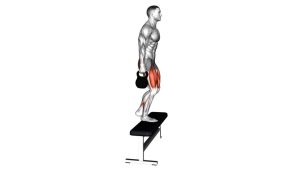
- Brace and prepare: Begin in the lowered deadlift position with both hands gripping the kettlebell. Keep your arms extended, feet planted, and abdominal muscles engaged.
- Initiate the upward movement: Push through your feet while beginning to extend your knees and hips. As a result, the kettlebell starts rising from the floor without requiring an aggressive arm pull.
- Lift with coordinated extension: Continue extending your hips and knees while keeping the weight close to your legs. Meanwhile, maintain a controlled torso position as your body becomes more upright.
- Keep the arms straight: Allow the kettlebell to hang naturally from your hands throughout the movement. Avoid curling the weight, shrugging excessively, or swinging it forward.
- Reach the standing position: Finish upright with your hips and knees comfortably extended. Squeeze your glutes without pushing your hips excessively forward or leaning backward at the waist.
- Begin the lowering phase: Push your hips backward while allowing your torso to incline forward. Subsequently, bend your knees as needed to guide the kettlebell downward.
- Control the kettlebell’s descent: Keep the weight close to your thighs and shins as it approaches the floor. Avoid dropping the kettlebell or allowing your shoulders to collapse forward.
- Return and reset: Lower the kettlebell to the starting position with control. Once the weight is settled, reestablish your brace and repeat the movement without rushing.
Controlling the Lowering Phase
The lowering phase is just as important as the upward lift. Therefore, avoid relaxing your muscles immediately after reaching the standing position. Instead, maintain trunk tension while moving your hips backward.
As the kettlebell passes your knees, allow additional knee bending so the weight can approach the floor naturally. Finally, place the kettlebell down smoothly and prepare for the next repetition. This controlled approach reinforces consistent technique throughout the set.
Pro Tips & Common Mistakes
- Master the hip hinge: Push your hips backward instead of relying entirely on knee bending. Consequently, the glutes and hamstrings can contribute effectively to the lift.
- Keep the kettlebell close: Allowing the weight to drift too far forward increases the demand on your trunk and lower back. Therefore, maintain a controlled path near your legs.
- Avoid excessive back rounding: Maintain a comfortable, stable spinal position throughout the exercise. If your back position changes significantly, reduce the weight or raise the starting height.
- Do not pull with your arms: Your arms primarily support the kettlebell. Instead, generate the lifting force by extending your hips and knees.
- Keep your feet grounded: Avoid rising onto your toes or shifting excessively toward your heels. Rather, maintain balanced pressure through your feet during the lift.
- Finish without leaning backward: Stand tall at the top while keeping your ribs and pelvis controlled. Excessive backward leaning is unnecessary and may place additional stress on your back.
- Control the lowering phase: Avoid dropping the kettlebell or rushing toward the floor. Instead, guide the weight downward while maintaining consistent hip-hinge mechanics.
- Choose manageable resistance: Excessive weight can encourage jerking, poor balance, and inconsistent movement. Therefore, prioritize technique before increasing the kettlebell load.
- Maintain natural head alignment: Avoid looking sharply upward throughout the exercise. Keep your neck comfortably aligned with your torso as it changes angle.
Improving Strength and Movement Quality
For better results, perform each repetition with deliberate control rather than trying to complete sets quickly. Additionally, pay attention to how your hips, knees, and trunk coordinate during both movement phases.
Once your technique becomes consistent, you can progressively increase the kettlebell weight or training volume. However, avoid increasing both too aggressively. Gradual progression allows your muscles, grip, and movement control to adapt.
Recognizing Proper Muscle Engagement
You should generally feel muscular effort through your glutes, thighs, and hamstrings. Additionally, your forearms may work hard to maintain a secure grip. Your abdominal and back muscles also contribute by stabilizing your trunk.
Although some muscular fatigue is normal, sharp pain or unusual joint discomfort should not be ignored. If symptoms develop, stop the exercise and reassess the load, technique, and movement range.
FAQ
Kettlebell Deadlift Technique and Muscles
What muscles does the kettlebell deadlift work?
The kettlebell deadlift primarily works the glutes, hamstrings, and quadriceps. Additionally, the spinal erectors, abdominal muscles, upper-back stabilizers, and forearms contribute to the movement. Because several joints move together, the exercise is classified as a compound strength-training movement.
Is the kettlebell deadlift good for beginners?
Yes. The kettlebell deadlift can be beginner-friendly when performed with manageable resistance and proper technique. Moreover, holding a single kettlebell between the legs provides a convenient introduction to loaded hip-hinge mechanics. Beginners should first master the starting position and controlled movement before increasing the load.
What is the difference between a kettlebell deadlift and a squat?
Both exercises involve the hips and knees. However, a kettlebell deadlift generally emphasizes a greater hip hinge, with the hips moving backward as the torso inclines forward. In contrast, a squat typically involves more knee bending and a larger downward movement of the hips. Both exercises can strengthen the legs, although their movement patterns differ.
Training Frequency and Progression
How often should I perform kettlebell deadlifts?
Many beginners can include kettlebell deadlifts in their training approximately two or three times per week. However, appropriate frequency depends on training intensity, experience, recovery, and other exercises. Therefore, allow sufficient recovery between demanding sessions and adjust training volume according to your overall program.
How heavy should my kettlebell be?
Choose a kettlebell that allows smooth repetitions without excessive back rounding, jerking, or instability. Initially, focus on learning the movement rather than lifting the heaviest available weight. Once your technique becomes consistent, gradually increase resistance while maintaining the same controlled form.
Can kettlebell deadlifts help build glutes?
Yes. The gluteus maximus contributes strongly to hip extension during the upward phase of the deadlift. Therefore, progressive kettlebell deadlift training can help strengthen the glutes. For muscle growth, combine appropriate resistance with sufficient training volume, recovery, and nutrition.
Form, Comfort, and Safety
Should the kettlebell touch the floor after every repetition?
In a conventional kettlebell deadlift, the kettlebell typically returns to the floor between repetitions. This allows the athlete to reset the starting position and brace. However, some training variations use continuous repetitions without fully resting the weight. Beginners may benefit from resetting between repetitions while learning.
Why do I feel kettlebell deadlifts in my lower back?
Your lower-back muscles help stabilize the torso during a deadlift. Therefore, some muscular effort in this region can be normal. However, excessive discomfort may indicate unsuitable resistance, fatigue, or inconsistent technique. Reduce the load and review your hip-hinge mechanics. Stop if you experience sharp, radiating, or persistent pain.
Can I perform kettlebell deadlifts at home?
Yes. Kettlebell deadlifts require relatively little space and only one kettlebell. However, choose a stable, level surface with enough room to move safely. Additionally, keep the surrounding area clear and avoid slippery flooring. Start with manageable resistance and maintain controlled repetitions.
Recommended Equipment
- Cast Iron Kettlebell — essential resistance equipment for practicing kettlebell deadlifts, hip hinges, and lower-body strength training
- Adjustable Kettlebell — allows gradual resistance progression while reducing the need to purchase several separate kettlebells
- Flat-Sole Weightlifting Shoes — provide a firm, stable base for controlled foot pressure and consistent deadlift mechanics
- Rubber Gym Floor Mat — protects training floors and provides a durable surface for home kettlebell workouts
- Liquid Lifting Chalk — helps improve grip security when sweaty hands make the kettlebell handle difficult to hold
Choosing Equipment for Safe Progression
A single appropriately weighted kettlebell is sufficient to begin training. Therefore, additional accessories are optional rather than essential. Choose equipment that supports a stable grip and consistent technique.
Additionally, inspect the kettlebell handle and training surface before starting each session. If you use an exercise mat, ensure it remains flat and stable. Above all, prioritize equipment quality and movement control over heavier resistance.
Tip: Begin with a kettlebell that allows comfortable, repeatable lifting. As your strength improves, increase resistance gradually while maintaining proper hip-hinge mechanics, balanced foot pressure, and a controlled lowering phase.