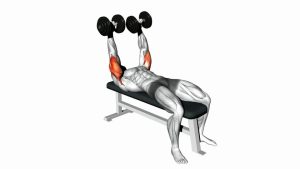
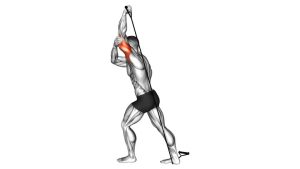
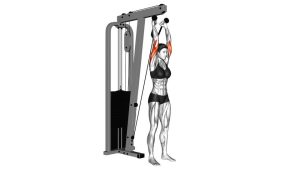
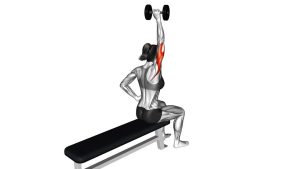
Dumbbell Standing Overhead Triceps Extension: Form, Sets, Tips & FAQ
Learn the Dumbbell Standing Overhead Triceps Extension for stronger upper arms and better long-head triceps development. Includes form tips, sets by goal, common mistakes, FAQs, and recommended equipment.
Dumbbell Standing Overhead Triceps Extension
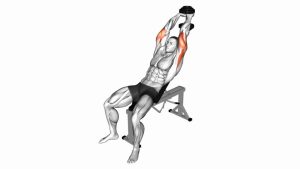
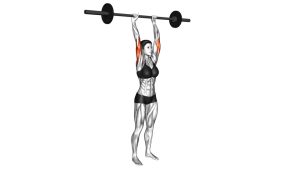
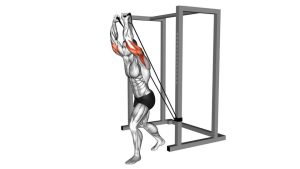
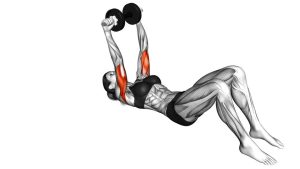
This variation is excellent for lifters who want more triceps size, especially in the back of the upper arm. Because the weight travels behind the head, the exercise creates a strong stretch at the bottom and a hard contraction at the top. Use a weight you can control through a full range of motion without letting the elbows flare excessively or the ribs lift too much.
Quick Overview
| Body Part | Triceps |
|---|---|
| Primary Muscle | Triceps brachii (long head emphasis) |
| Secondary Muscle | Triceps lateral head, triceps medial head, shoulders and core as stabilizers |
| Equipment | One dumbbell |
| Difficulty | Beginner to Intermediate |
Sets & Reps (By Goal)
- Muscle growth: 3–4 sets × 8–15 reps
- Strength focus: 4–5 sets × 6–8 reps
- Technique practice: 2–3 sets × 10–12 reps with light weight
- Finisher / pump work: 2–3 sets × 15–20 reps
Progression rule: Add reps first, then increase weight once you can keep the elbows controlled, the dumbbell path smooth, and the torso stable.
Setup / Starting Position
- Stand tall: Place your feet about hip- to shoulder-width apart for balance.
- Grip the dumbbell securely: Hold one end of the dumbbell with both hands and press it overhead.
- Set the torso: Brace your abs, keep your ribs down, and maintain a neutral spine.
- Align the arms: Keep the upper arms close to your ears with the elbows pointing mostly forward/up.
- Start at lockout: Arms extended overhead, shoulders stable, wrists neutral.
Tip: A staggered stance can help some lifters stay more stable if they tend to arch during overhead extensions.
Execution (Step-by-Step)
- Lower the dumbbell: Bend your elbows and bring the dumbbell behind your head in a controlled arc.
- Keep the upper arms steady: Let the elbows hinge, but avoid turning the movement into a shoulder press.
- Reach the stretch: Lower until you feel a strong but comfortable triceps stretch without losing posture.
- Extend the elbows: Drive the dumbbell back up by straightening the arms.
- Finish overhead: Return to full extension and squeeze the triceps without slamming into lockout.
Pro Tips & Common Mistakes
- Keep elbows from drifting too wide: Slight natural movement is fine, but excessive flare reduces isolation.
- Brace hard: Prevent lower-back arching by tightening the abs and glutes.
- Use full control: Do not bounce out of the bottom stretched position.
- Don’t rush lockout: Finish each rep with deliberate triceps contraction.
- Choose the right load: Too much weight usually turns this into a sloppy shoulder-and-back movement.
- Keep wrists stacked: Avoid letting the dumbbell pull the wrists into awkward angles.
FAQ
What part of the triceps does this exercise emphasize most?
The overhead position strongly emphasizes the long head of the triceps, which is one reason this variation is so popular for arm development.
Should I use one dumbbell or two?
Most lifters learn this movement with one dumbbell held in both hands. It is usually easier to control and better for consistent elbow positioning.
Why do I feel this in my shoulders or lower back?
That usually happens when the weight is too heavy, the ribs flare up, or the elbows drift too much. Lower the load and brace your torso harder.
How low should I lower the dumbbell?
Lower until you feel a strong triceps stretch while still keeping a stable torso and pain-free elbow position. Range of motion should be controlled, not forced.
Is this good for muscle growth?
Yes. This is an excellent hypertrophy exercise because it combines stretch, tension, and a long range of motion, especially for the long head of the triceps.
Recommended Equipment
- Adjustable Dumbbell Set — practical for progressive overload and home training
- Adjustable Weight Bench — useful for seated or supported dumbbell triceps work
- Wrist Wraps — extra wrist support for heavier pressing and extension sessions
- Lifting Straps / Wrist Support — optional support for comfort and grip confidence during longer workouts
- Tricep Rope Cable Attachment — useful for pairing overhead dumbbell work with cable pushdowns and extensions
Tip: Adjustable dumbbells, wrist wraps, and cable attachments are widely available on Amazon, and search listings specifically surface products for dumbbell training, wrist support, and triceps extension work.