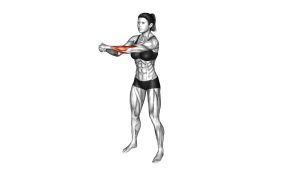
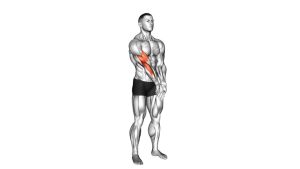
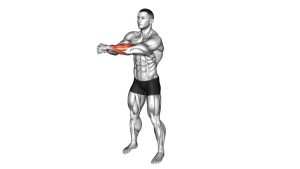
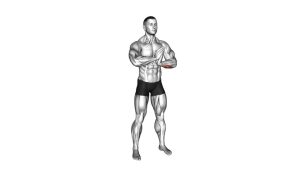
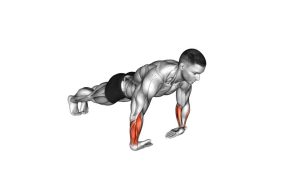
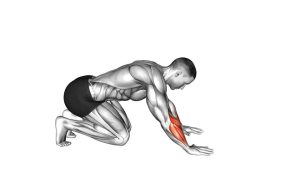
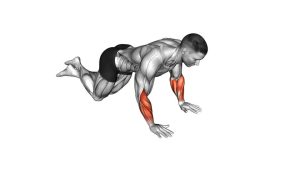
Wrist Circles: Forearm Mobility, Warm-Up, Form, Sets & FAQ
Learn how to do Wrist Circles for better wrist mobility, forearm activation, joint preparation, and warm-up control. Includes setup, execution, mistakes, FAQ, and equipment.
Wrist Circles
Wrist Circles are commonly used before upper-body workouts, grip training, calisthenics, push-ups, weightlifting, racket sports, climbing, and any activity that demands healthy wrist movement. Because the exercise is low-impact and equipment-free, it works well as a daily mobility drill, a desk-break reset, or the first movement in a forearm warm-up routine.
Quick Overview
| Body Part | Forearms |
|---|---|
| Primary Muscle | Wrist flexors and wrist extensors |
| Secondary Muscle | Finger flexors, finger extensors, wrist stabilizers, hand muscles |
| Equipment | No equipment required |
| Difficulty | Beginner |
Sets & Reps (By Goal)
- General warm-up: 1–2 sets × 10–20 circles each direction.
- Wrist mobility practice: 2–3 sets × 15–30 seconds each direction.
- Forearm activation: 2–3 sets × 12–20 slow circles each direction.
- Desk-break reset: 1–2 sets × 10 circles clockwise and 10 circles counterclockwise.
- Before push-ups or pressing: 1–2 sets × 15 controlled circles each direction.
Progression rule: Improve control before increasing speed. Keep every circle smooth, even, and pain-free.
Setup / Starting Position
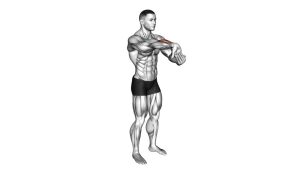
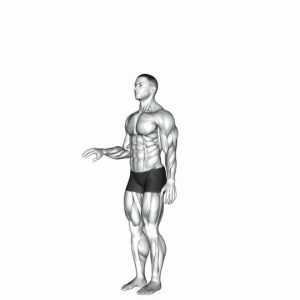
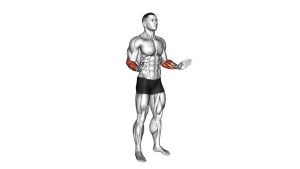
- Stand tall: Keep your chest open, shoulders relaxed, and spine neutral.
- Position the arms: Hold your arms slightly in front of your body or out to your sides.
- Relax the hands: Keep the fingers loose or softly extended. Avoid squeezing the fists tightly.
- Stabilize the elbows: Keep the elbows still so the movement comes mainly from the wrists.
- Start neutral: Begin with the wrists straight and the hands aligned with the forearms.
Tip: If you are using this as a warm-up, start with smaller circles and gradually increase the range only if the wrists feel comfortable.
Execution (Step-by-Step)
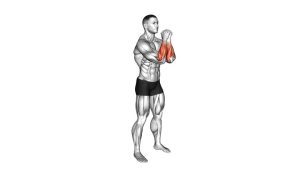
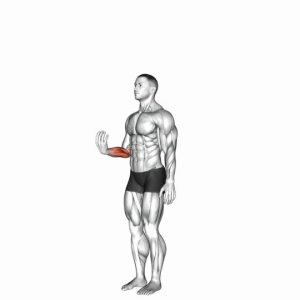
- Begin in neutral: Hold the hands steady with the wrists relaxed and aligned.
- Circle slowly: Move the wrists in a smooth circular path without jerking or forcing range.
- Control the full path: Let the hands move upward, outward, downward, and inward in one continuous circle.
- Keep the arms quiet: Avoid swinging the elbows, shrugging the shoulders, or leaning the body.
- Breathe normally: Stay relaxed through the neck, shoulders, jaw, and upper back.
- Reverse direction: After completing your reps or time, repeat the same number of circles in the opposite direction.
Pro Tips & Common Mistakes
- Use smooth circles: Avoid choppy movement. The motion should feel controlled from start to finish.
- Do both directions: Clockwise and counterclockwise circles help prepare the wrist more evenly.
- Do not force the range: Bigger circles are not always better. Stay inside a comfortable range.
- Keep the shoulders relaxed: Shoulder tension reduces the quality of the drill.
- Avoid tight fists: Clenching can create unnecessary forearm tension and limit mobility.
- Move from the wrist: Do not turn the whole arm to fake the circle.
- Slow down if needed: Fast circles often become sloppy and less useful.
- Use it before loading: Wrist circles are especially helpful before push-ups, planks, curls, rows, and grip work.
FAQ
What are Wrist Circles good for?
Wrist Circles help warm up the wrist joints, activate the forearm muscles, improve movement awareness, and prepare the hands for exercises that require gripping, pushing, pulling, or supporting body weight.
Should I do Wrist Circles before every upper-body workout?
They are a good option before most upper-body workouts, especially if your session includes push-ups, bench press, pull-ups, curls, rows, kettlebells, dumbbells, or barbell work.
How big should the circles be?
Use a range that feels smooth and pain-free. Start small, then slightly increase the circle size as the wrists warm up. Never force the wrist into a painful position.
Can Wrist Circles build forearm muscle?
Wrist Circles are mainly a mobility and warm-up drill, not a heavy muscle-building exercise. They can activate the forearms, but direct resistance exercises are better for strength and size.
Why do my wrists click during Wrist Circles?
Mild clicking without pain can happen for some people. If clicking is painful, sharp, or comes with swelling, weakness, numbness, or instability, stop the exercise and seek professional guidance.
Recommended Equipment (Optional)
- Adjustable Hand Grip Strengthener — useful for building grip strength after mobility work.
- Wrist Roller Forearm Exerciser — helps train wrist flexion, extension, and forearm endurance.
- Gyroscopic Wrist Ball — supports wrist coordination, endurance, and circular control.
- Finger Extensor Bands — balances gripping work by training finger and hand opening strength.
- Workout Wrist Wraps — optional support for heavier pressing or loaded wrist positions.
Tip: Wrist Circles require no equipment. These tools are optional add-ons for people who want extra grip, forearm, or wrist-strength work.