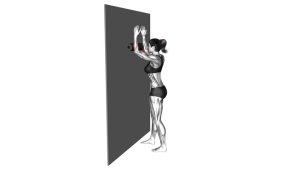
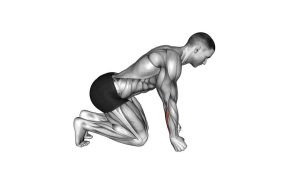
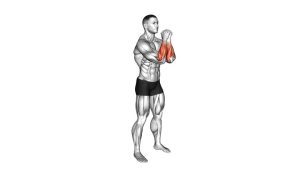
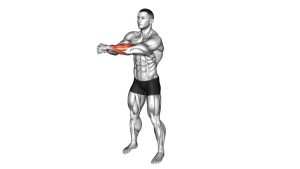
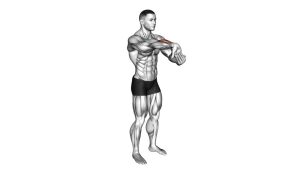
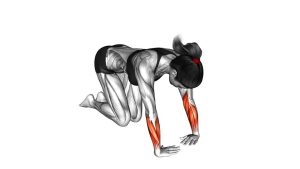
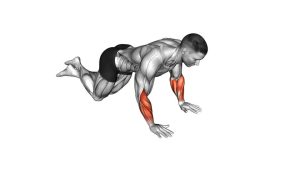
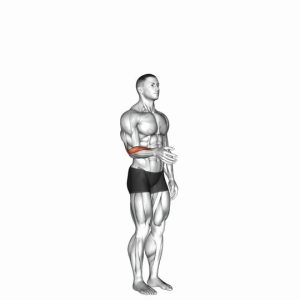
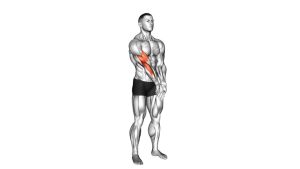
Wrist Circles: Proper Form, Benefits, Sets, Tips & FAQ
Learn how to do Wrist Circles with proper form to improve wrist mobility, warm up the forearms, and support joint health. Includes step-by-step execution, sets by goal, common mistakes, FAQs, and recommended equipment.
Wrist Circles
This exercise is most effective when performed with light tension and clean control. Wrist Circles help increase blood flow to the forearms, improve joint awareness, and gently expose the wrists to flexion, extension, and side-to-side movement. They work well before strength training, racket sports, boxing, yoga, gymnastics, or long desk sessions.
Quick Overview
| Body Part | Forearms |
|---|---|
| Primary Muscle | Forearm flexors and forearm extensors |
| Secondary Muscle | Wrist stabilizers, finger flexors, finger extensors |
| Equipment | None |
| Difficulty | Beginner |
Sets & Reps (By Goal)
- General warm-up: 1–2 sets × 10–15 circles each direction
- Mobility improvement: 2–3 sets × 12–20 circles each direction
- Pre-lifting wrist prep: 1–3 sets × 8–12 controlled circles each direction
- Desk break / recovery: 1–2 sets × 10 slow circles each direction, several times per day if needed
Progression rule: First improve control and smoothness, then gradually increase circle size or total reps. Do not force extra range if the movement becomes painful or sloppy.
Setup / Starting Position
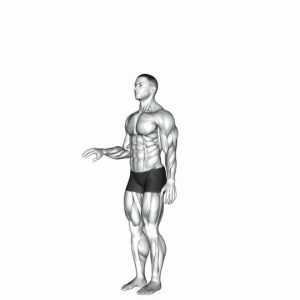
- Stand or sit tall: Keep your torso upright with shoulders relaxed and neck neutral.
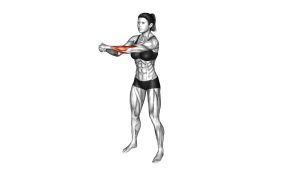
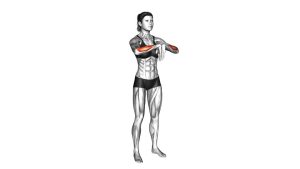
- Raise the arms in front: Extend your arms forward at about chest height or keep the elbows slightly bent if that feels better.
- Make light fists or keep the hands relaxed: Avoid squeezing too hard, which can add unnecessary tension.
- Set the wrists neutral: Start with the wrists straight before beginning the circles.
- Brace lightly through the forearms: Keep the elbows and shoulders quiet so the wrists do the work.
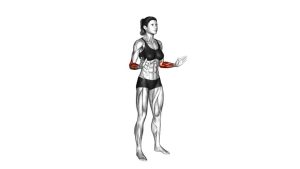
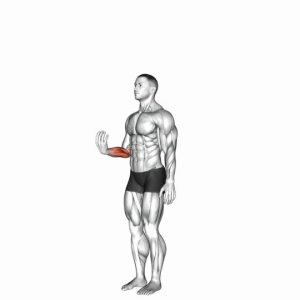
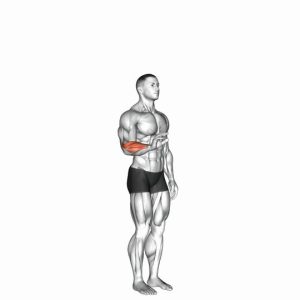
Tip: If both arms extended feels tiring, perform the drill with elbows bent at your sides while still isolating the wrists.
Execution (Step-by-Step)
- Start slowly: Begin rotating both wrists in small circles at the same time.
- Move through all directions: Let the wrists pass through flexion, extension, radial deviation, and ulnar deviation as part of each circle.
- Keep the motion smooth: Avoid jerky transitions or rushing through stiff areas.
- Maintain forearm control: Keep your elbows, shoulders, and torso still while the wrists rotate.
- Complete the reps: Perform all circles in one direction, then reverse and repeat in the opposite direction.
Pro Tips & Common Mistakes
- Start with small circles: Expand the range only after the wrists feel smooth and warm.
- Use both directions: Clockwise and counterclockwise circles help train balanced mobility.
- Don’t rush: Fast circles often reduce control and skip the stiff parts of the range.
- Relax the grip: Over-squeezing the fists creates extra forearm tension and can limit movement quality.
- Keep shoulders down: Avoid shrugging or turning this into a full-arm movement.
- Use before demanding hand work: Great before curls, pull-ups, push-ups, handstands, racket sports, or grip training.
- Stop before pain: Mild stiffness is normal, but sharp pain or pinching is a sign to back off.
FAQ
What do Wrist Circles help with?
Wrist Circles help improve wrist mobility, increase blood flow to the forearms, and prepare the hands and wrists for exercise, sports, and repetitive daily tasks.
Should I do Wrist Circles before workouts?
Yes. They are especially useful before exercises that load the wrists, such as push-ups, planks, curls, pull-ups, pressing movements, hand balancing, or sports that require grip and wrist control.
How big should the circles be?
Start with small circles and gradually make them larger as long as the movement stays smooth and pain-free. Bigger is not always better if control is lost.
Can I do Wrist Circles every day?
In most cases, yes. Since this is a low-intensity mobility drill, many people can perform it daily as part of a warm-up, work break, or recovery routine.
What if my wrists click during the exercise?
Occasional painless clicking can happen with joint movement. If the clicking comes with pain, pinching, swelling, or instability, reduce range and consider getting professional assessment.
Recommended Equipment (Optional)
- Hand Grip Strengthener — useful for building complementary grip and forearm strength
- Therapy Putty — supports hand, finger, and wrist conditioning with light resistance
- Wrist Roller Forearm Trainer — good for progressing into more challenging forearm and wrist work
- Light Resistance Bands Set — helpful for warm-ups, rehab-style drills, and upper-limb mobility work
- Wrist Brace / Support Wrap — optional support tool for people who need light stability outside training
Tip: Mobility drills work best when paired with gradual strengthening. Use equipment to support long-term wrist function, not to replace movement quality.