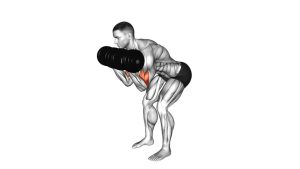
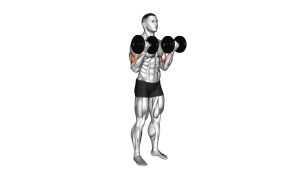
Dumbbell Concentration Curl: Proper Form, Sets, Muscles Worked & FAQ
Learn how to do the Dumbbell Concentration Curl with strict form to isolate the biceps for better arm growth. Includes setup, step-by-step execution, sets by goal, mistakes, FAQs, and recommended equipment.
Dumbbell Concentration Curl
This movement is best performed with light to moderate weight and strict control. It is especially effective for lifters who want to improve biceps detail, build a better mind-muscle connection, and minimize assistance from the shoulders or lower back. Because the arm is braced, it becomes easier to focus on quality reps instead of chasing momentum.
Quick Overview
| Body Part | Biceps |
|---|---|
| Primary Muscle | Biceps brachii |
| Secondary Muscle | Brachialis and brachioradialis |
| Equipment | Single dumbbell and flat bench or sturdy seat |
| Difficulty | Beginner to Intermediate |
Sets & Reps (By Goal)
- Muscle growth: 3–4 sets × 8–12 reps per arm, 45–75 sec rest
- Strict isolation work: 2–4 sets × 10–15 reps per arm, controlled tempo, 30–60 sec rest
- Strength-focused arm training: 3–4 sets × 6–8 reps per arm with full control, 60–90 sec rest
- Finisher / pump work: 2–3 sets × 12–20 reps per arm, short rest, lighter load
Progression rule: Add reps before adding weight. Only increase the load when you can keep the elbow anchored, avoid body swing, and maintain a smooth eccentric on every rep.
Setup / Starting Position
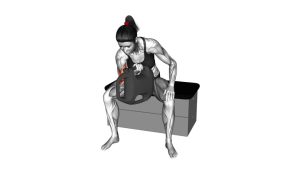
- Sit on a bench: Sit near the edge with your feet flat on the floor and legs slightly apart.
- Lean forward slightly: Keep your chest up and spine neutral rather than rounding hard through the upper back.
- Brace the arm: Hold a dumbbell in one hand and press the back of your upper arm or elbow area against the inside of the same-side thigh.
- Start low: Let the arm extend downward with the dumbbell hanging under control, palm facing mostly upward or slightly inward.
- Lock in posture: Keep the non-working hand on the opposite thigh or bench for extra balance.
Tip: The more stable your seated position is, the easier it becomes to isolate the biceps and remove momentum.
Execution (Step-by-Step)
- Brace and breathe: Set your elbow firmly against the inner thigh and keep the shoulder quiet.
- Curl the dumbbell upward: Bend the elbow and lift the weight in a smooth arc toward the front of your shoulder.
- Supinate fully if comfortable: Rotate the palm up as you curl to increase biceps involvement.
- Squeeze at the top: Pause briefly when the forearm reaches the top position and contract the biceps hard.
- Lower slowly: Return the dumbbell to the starting position under control without letting it drop.
- Repeat evenly: Complete all reps on one arm, then switch sides.
Pro Tips & Common Mistakes
- Keep the elbow planted: This is the key to making the movement a true concentration curl.
- Control the lowering phase: The eccentric is where a lot of muscle-building stimulus happens.
- Do not swing the torso: Momentum takes tension away from the biceps.
- Use moderate weight: Heavy dumbbells often ruin the setup and shorten the range of motion.
- Squeeze at the top: A brief pause improves mind-muscle connection and peak contraction.
- Do not rush the bottom: Lower fully, but keep tension instead of relaxing completely between reps.
- Keep the wrist neutral: Avoid excessive bending or curling through the wrist to protect the forearm and maintain clean arm mechanics.
FAQ
What muscles does the dumbbell concentration curl work?
The main target is the biceps brachii. The brachialis and brachioradialis assist during elbow flexion, but the setup is designed to place most of the emphasis on the biceps.
Is the concentration curl good for building bigger biceps?
Yes. It is one of the best isolation exercises for improving biceps tension, peak contraction, and arm detail, especially when performed with strict technique and controlled tempo.
Should I go heavy on concentration curls?
Usually no. This exercise works best with a load you can control without torso movement or elbow drift. Strict reps matter more than lifting heavy here.
How high should I curl the dumbbell?
Curl until you reach a strong top contraction without letting the shoulder roll forward too much. You want a full squeeze, not a forced range that changes your posture.
Can beginners do dumbbell concentration curls?
Absolutely. It is beginner-friendly because the braced position helps teach proper biceps isolation and makes it easier to feel the target muscle working.
Recommended Equipment
- Adjustable Dumbbell — lets you progress weight gradually for single-arm curl training
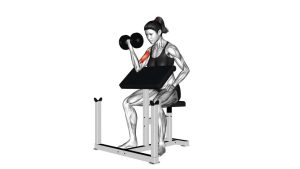
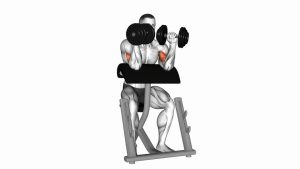
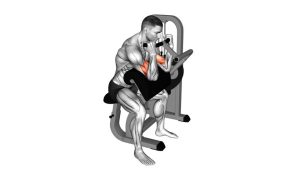
- Preacher Curl Bench — useful for additional biceps isolation work if you want to pair concentration curls with supported curl variations
- Flat or Adjustable Weight Bench — provides a stable seat and works for many other upper-body exercises
- Wrist Wraps — helpful if your wrists feel unstable during curls or other arm work
- Resistance Bands Set — useful for warm-ups, high-rep finishers, and extra arm volume without always using dumbbells
Tip: Pick tools that support strict form and progressive overload. For concentration curls, a comfortable seat and the right dumbbell matter more than fancy equipment.