Barbell Lying Triceps Extension: Proper Form, Sets, Tips & FAQ
Learn how to perform the Barbell Lying Triceps Extension with proper form. Discover setup tips, step-by-step execution, sets and reps by goal, common mistakes, FAQs, and recommended equipment.
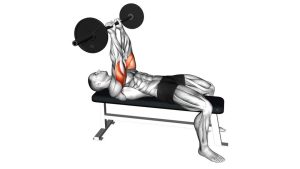
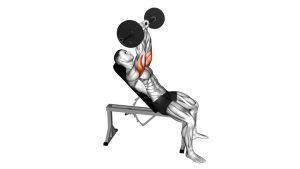
Barbell Lying Triceps Extension
This exercise is highly effective for building triceps size and strength, especially when performed with a full, controlled range of motion. The key is to let the elbows do the work while the upper arms remain mostly fixed. You should feel tension in the back of the upper arms, not discomfort in the wrists, shoulders, or elbows.
Quick Overview
| Body Part | Triceps |
|---|---|
| Primary Muscle | Triceps brachii |
| Secondary Muscle | Anconeus, forearm stabilizers, front delts (light stabilization) |
| Equipment | Barbell, weight plates, flat bench |
| Difficulty | Intermediate |
Sets & Reps (By Goal)
- Muscle growth: 3–4 sets × 8–12 reps with 60–90 seconds rest
- Strength emphasis: 4–5 sets × 5–8 reps with 90–120 seconds rest
- Technique and control: 2–3 sets × 10–15 reps using moderate weight and slow tempo
- Finisher / pump work: 2–3 sets × 12–15 reps with short rest and strict form
Progression rule: Increase the load only when you can keep the elbows steady, control the lowering phase, and complete every rep without shoulder swing or wrist collapse.
Setup / Starting Position
- Lie flat on a bench: Keep your head, upper back, and glutes supported, with feet planted firmly on the floor.
- Grip the barbell securely: Use a shoulder-width or slightly narrower grip that feels stable on your wrists and elbows.
- Press the bar above your upper chest: Start with arms extended and elbows pointing mostly upward.
- Set the upper arms: Keep them relatively fixed, with only a slight backward angle if it feels more natural and comfortable.
- Brace your torso: Keep your ribcage down and avoid excessive arching or shifting on the bench.
Tip: A moderate grip width usually feels better on the elbows than going extremely narrow.
Execution (Step-by-Step)
- Start at lockout: Hold the bar above the upper chest with elbows extended and wrists stacked under control.
- Lower the bar slowly: Bend at the elbows and guide the bar down toward the forehead or slightly behind the head.
- Keep upper arms steady: Avoid letting the elbows flare too wide or the shoulders roll excessively.
- Reach the stretched position: Pause briefly when the triceps are fully loaded at the bottom.
- Extend the elbows: Press the bar back up by straightening the arms until you return to the starting position.
- Repeat smoothly: Maintain a controlled rhythm and avoid bouncing out of the bottom.
Pro Tips & Common Mistakes
- Use a controlled eccentric: Lowering too fast makes the exercise less effective and less safe.
- Don’t flare the elbows hard: Excessive elbow flare often shifts tension away from the triceps and stresses the joints.
- Avoid turning it into a press: Keep shoulder movement minimal so the elbows remain the main joint in action.
- Keep wrists neutral: Bent-back wrists can reduce force transfer and create unnecessary discomfort.
- Use full but safe range: Lower until you feel a deep triceps stretch without forcing painful elbow angles.
- Choose load carefully: Heavy weight with sloppy tempo usually beats up the elbows faster than it builds muscle.
FAQ
What muscles does the barbell lying triceps extension work?
It mainly targets the triceps brachii, especially the long head, while the forearms and shoulders assist with stabilization.
Is this the same as a skull crusher?
Yes. The barbell lying triceps extension is commonly called a skull crusher, especially when the bar is lowered toward the forehead.
Should I lower the bar to my forehead or behind my head?
Both can work. Lowering slightly behind the head often creates a deeper stretch and can feel smoother on the elbows for some lifters.
Why do my elbows hurt during skull crushers?
Elbow discomfort usually comes from too much load, poor control, excessive flare, or too much volume. Try a lighter weight, slower tempo, better warm-up, or a slightly adjusted bar path.
Can beginners do barbell lying triceps extensions?
Yes, but beginners should start with light weight and focus on elbow control before chasing heavier loads. Technique matters a lot with this exercise.
Recommended Equipment
- Olympic Barbell — the main tool for performing barbell lying triceps extensions with consistent loading
- Weight Plates — lets you scale the exercise for strength, hypertrophy, or technique work
- Flat Weight Bench — provides stable body support and proper positioning for the movement
- Barbell Collars — helps keep the plates secure and balanced during each set
- Elbow Sleeves — optional support for lifters who want extra warmth and comfort around the elbow joint
Tip: Start with lighter loading and perfect your elbow path first. This exercise becomes far more effective when technique stays strict.