Dumbbell Decline Triceps Extension: Form, Sets, Tips & FAQ
Learn how to do the Dumbbell Decline Triceps Extension with proper form. Discover setup tips, sets and reps by goal, common mistakes, FAQs, and recommended equipment for stronger triceps.
Dumbbell Decline Triceps Extension
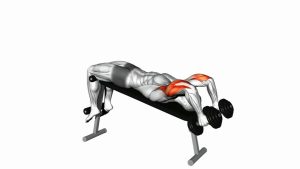
This variation works best when you stay strict and let the elbows do the job. You should feel the triceps loading on the way down and contracting hard as you extend back up. The bench angle helps many lifters stay more stable than on a flat bench, but the key is still the same: control the eccentric, avoid flaring too much, and keep the shoulders from taking over.
Quick Overview
| Body Part | Triceps |
|---|---|
| Primary Muscle | Triceps brachii (long head emphasis) |
| Secondary Muscle | Anconeus, forearm stabilizers, front delts and upper-arm stabilizers |
| Equipment | Dumbbells and a decline bench |
| Difficulty | Beginner to Intermediate |
Sets & Reps (By Goal)
- Muscle growth: 3–4 sets × 8–12 reps with 60–90 sec rest
- Technique practice: 2–3 sets × 10–15 reps with light dumbbells and slow tempo
- Strength-focused accessory work: 3–4 sets × 6–8 reps with full control
- Higher-volume arm finisher: 2–3 sets × 12–15 reps with shorter rest
Progression tip: Add reps before adding weight. When all working sets feel clean and stable, increase the dumbbells slightly while keeping the same range of motion and elbow control.
Setup / Starting Position
- Set the bench to decline: Secure your feet and lie back with your head lower than your hips.
- Hold a dumbbell in each hand: Use a neutral grip with palms facing each other.
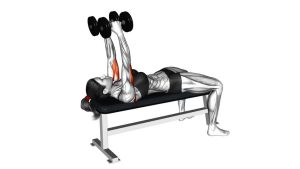
- Press the dumbbells above the chest: Arms should be extended with elbows stacked over the shoulders.
- Brace the torso: Keep your upper back settled into the bench and avoid unnecessary movement.
- Prepare your elbows: Keep them pointed generally upward and slightly tucked rather than flared wide.
Tip: Start lighter than you think. Triceps extensions challenge joint control more than presses, especially at the bottom.
Execution (Step-by-Step)
- Begin from lockout: Hold the dumbbells directly above the upper chest with a steady wrist position.
- Bend at the elbows: Lower the dumbbells slowly toward the sides of your head.
- Keep the upper arms mostly fixed: A small amount of natural movement is fine, but do not turn it into a pullover or press.
- Reach a deep controlled stretch: Stop when your elbows are fully flexed and the dumbbells are near temple or ear level.
- Extend back up: Drive through the triceps until your arms return to full extension.
- Reset at the top: Stabilize before starting the next rep instead of bouncing into the next descent.
Pro Tips & Common Mistakes
- Use a slow eccentric: The lowering phase is where this movement becomes much more effective.
- Do not rush the bottom: Control the stretch rather than dropping the dumbbells.
- Keep wrists stacked: Bent wrists can make the movement less stable and more uncomfortable.
- Avoid excessive elbow flare: Let the elbows stay in a natural path without spreading too wide.
- Do not press the weight up: The motion should be elbow extension, not a dumbbell press.
- Match both arms: Keep both dumbbells traveling evenly to avoid side-to-side compensation.
- Train near fatigue, not chaos: Stop the set once form breaks down instead of forcing ugly reps.
FAQ
What muscles does the Dumbbell Decline Triceps Extension target?
It mainly targets the triceps brachii, with strong emphasis on the long head because the arm position creates a deeper loaded stretch than many simpler pushdown-style variations.
Is this better than flat-bench skull crushers?
Not always better, but different. Many lifters find the decline setup gives them a stable body position and a smooth range of motion. The best choice is the one you can perform pain-free with good elbow control.
How heavy should I go?
Use a weight you can control for the full rep path. Most people get better results from moderate loads and clean reps than from going too heavy and turning the movement into a press.
Should the dumbbells touch my shoulders?
No. Lower them only as far as you can maintain control and tension in the triceps. For most lifters, the dumbbells will finish near the sides of the head rather than touching the shoulders.
Can beginners use this exercise?
Yes, as long as the dumbbells are light enough and the movement stays controlled. Beginners should prioritize tempo, alignment, and elbow stability before chasing heavier loads.
Recommended Equipment
- Adjustable Dumbbells — the most practical choice for progressive overload in home workouts
- Incline/Decline Weight Bench — lets you set a stable decline angle for this exercise and many other pressing variations
- Weightlifting Elbow Sleeves — useful for warmth and support if your elbows get irritated during extension work
- Wrist Wraps for Weightlifting — help keep the wrists more secure when dumbbells feel unstable at the bottom
- Dumbbell Storage Rack — keeps your training area organized and makes loading and setup easier between sets
Tip: For this movement, the best equipment upgrades are usually better dumbbells and a sturdy adjustable bench before anything else.