Close-Grip Push-Up Against the Wall: Form, Benefits, Sets & Tips
Learn how to do the Close-Grip Push-Up Against the Wall to target the triceps with beginner-friendly bodyweight resistance. Includes setup, steps, tips, mistakes, FAQ, and equipment.
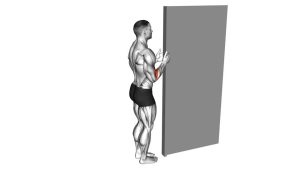
Close-Grip Push-Up Against the Wall
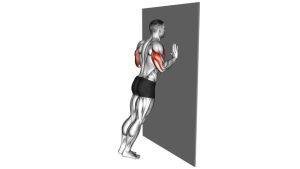
This exercise is excellent for beginners, home workouts, warm-ups, rehabilitation-style strength building, or anyone who wants to improve triceps control without going directly to the floor. Since the body angle is more upright, the resistance is easier to manage, but the movement still teaches an important pressing pattern: brace the body, keep the elbows close, lower under control, then press through the palms until the arms extend smoothly.
The key is not simply touching the wall and pushing away. Instead, the goal is to move the whole body as one solid line. Your head, shoulders, hips, knees, and heels should stay connected in one controlled position. When performed correctly, you should feel the back of the upper arms working strongly while the shoulders stay relaxed and stable.
Quick Overview
| Body Part | Triceps |
|---|---|
| Primary Muscle | Triceps brachii |
| Secondary Muscle | Chest, anterior deltoids, serratus anterior, core stabilizers |
| Equipment | Wall only; optional exercise mat, wrist wraps, or push-up handles for comfort |
| Difficulty | Beginner |
Sets & Reps (By Goal)
- Beginner strength: 2–3 sets × 8–12 reps with slow, controlled movement.
- Triceps endurance: 3–4 sets × 12–20 reps with short rests and clean elbow tracking.
- Warm-up activation: 1–2 sets × 10–15 reps before push-ups, dips, presses, or arm workouts.
- Technique practice: 2–3 sets × 6–10 reps using a 3-second lowering phase and full control.
- Progression toward floor push-ups: 3 sets × 10–15 reps, then gradually move the feet farther from the wall.
Progression rule: First improve control, then increase reps. After that, make the exercise harder by stepping farther away from the wall or progressing to an incline close-grip push-up on a bench.
Setup / Starting Position
- Stand facing a wall: Position yourself about one arm’s length away. The farther your feet are from the wall, the harder the exercise becomes.
- Place your hands close together: Set both palms on the wall around chest height. Keep the hands narrower than shoulder width to emphasize the triceps.
- Set your body line: Keep your head, ribs, hips, knees, and ankles aligned. Avoid bending at the hips or letting the lower back arch.
- Brace your core lightly: Tighten your midsection enough to prevent your body from collapsing toward the wall.
- Relax your shoulders: Keep your shoulder blades stable without shrugging them toward your ears.
- Prepare your elbows: Point the elbows slightly downward and back so they can stay close to your torso during the rep.
Execution (Step-by-Step)
- Begin tall and controlled: Start with arms extended, hands close together on the wall, and your body leaning forward slightly.
- Bend the elbows: Lower your chest toward the wall by bending the elbows. Keep them tucked close to your ribs.
- Move as one unit: Let your whole body travel forward together. Do not lead with the head, drop the hips, or round the upper back.
- Reach the bottom position: Stop when your chest is close to the wall and your elbows are comfortably bent.
- Press through the palms: Push the wall away and straighten your elbows using the triceps.
- Return to the top: Finish with the arms extended but not aggressively locked. Keep your shoulders down and your core engaged.
- Repeat with rhythm: Use a smooth lowering phase, a brief controlled pause, and a steady press back to the start.
Pro Tips & Common Mistakes
Pro Tips
- Keep your hands narrow: A close grip increases triceps involvement and makes the exercise more arm-focused.
- Control the lowering phase: Take 2–3 seconds to lower toward the wall for better tension and cleaner technique.
- Use your triceps to press: Focus on straightening the elbows instead of pushing with the shoulders.
- Stay in a straight line: Your torso should move like a plank, even though the exercise is done standing.
- Adjust difficulty with foot position: Step closer to the wall to make it easier; step farther back to make it harder.
- Breathe naturally: Inhale as you lower, exhale as you press away from the wall.
Common Mistakes
- Flaring the elbows: This reduces triceps emphasis and places more stress on the shoulders.
- Leading with the head: Keep the neck neutral instead of poking the chin toward the wall.
- Dropping the hips: A sagging body line reduces core control and weakens the movement pattern.
- Rushing the reps: Fast, bouncy reps usually remove tension from the triceps.
- Placing hands too high: Hands should be around chest height, not above the shoulders.
- Locking the elbows harshly: Finish strong, but avoid snapping the joints at the top.
FAQ
Is the Close-Grip Push-Up Against the Wall good for beginners?
Yes. This is one of the best beginner-friendly triceps push-up variations because the wall reduces bodyweight load. It allows you to practice close-grip pressing mechanics before progressing to harder incline or floor versions.
What muscles does this exercise work?
The main target is the triceps brachii. The chest, front shoulders, serratus anterior, and core also assist by stabilizing the body and supporting the pressing movement.
How close should my hands be?
Keep your hands narrower than shoulder width. They do not need to touch. Choose a close position that allows your wrists, elbows, and shoulders to feel comfortable while keeping the elbows tucked.
How can I make this exercise harder?
Step your feet farther away from the wall, slow down the lowering phase, add a longer pause at the bottom, or progress to a close-grip incline push-up using a bench or sturdy surface.
Should I feel this more in my chest or triceps?
You may feel some chest involvement, but the main effort should be in the back of the upper arms. If your chest or shoulders dominate, bring the elbows closer to the body and focus on extending through the elbows.
Can I do this exercise every day?
You can perform it frequently if the intensity is light and your elbows, wrists, and shoulders feel good. For strength progress, 2–4 sessions per week is usually enough.
Recommended Equipment
- Push-Up Handles — useful for wrist comfort when progressing from wall push-ups to floor push-ups.
- Wrist Wraps — provide light wrist support during pressing exercises.
- Exercise Mat — helpful for progressing to knee push-ups, incline push-ups, or floor triceps work.
- Resistance Bands Set — useful for triceps pressdowns, band extensions, and upper-body warm-up drills.
- Adjustable Workout Bench — ideal for incline close-grip push-ups once the wall version becomes too easy.
Tip: You do not need equipment for the wall version. These tools are mainly useful for comfort, warm-ups, and future progressions.